Cesanese, the Lazio red that Rome forgot
From Piglio DOCG to Olevano Romano and Affile, the history and revival of Cesanese, Lazio's most important red grape and still far too little drunk.
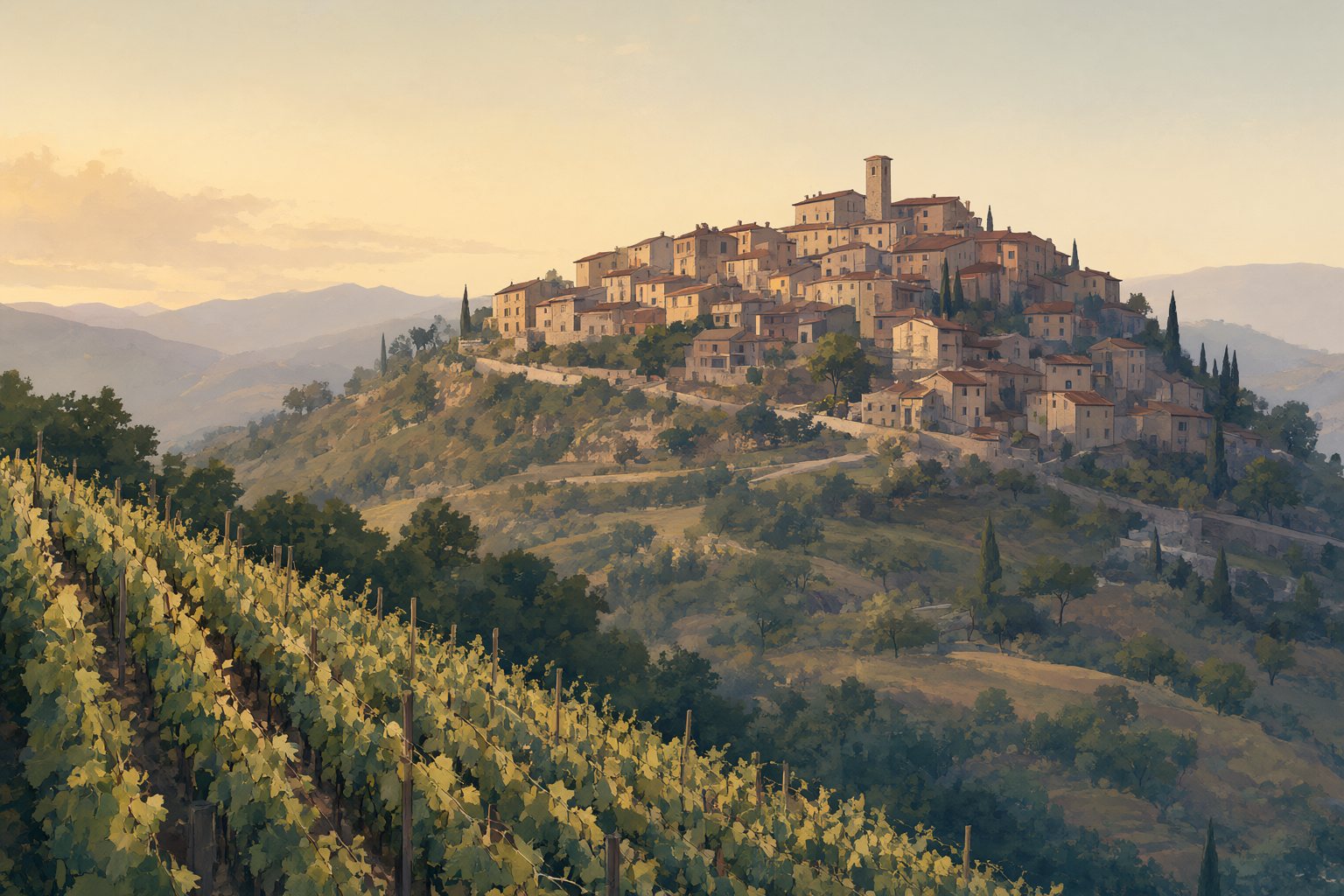
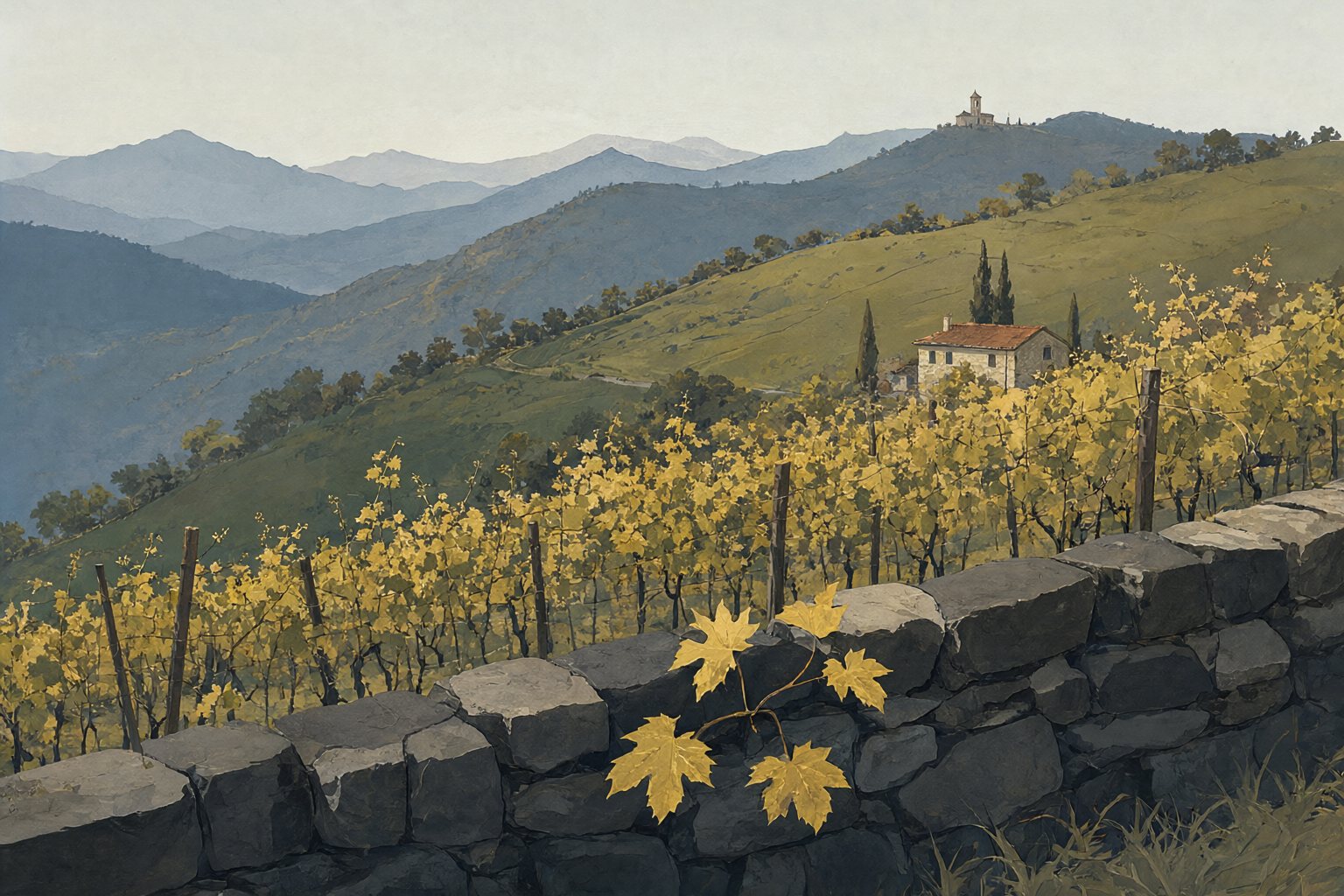
Rome has always drunk Frascati and, in recent decades, has learned to drink half of Italy besides. Yet some forty kilometres from the Colosseum, in the hills of Ciociaria, grows a red grape that has no rival in Lazio for importance and that the capital has treated for years like a country cousin to be invited only at Easter. It is called Cesanese, and its story is that of a vine that came close to vanishing just as the city beside it was growing.
A grape older than its troubles
The origin of the name is disputed: some tie it to the locality of Cesano, near Rome, others to the Latin caesae, places where trees were cut. A few go as far as Pliny the Elder, but that is a theory to be handled with tongs. The rest is on firmer ground: the grape appears in agricultural contracts of the fifteenth century, which is enough to say it is neither a recent invention nor an imported fashion.
The twentieth century was less kind to it. Urbanisation, emptying countryside, the race for quantity: by 2000 plantings had fallen below a thousand hectares, according to available reconstructions. For a local variety that is the threshold beyond which you become a museum curiosity. The recovery began in the early 2000s, when a group of growers decided to bet on quality rather than chase volume.
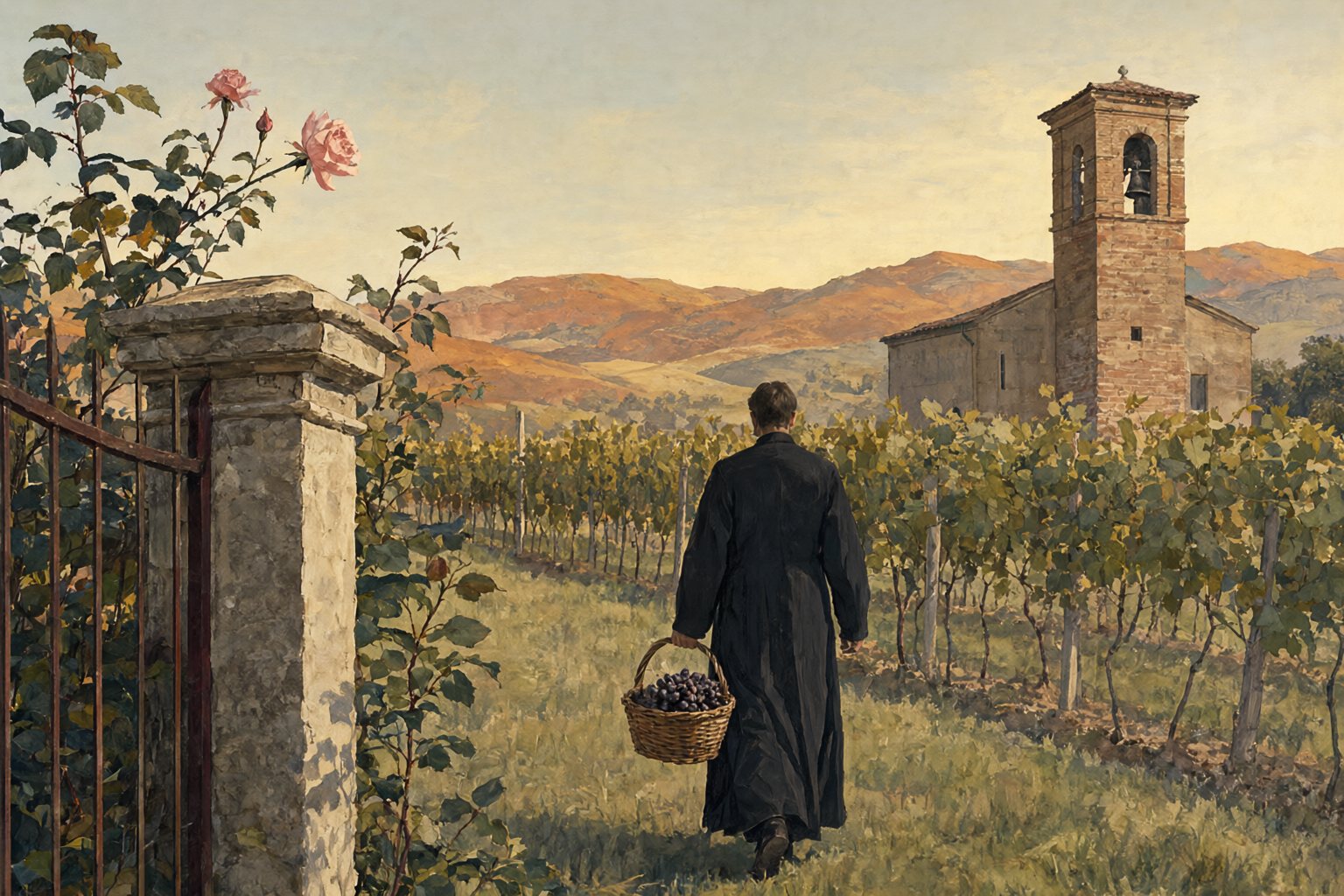
Worth pausing on this moment. A revival is never only a matter of new cellars: someone, in a village of a few thousand people, has to decide that a forgotten grape deserves to be taken seriously, and keep deciding it long enough to convince the neighbours too. That is what happened here, in small steps, and the result is measured more in the consistency of the choices than in the numbers.
Two Cesanese, or perhaps just one
Local usage distinguishes Cesanese comune from Cesanese di Affile. The first has larger berries and is more vigorous; the second has smaller berries and is regarded as the finer biotype, with greater concentration and aromatic complexity. The name comes from Affile, the Lazio village where, according to tradition, the variety arrived in the late eighteenth century.
Here is a detail purists prefer not to dwell on: some DNA analyses have indicated that the two biotypes are genetically identical, and that the difference lies in berry size. An agronomic distinction rather than a question of family, in other words. The finding should be taken as indicative, but it explains why the rulebooks admit both without much ceremony.
Piglio, Olevano, Affile: three addresses
Cesanese del Piglio is the only red DOCG in Lazio. It gained DOC status in 1973 and was promoted to DOCG in 2008. The rulebook calls for at least 90% Cesanese, di Affile and/or comune, and the zone covers all of Piglio and Serrone and parts of Acuto, Anagni and Paliano, in the province of Frosinone. The basic version requires at least 12% alcohol; the Superiore 13%; the Riserva 14%. Superiore and Riserva call for at least 20 months of ageing, six of them in bottle. Maximum yields are set at 11 tonnes of grapes per hectare for the basic wine and 9 for the Superiore.
Cesanese di Olevano Romano, also recognised as a DOC in 1973, lies instead in the province of Rome, some seventy kilometres from the capital: the rulebook asks for at least 85% Cesanese. The Riserva requires 24 months of ageing, six of them in bottle. Cesanese di Affile has a DOC of its own, smaller still and almost unknown outside Lazio.
These are tiny appellations. For Piglio, 2017 figures speak of around 108 hectares under vine: garden numbers, not regional ones. One note of caution: acreage figures change from year to year and should be read as an order of magnitude.
What to expect in the glass
The difference between the types lies above all in time. The basic version is released earlier, around the winter after the harvest, and is meant for everyday tables. Superiore and Riserva arrive later, with higher minimum alcohol levels and a compulsory spell of ageing. As for flavours, I would rather skip the usual list of descriptors: without solid data in hand, better to leave the word to whoever has it in the glass. And on price, I found no reliable evidence on which to indicate a band, so I do not give one.
The red missing from Roman wine lists
The point, in the end, is not whether Cesanese is a great wine. The point is why in Rome’s restaurants it is still so hard to find, while every list has its Chianti and its Montepulciano. It will be said that production is small. True, but it is precisely the smallness that makes it an opportunity: a territory with a single recognisable red grape does not need to invent an identity, it already has one.
I would put it on the list alongside the reds sommeliers cite out of snobbery. Lazio has a wine that tells its landscape better than any slogan. If Rome does not drink it, so much the worse for Rome.
❦