What wine goes with bistecca alla fiorentina, and why it is almost always Sangiovese
Chianti Classico, Rosso di Montalcino, Brunello or Nobile? How to choose the wine for a Florentine T-bone steak, and what to drink outside Tuscany.
There are dishes you pair and dishes you go along with. Bistecca alla fiorentina, the great Florentine T-bone, belongs to the second category: it arrives at the table as thick as a book, red inside, with a dark crust and crunching coarse salt, and it brooks no argument. The wine does not have to seduce it or correct it. It has to keep up with it. And to do that, nine times out of ten, you need just one grape.
First the steak, then the glass
It is worth remembering what is actually on the plate, because many wrong pairings start from an imagined fiorentina. It is a cut from the loin with a T-shaped bone: on one side the fillet, tender and almost sweet, on the other the sirloin, firmer, more flavoursome and with its band of fat. Two different meats on the same bone, which already tells you that the wine will need a certain range.
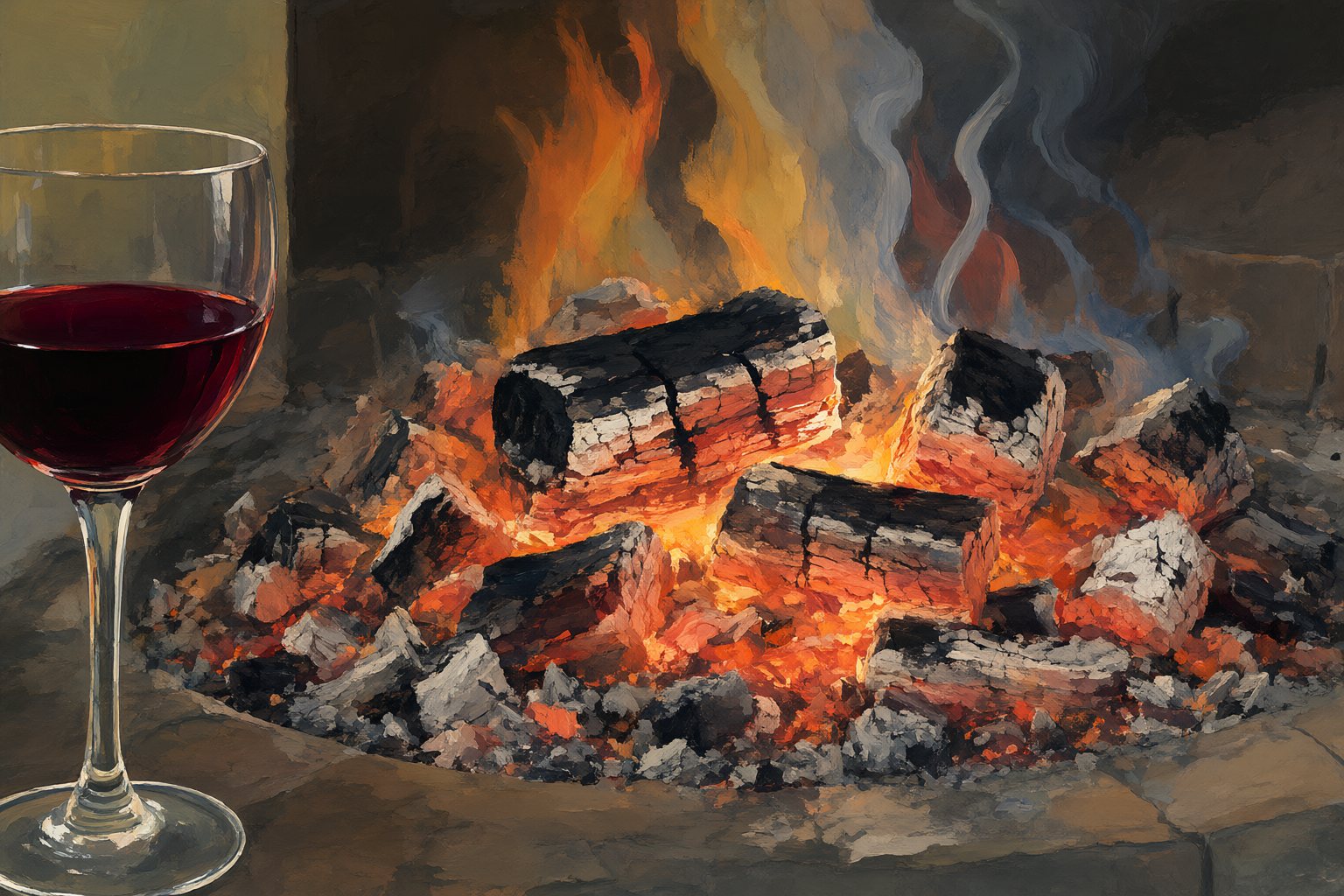
Thickness is part of the definition: tradition speaks of three or four fingers, and the weight easily exceeds a kilo. The most frequently cited breed is Chianina, but in Tuscan butcher’s shops you will find fiorentine from other breeds and other origins, and the name refers to the cut and the cooking more than to an obligatory pedigree. As for the cooking, the rules the Florentines defend are few and strict: live embers of wood or charcoal, no seasoning beforehand, a few minutes per side, a spell standing upright on the bone to warm the heart, then salt and perhaps a drizzle of oil. Rare, no negotiation.
There is also a chapter of recent history that many have forgotten. In the early 2000s, with the so-called mad cow emergency, European rules on bovine spinal columns effectively made the bone-in fiorentina illegal for several years. When it returned to the butchers’ counters it was celebrated like a return from exile, which says a great deal about the place it holds in the Tuscan imagination. The precise dates of the ban and its lifting vary according to the source and the age of the animals in question, so we will leave them vague.
For the wine, all this translates into three requirements. The fat and succulence call for acidity. The proteins of a meat that is almost raw call for tannin, which binds with them and softens. The crust and the salt call for fruit, otherwise the wine seems lean. Sangiovese has all three, and it is no coincidence that it grew up on the same hills as the steak.
Chianti Classico, the home answer
The most obvious reference remains the right one. Chianti Classico, with its minimum of 80% Sangiovese, has the cutting acidity and the dense tannin a fiorentina demands, plus that profile of cherry, violet and a touch of earth that sits beautifully beside chargrilled meat. We have written elsewhere about the difference from Chianti; here it is enough to say that with the steak both can work, provided you choose bottles with enough structure.
The real question is which type. The annata, the basic young version, nervy and vibrant, is often the best pairing of all: the still slightly rough tannin melts on the meat and the acidity cleans the mouth bite after bite. The Riserva adds weight and more evolved notes, and copes well with a fatty sirloin. The Gran Selezione, the top rung, is a wine to listen to: in front of a rare steak it risks becoming an expensive extra.
Montalcino in two tempos
Brunello di Montalcino comes to mind by reflex, like the good suit for the important occasion. It is pure Sangiovese, released no earlier than 1 January of the fifth year after the harvest, and spends at least two years in wood: a broad, deep wine, often with notes of leather, tobacco and fruit preserved in spirit. With the fiorentina it works, but on one condition. The more mature the Brunello, the more delicate its aromas, and the more they risk being covered by smoke and crust. A twenty-year-old Brunello deserves a quieter meat, or the same steak eaten slowly, at the end of the evening, when hunger has been sated.
The more natural companion, in our view, is the younger brother. Rosso di Montalcino is also pure Sangiovese, from the same area, but can be released from the September after the harvest: it has livelier fruit, snappier tannin and that freshness which makes the difference with meat. It is one of those cases in which the “lesser” wine is simply the more suitable, and choosing Brunello purely for the label means using a grand piano to play a march.
The Nobile and other Tuscan roads
Further east, on the ridge between the Val di Chiana and the Val d’Orcia, Vino Nobile di Montepulciano offers an alternative that is too often forgotten. The base is Sangiovese, here called Prugnolo Gentile, at a minimum of 70%, and the rest can come from other grapes permitted in Tuscany. The result is usually a slightly softer and rounder wine than Chianti Classico, with less angular tannins: a good compromise when someone at the table finds the more austere Sangiovese wines too hard. And this is the Val di Chiana, the land that gave its name to the fiorentina’s most celebrated breed. Rosso di Montepulciano, younger and more immediate, plays the same role that Rosso di Montalcino plays to Brunello.
That leaves the side roads: the Chianti of the more serious subzones, such as Rufina and Colli Senesi, and Sangiovese-based Tuscan reds outside the major appellations. With blends dominated by international grapes, softer and sometimes oakier, the pairing remains possible but loses some of its nerve: toasted oak on top of the char of the embers tends to add bitterness to bitterness.
Outside Tuscany, without guilt
There is no law that imposes Sangiovese. What you need is acidity and tannin, and Italy is full of both. Nebbiolo is the most convincing candidate: a young Langhe Nebbiolo, or a red from Valtellina, where the grape is called Chiavennasca, has firm tannin, high acidity and a floral profile that works with rare meat in a way surprisingly similar to Sangiovese. Aglianico, from the Vulture or from Irpinia in the form of Taurasi, brings more power and darker tones, and suits those who order their fiorentina more cooked than it should be. Sagrantino di Montefalco, one of Italy’s most tannic reds, is for strong stomachs: with very fatty meat it can be thrilling, with a lean fillet it turns into sandpaper.
Beyond the borders, the logic does not change. A Rioja with a few years of ageing or a Syrah-based red from the northern Rhône shares with Sangiovese the combination of fruit, freshness and tannin. They work, but at that point the question to ask is a different one: why cross a frontier when the wine born next door to the steak already does the job better than almost any other?
Our conclusion runs a little against the current. The fiorentina does not ask for the most important wine in the cellar, it asks for the most alive. A young Chianti Classico annata or a young Rosso di Montalcino do it more justice than many illustrious bottles opened to impress. Mature Brunellos and Gran Selezioni deserve their evening, but far from the smoke. In front of the embers, the hierarchy is decided by the meat.
❦