What wine goes with game, from wild boar to pheasant
Wild boar, red deer, roe deer, hare and pheasant call for different reds. A guide to game pairings, from salmì to civet, with Italy’s great wines.
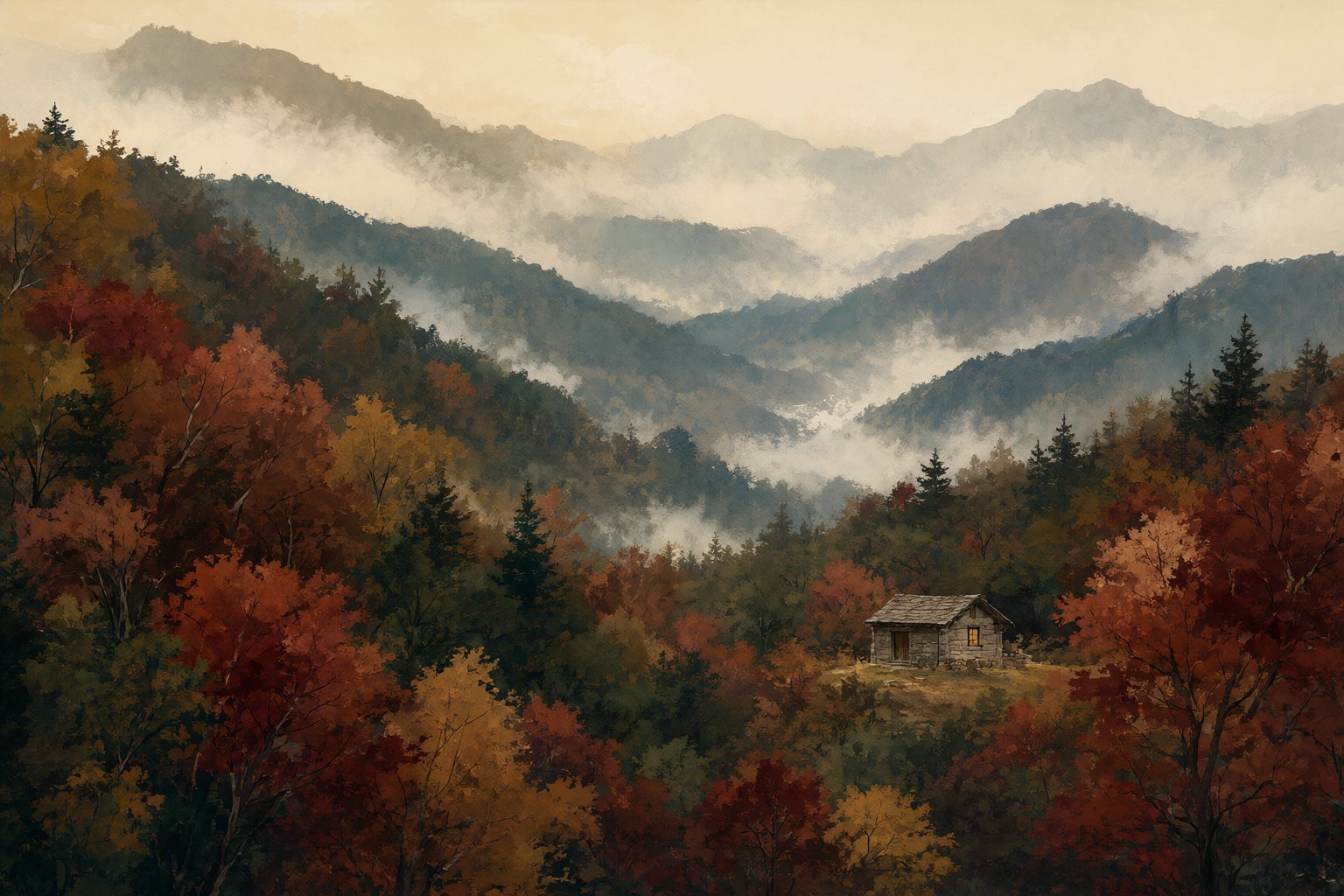
There is a prejudice that refuses to die: game means an enormous wine. The most tannic, the most alcoholic, the oldest bottle in the cellar, as though the dish were an opponent to be brought down by sheer force of extract. It is an understandable mistake, because meat from the woods has character, but it is a mistake all the same. A roe deer is not a wild boar, a hare in salmì is not a roast pheasant, and treating them the same way is like wearing the same coat to a gala dinner and a mountain hike.
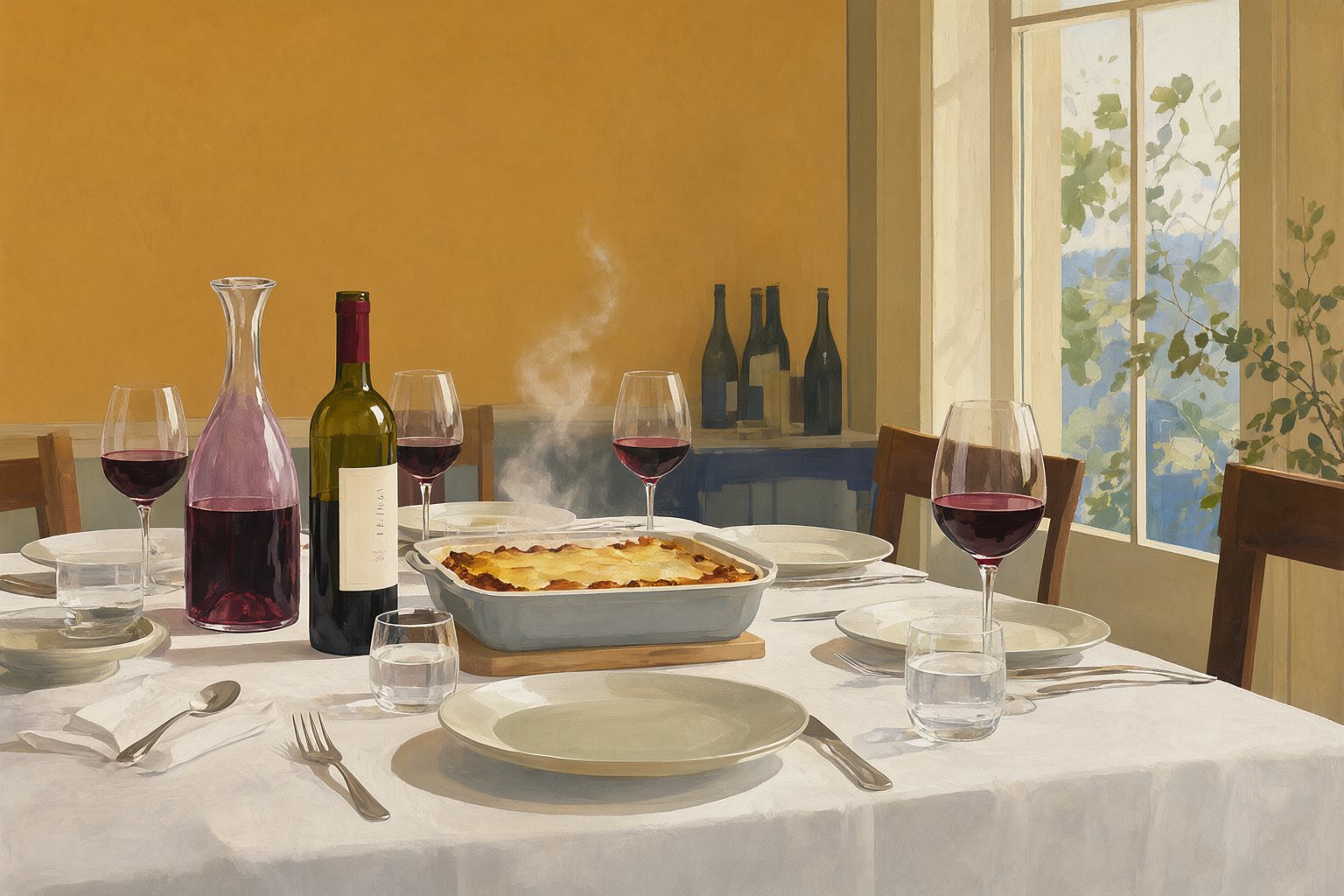
The real rule is a different one: before looking at the animal, look at the pot. The cooking and the sauce count at least as much as the meat.
First the sauce, then the beast
Game reaches the table in two very different ways. On one side there are the quick cooking methods, the pink fillet of venison, the saddle of roe deer, the roast breast of pheasant, where the meat speaks for itself and is lean, delicate, with a clean, iron-tinged flavour. On the other there are the long, dark ones, salmì, civet, stews and ragùs, where the meat has been marinated for hours in wine with spices and aromatics and then cooked until it falls apart.
Salmì, in the Italian tradition, is exactly this: meat marinated at length in red wine with vegetables, juniper berries, bay leaves and cloves, then stewed in that same marinade. Civet is its French cousin, whose name comes from cive, chives or onion, and which in its classic version binds the sauce with the animal’s blood. In both cases the result is a dense, almost velvety base, with a sweet note from the cooking and a depth that borders on bitterness.
That is the point: a dish like this can take, indeed seeks out, a structured wine. A barely seared fillet of roe deer, on the other hand, disappears beneath an overly powerful red. The tannin of a young, massive wine on lean meat with little fat turns rough, almost powdery. What you need is acidity, finesse, fruit.
Wild boar and red deer, the full-chested reds
Wild boar is the “easiest” animal to pair, because it is also the fattiest and the most flavoursome, and it almost always ends up stewed, in a ragù over pappardelle or in dolceforte, the old sweet-and-sour sauce. Here Sangiovese is almost the obligatory choice, and not only for its geographical affinity with the Maremma and the Tuscan hills. Its acidity cuts the fat, its tannin dries, and that note of dark cherry and earth marries with the tomato and herbs. A Chianti Classico or a Morellino di Scansano with a few years behind it handles a ragù without effort. For a richer boar stew, with chocolate or dried fruit, you can step up to Brunello di Montalcino, 100% Sangiovese, which the production rules do not allow onto the market before the first of January of the fifth year after the harvest and which spends at least two years in wood.
Red deer is nobler and leaner, and should be treated with a little more respect. Slow-cooked it wants a serious red, quickly cooked an elegant one. Nebbiolo is the perfect grape for both versions, provided you choose the appellation carefully. A Barolo, which by regulation ages for at least 38 months, 18 of them in wood, has the tannin and depth for a venison stew. A Barbaresco, a little leaner, suits a rare medallion better. In Alto Adige, where red deer is at home, they drink Lagrein instead: dark, juicy, with soft tannin and a note of violet and cocoa that seems made to measure.
Roe deer and hare, two opposite temperaments
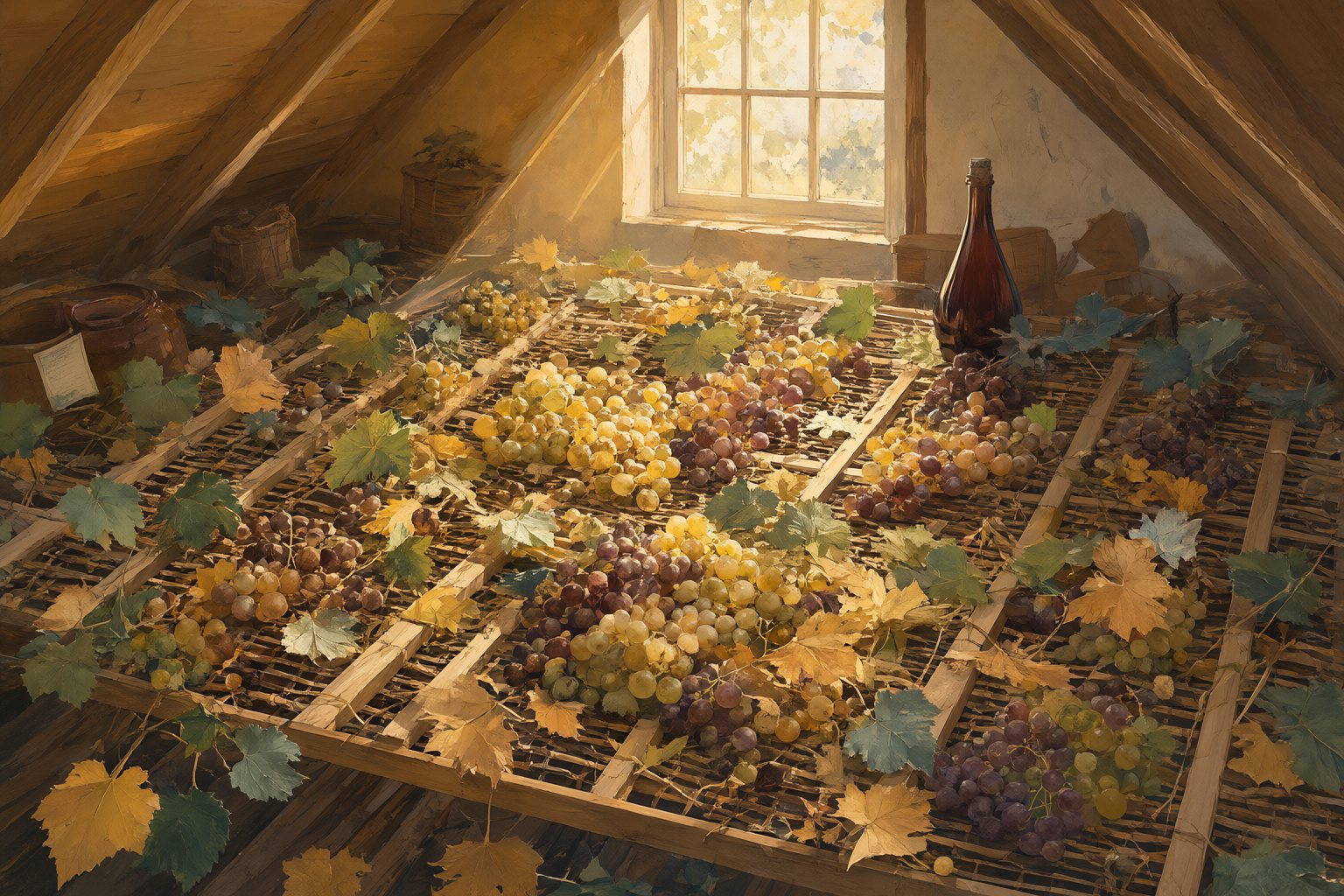
Roe deer is the most delicate meat of the woods, fine and almost sweet. It needs a wine that accompanies it without stepping in front. Mountain Nebbiolo is the most convincing answer: in Valtellina they call it Chiavennasca, and the reds of the area, from Valtellina Superiore and its subzones, have that combination of alpine freshness, fine tannin and notes of dried rose that goes beautifully with a saddle of roe deer with forest fruits. If the roe deer ends up in a salmì with polenta, as often happens in the Lombard valleys, you can move on to Sforzato di Valtellina, made from dried grapes, warmer and more enveloping.
Hare is the opposite. It has the darkest meat and the most intense flavour of all game, bordering on the feral. French civet de lièvre and lièvre à la royale, or the hare in salmì of our own countryside, are among the most demanding dishes of all to pair. Here you need wines with tannin and substance, but also a streak of acidity to refresh the palate. Aglianico is a formidable candidate: Taurasi, in Irpinia, and Aglianico del Vulture, in Basilicata, have the structure to stand as equals with a blood-thickened sauce and a volcanic acidity that keeps the whole from becoming heavy. Sagrantino di Montefalco too, among Italy’s most tannic reds, finds in a hare salmì one of the few dishes capable of taming it.
And Amarone della Valpolicella? It has its fans, and with a very dark, spiced civet it can work, because the sweetness of the dried-grape fruit converses with that of the cooking juices. But it must be handled with caution: if the sauce is sharper or leaner, its alcoholic power risks flattening everything.
Pheasant, the feather that changes the rules
Feathered game is a chapter of its own, and pheasant is the most instructive case. It is white meat, or almost, with a slightly gamey note that becomes more pronounced if the bird has been hung. A big, tannic red is simply out of place here. Better a Pinot Nero, from Alto Adige or the Oltrepò Pavese, with its red fruit and light texture. Or a Nebbiolo from Alto Piemonte, from the hills of Gattinara, Ghemme or Boca, leaner and more mineral than that of the Langhe. Or again an Etna Rosso, based on Nerello Mascalese, which has the grace of a northern wine over a background of smoke and stone.
If the pheasant is cooked the old-fashioned way, with truffle, chestnuts or a rich sauce, you can aim a little higher, but without ever losing sight of finesse. Even a structured, mature white, for those with the courage to try it, can be a discovery.
In defence of restraint
There is one lesson game teaches better than any other dish: pairing is not a contest of strength. The right wine is not the one that “stands up to” the dish, but the one that makes it seem better. A wild boar ragù wants Sangiovese’s acidity more than it wants power, a roe deer wants the elegance of the mountains more than oak, and a hare in blood sauce wants a red that is deep but alive, not a tired or sweetish wine.
If one grape emerges from this survey as the true champion of Italian game, it is Nebbiolo, in all its guises, from the Langhe to Valtellina to Alto Piemonte. Because it has everything that is needed: tannin, acidity, perfume and, above all, a sense of measure. Which, at the table as in the woods, is the rarest quality of all.
❦