No corkscrew? How to open a bottle of wine without hurting yourself
Pushing the cork in, a screw and pliers, the shoe against the wall: the methods that work, the ones to avoid, and a short history of the corkscrew.

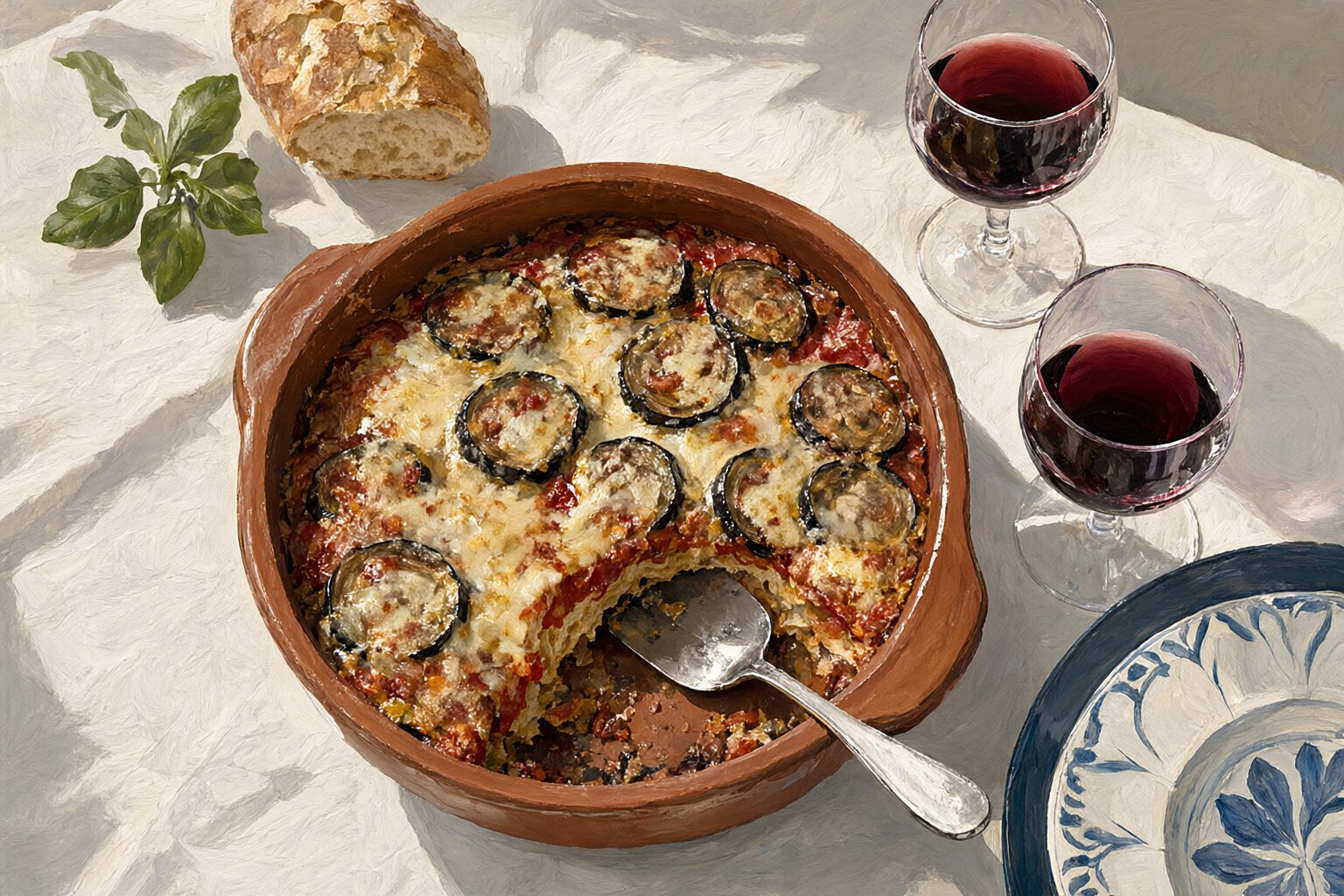
It always happens in the wrong place. The meadow is perfect, so is the bottle, the cheese is already softening in the sun, and then someone rummages through the basket with the look of a person who has lost their house keys. The corkscrew has been left on the kitchen table. It happens to sommeliers and beginners alike, and the first temptation is always the wrong one.
So let us put things in order, starting from a rather unromantic premise: no bottle is worth a trip to A&E. There are sensible ways to open wine without the proper tool, and there are viral-video tricks that end with glass in your fingers. It is worth knowing the difference.
The safest method: push it in
It looks like surrender, and is in fact the cleanest solution. Instead of pulling the cork out, you push it into the bottle. You need something rigid, blunt and narrower than the neck: the handle of a wooden spoon, a thick marker pen, the end of a ladle. Stand the bottle on a stable surface, aim the object at the centre of the cork and push with steady pressure, without jabbing.
Two tips. The first: when the cork gives way, the wine tends to spurt upwards, because the cork displaces liquid and air as it goes in. Better to do it over a sink or on the grass, with a napkin wrapped around the neck. The second: an old or already dried-out cork may crumble, leaving fragments in the wine. Nothing serious; simply pour through a tea strainer or, if you have one, decant into a carafe. The cork will be left floating inside, and the bottle will have to be finished the same day, which is not usually a problem.
One rule without exceptions: this method is for still wines only. With a sparkling wine, or any bottle under pressure, you push nothing and force nothing, but there you usually have no need of a corkscrew at all.
Screw and pliers: the home-made corkscrew
If you have a toolbox to hand, or even just the drawer of odds and ends that every home possesses, you can build an emergency corkscrew. A fairly long wood screw, driven into the centre of the cork with a good centimetre left sticking out. Then grip the head with pliers, or with the claw of a hammer, and pull calmly, levering against the rim of the bottle.
It is, in essence, the principle of the real corkscrew: a spiral, or something resembling one, that bites into the cork and draws it out. There are two limitations. A thin screw tends to tear out the middle of the cork rather than lift it, so a screw with a coarse thread is better, driven in deep but without piercing the bottom of the cork, or crumbs will fall into the wine. And the pliers should be handled with your body out of the line of fire: if the cork comes out suddenly, your hand jerks backwards. Protecting the neck of the bottle with a tea towel is not an excessive precaution.
The shoe against the wall, honestly explained
It is the most famous method, and it deserves to be explained for what it is. Remove the capsule, slip the base of the bottle into a shoe with a flat, sturdy sole, and knock the sole against a solid wall, keeping the bottle horizontal. The impacts drive the wine against the cork, which little by little slides out. When enough of it protrudes, you pull it out by hand.
Does it work? Often, yes, with patience. Is it safe? Far less than its student-party reputation suggests. The glass of a wine bottle is not designed to take repeated blows, and an invisible flaw, a scratch or a bottle thinner than expected may be enough for it to crack or break in your hand. Every blow also shakes up the wine, which gains nothing from it.
If you really want to try it, the minimum conditions are these: a bottle of still wine and never of sparkling, firm but not violent blows, a shoe with a heel and a thick sole to act as a cushion, nobody nearby, and abandoning the attempt immediately at the first sign of a crack. That said, our advice is to treat it as the last option, not the first.
What never to do
Break the neck of the bottle. Whether with a knife, against a corner or with a sharp blow, the result is the same: razor-sharp edges, splinters that can end up in the glass and a wine that nobody should drink any more. There is no safe way of doing it at home.
Heat the neck with a flame. The idea circulates online that the heat will push the cork out on its own, thanks to the expanding air. Glass, however, can crack or shatter when subjected to sudden changes in temperature, and a lighter next to a bottle held in the hand is a bad idea in any case. There is, in fact, a professional technique, the so-called Port tongs, in which the neck of very old bottles is heated and then cooled so that it snaps off cleanly when the cork is too fragile to be extracted. It is a job for specialists, with dedicated tools, meant for rare cases: nothing to do with an afternoon in the park.
Use knives and screwdrivers as levers. The blade slips, the cork resists, the hand goes where it should not. House keys jammed into the cork are only a slightly less risky version of the same mistake.
A brief history of spirals
The corkscrew was not born for wine. According to the most widely accepted account, it descends from the so-called gun worm, a spiral tool in use since at least the early decades of the seventeenth century to extract unfired charges from the barrels of muskets. One of the earliest known mentions of a similar instrument for bottles dates back to 1681, when a steel worm for drawing corks is spoken of.
The first English patent for a corkscrew came in 1795, in the name of a clergyman, the Reverend Samuel Henshall. His idea was a small disc between the spiral and the shank, which stopped it from sinking in too far and helped turn the cork in the neck before pulling it. In 1882 the German Karl Wienke devised the folding model with the lever that rests on the rim of the bottle, the one everybody now calls the sommelier’s knife, or waiter’s friend. The winged model, with its two levers that rise as the spiral descends, is usually associated with the patent obtained in the United States in 1930 by the Italian Domenico Rosati. Since then the variants have become countless, but the principle is the same as ever: a spiral and a lever.
The moral of the meadow
All these methods exist, and two out of three work well. But the real lesson lies elsewhere: a sommelier’s corkscrew weighs a few grams, costs less than a sandwich and fits into any pocket or basket. Keeping one in the car, one in your rucksack and one in the picnic bag is not pedantry, it is respect for the bottle and for your own fingers. And if fate should still catch you unprepared, push the cork in, pour calmly and keep your shoes on your feet. Wine, after all, was never a feat to be accomplished: it is something to drink.
❦