Merano WineFestival 2026: five days of wine at the Kurhaus
From 6 to 10 November the 35th Merano WineFestival returns to the Kurhaus: its history, the WineHunter selections, what to expect and what to open.
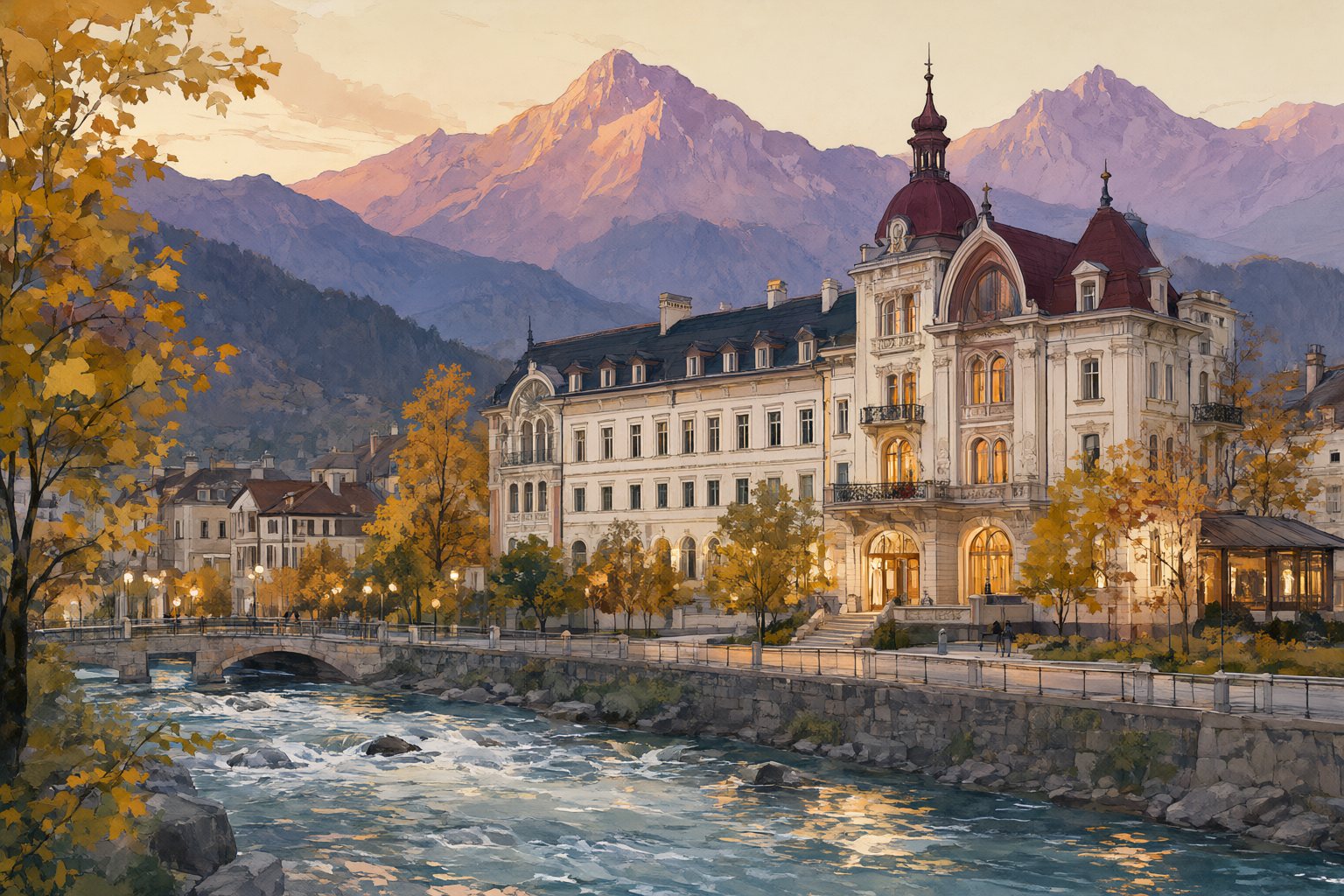
Some wine fairs feel like airports: endless corridors, badges round necks, people dashing from one hall to the next with the look of someone who has missed a connection. And then there is Merano, where in November wine is drunk beneath Art Nouveau stucco, with the Passirio running past the windows and the mountains as a backdrop. From 6 to 10 November 2026 the Kurhaus will host the 35th edition of the Merano WineFestival, and the theme chosen by the organisers, “elegance and beauty”, for once does not sound like a slogan stuck on after the fact. It describes rather well what this event has always tried to be.
A story born in a hotel
The festival was born in 1992 from an idea of three Merano enthusiasts: Helmuth Köcher, Johann Innerhofer and Othmar Kiem. The first edition was not even held at the Kurhaus but at the Hotel Palace, with some fifty producers and around a thousand visitors. Numbers fit for a tasting among friends, compared with today’s big shows. The response, however, was such that the very next year the event moved into the Kurhaus, the Art Nouveau building overlooking the Passirio promenade, which has been its home ever since.
From there, growth was steady but never disorderly. In the mid-1990s came the turning point that still defines the festival: a quality selection at the door. Paying for a stand is not enough to get in; you have to pass an exam. In 1997 food was added, and in 2005 came bio&dynamica, the space devoted to organic and biodynamic viticulture, long before “natural” became a word for fashionable wine lists. Of the three founders, it is Köcher who has tied his name to the festival’s identity: he is the public face of the event and the “WineHunter”, the hunter of wines who gives his name to the entire selection system.
How to get in: the WineHunter filter
This is precisely what sets Merano apart from so many other shows: the wines on tasting do not get there by registration, but on merit. The mechanism runs through The WineHunter Award, the accolade devised by Köcher. Tasting panels coordinated by him (there were fourteen in 2025) assess thousands of samples each year on a 100-point scale and assign the various award levels.
The hierarchy is simple. Rosso goes to wines scoring between 90 and 92.99 points; Gold to those between 93 and 94.99. At the top sits Platinum, the highest honour, reserved for a select circle of labels chosen from the candidates with the best scores. For the 2026 edition the declared figures are these: more than seven thousand wines tasted, 2,662 Rosso and 1,506 Gold, and 213 wines shortlisted for Platinum. New this year: the Platinum winners were announced on 7 October at a ceremony in Rome, for the first time away from Alto Adige. In Merano, a month later, those wines will nonetheless take centre stage, and the Platinum labels are billed as the heart of the edition.
One could argue at length about the relevance of 100-point scores, and this writer tends to distrust them when they become the only criterion. But the underlying principle, filtering upstream rather than welcoming all comers, remains the reason why, on average, you taste better in Merano than elsewhere.
What to expect at the Kurhaus
The detailed 2026 programme is not yet complete, and the organisers have promised a mix of established fixtures and new features. Recent editions, however, give a clear idea of the structure. The festival stretches over five days, from Friday to Tuesday, and each day has a different character: there is the space for organic and biodynamic wines, there is the GourmetArena devoted to artisan food, beers and spirits, there are the central days with the producers selected by the guide, and traditionally the close is entrusted to sparkling wine, with a day dedicated to Champagne and metodo classico. Alongside the stands come masterclasses and themed tours of the territories, which in Merano are often the most interesting part for anyone who wants to understand and not just drink.
The audience is mixed: trade, buyers, journalists and enthusiasts. The first days tend to be more technical, the weekend more crowded. Anyone after long conversations with producers would do well to pick the weekdays.
The land behind the glass
Merano is no ordinary place to talk about wine. This is the Burgraviato, a basin with a surprisingly mild climate for its latitude, where vineyards, palm trees and mountains over three thousand metres live side by side. Alto Adige produces above all whites of great precision: Pinot Bianco, Sauvignon, Gewürztraminer, Kerner and Sylvaner in the Valle Isarco. But around here they also grow Schiava, the light, fragrant red that for decades was the region’s everyday wine and is now enjoying a small renaissance. A festival of national and international scope held right here has a valuable side effect: it forces those arriving from elsewhere to reckon with an idea of wine built on freshness, tension and restraint. The theme of elegance, in short, was not chosen at random.
Tips for those going and for those staying at home
For those setting off: book your accommodation early, because Merano fills up in November. Arrive with a plan, choosing three or four territories or grapes to explore in depth rather than trying to cover everything. Drink water, use the spittoon without embarrassment and keep a notebook, even just on your phone: after the thirtieth tasting, memory starts playing tricks. And treat yourself to a stroll along the Passirio between sessions; your palate will thank you.
For those following from home: the most fitting choice is to open Alto Adige. A Pinot Bianco with a few years on it, which reveals its depth precisely with time, or a Schiava served just cool, perhaps with some speck and dark bread. If you want to pay homage to the final day, a metodo classico from Alto Adige, the sparkling wine that in the region bears the Alto Adige Spumante designation, is the right way to finish.
Practical information
- When: from Friday 6 to Tuesday 10 November 2026
- Where: Kurhaus di Merano, Corso Libertà, Alto Adige
- Edition: 35th
- 2026 theme: elegance and beauty
- Official website: meranowinefestival.com (check there for the daily programme, opening times and tickets)
Thirty-five editions on, the Merano WineFestival remains proof that a wine event can grow without becoming a shopping centre. The filter at the door, the Art Nouveau hall, the compact town: these are choices that limit numbers and raise the quality of the experience. In a calendar ever more crowded with fairs, it is a lesson worth copying.
❦