Carignan Day 2026: on 29 October we toast a rehabilitated grape
29 October is International Carignan Day: from the Languedoc to Priorat, from Chile’s Maule to the Sulcis, what to know about Carignano and what to open.
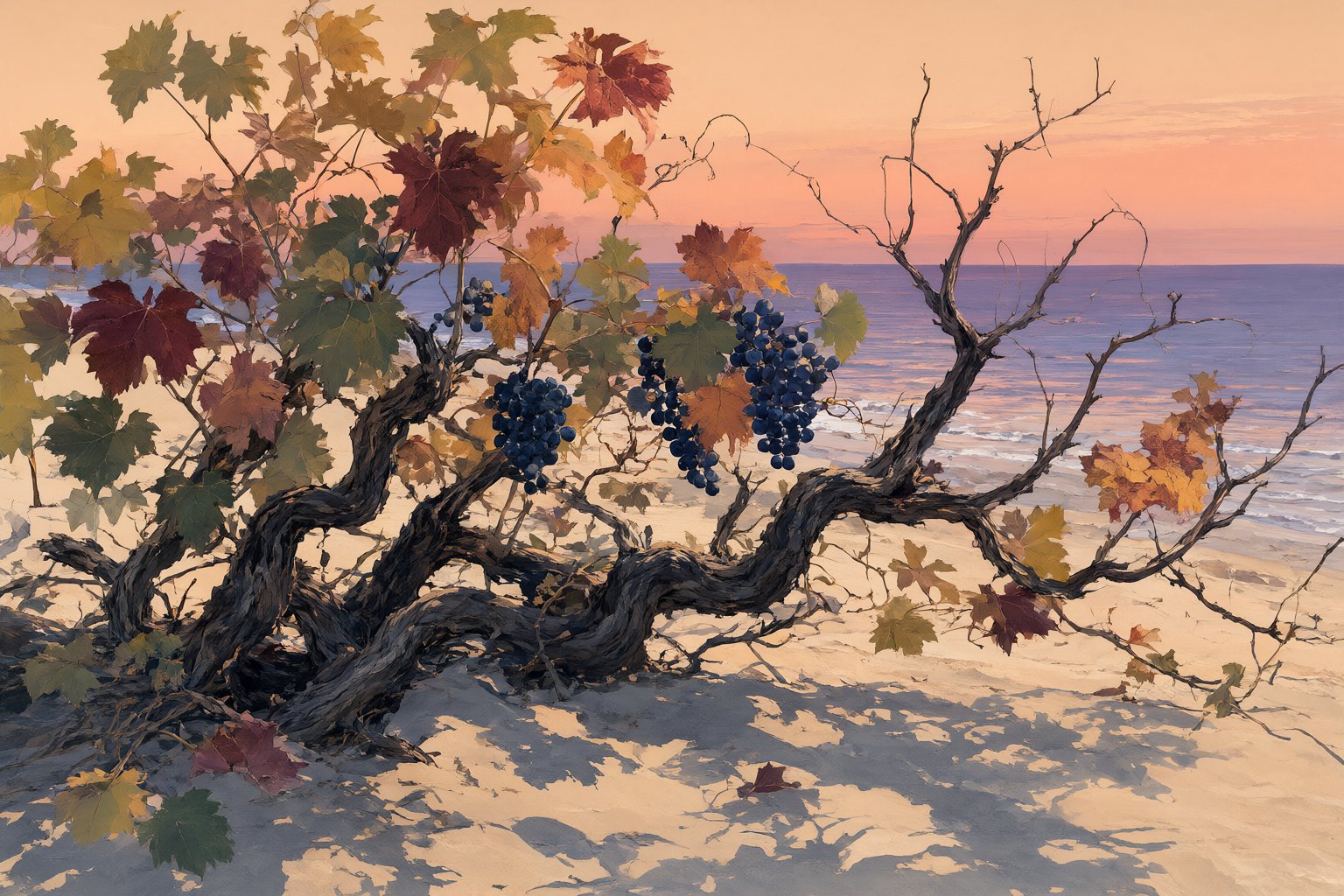
For much of the twentieth century Carignano was the grape people were ashamed of. It yielded enormously, gave colour and acidity, ended up in tankers and then in anonymous demijohn-sized bottles. When Europe decided to pay farmers to grub up surplus vineyards, it was among the first to be sacrificed, and few shed a tear. On Thursday 29 October 2026, the last Thursday of the month as tradition dictates, the wine world will instead devote an entire day to it: International Carignan Day. A rehabilitation in due form, and for once a deserved one.
A grape named after a town
The name gives away its origins. Ampelographers tend to place the cradle of Carignano at Cariñena, a small town in Aragon south of Zaragoza, from where it is thought to have spread along the shores of the Mediterranean. Along the way it collected names: Carignan in France, Mazuelo in Rioja, Samsó or Carinyena in Catalonia, Carignano in Sardinia, Carignane in the United States. There are also rare white- and grey-berried mutations, which have survived above all in Roussillon.
Its character is not to everyone’s taste. It buds late, ripens late, suffers from powdery and downy mildew, and if left to its own devices produces huge yields. In return it brings with it high natural acidity, plenty of colour and angular tannins, sometimes decidedly austere. Badly made, from young, overcropped vines, it gives hard, anonymous reds. From old vines, pruned short and farmed without irrigation, it shows a different face: black fruit, pepper, liquorice, a Mediterranean herbaceousness and above all a freshness that in hot climates is worth its weight in gold.
It is precisely this dual nature that explains the day on 29 October. What is being celebrated is not Carignano in the abstract, but the idea that a grape considered fit only for quantity can become one of quality when it meets the right soil and someone willing to wait for it.
France: from the tanker to the rescue of old vines
No country tells the story of Carignano’s rise and fall better. In 1988 it was the most widely planted grape in France, with about 167,000 hectares concentrated in the Midi. Then came the uprooting schemes funded by the European Union and the switch to Syrah, Grenache, Merlot and Cabernet: by 2000 the area had fallen below 96,000 hectares, by 2009 to around 53,000. The table wine that had slaked France’s thirst for decades, often blended with robust reds imported from Algeria, where Carignano was the workhorse par excellence, no longer had a market.
What remained, however, is often the best: old bush vines on the hills of Corbières, Minervois, Faugères, Saint-Chinian and in Roussillon, where yields collapse of their own accord and the grapes reach a concentration that the vineyards of the plains never knew. In the region there has also been a great deal of work in the cellar, for example with carbonic maceration, which softens the tannins and lets the fruit run free. The result is reds less muscular than one would expect from the south, with a rustic streak that is part of their charm.
Spain: the Cariñena paradox and the glory of Priorat
There is an irony in the Spanish story. In Cariñena, one of the country’s oldest appellations, the grape that bears the town’s name is today a minor presence: the scene is dominated by Garnacha, which alone covers a large share of the vineyard. Carignano remains, but in the background.
Its revenge comes further east, in Catalonia. In Priorat, one of only two Spanish appellations of the highest rank alongside Rioja, Samsó (or Carinyena) grows next to Garnatxa on llicorella, the dark, crumbly slate that forces the roots to dig deep. Here old vines on vertiginous terraces have helped to build one of Spain’s most celebrated reds, powerful but held upright by the very acidity that Carignano carries with it. It is also found in neighbouring Montsant and, under the name Mazuelo, in Rioja blends, where it serves to give backbone to Tempranillo.
Chile and Sardinia: sand, drought, time
The most interesting case of the last fifteen years comes from the other side of the world. After the 1939 earthquake, the Chilean ministry of agriculture encouraged farmers in the Maule to plant Carignano, valued for its acidity and moderate alcohol, useful for propping up País. With the arrival of acidification in the cellar those vineyards were forgotten, but not uprooted. And so, decades later, a group of producers rediscovered them and founded VIGNO, Vignadores de Carignan: an association with its own rules, stricter than an appellation’s. To bear the name a wine must contain at least 70% Carignano from vines at least thirty years old, bush-trained and unirrigated, in the dry-farmed secano of the Maule, with at least 24 months of ageing between cask and bottle and the approval of a tasting panel. Sources disagree on the exact year of its founding, somewhere between 2009 and 2011.
And then there is Sardinia, which we have already covered on Vinofilo in our guide to the island. Suffice it to recall that in the Sulcis Carignano grows on sandy soils hostile to phylloxera, often still on its own roots, bush-trained and lashed by the mistral. The Carignano del Sulcis DOC has existed since 1977 and is probably the reason many Italians know this grape without realising how far it has travelled.
What to open on 29 October
The most enjoyable way to celebrate the day is a tour of the Mediterranean in three or four bottles, opened side by side. A red from the Languedoc or Roussillon based on old-vine Carignano, perhaps a Corbières or a wine that declares its centenarian vines on the label. A Priorat in which Samsó plays a major part, to understand what happens when it meets slate. A Chilean VIGNO, recognisable by the name printed prominently, for the freshest and juiciest version. And of course a Carignano del Sulcis, the bridge between all the others.
Those who prefer a single bottle can opt for the Sardinian one, the easiest to find in Italy. Serve the reds at around 16-18 degrees; the young versions can take a few degrees less. At table Carignano calls for substantial food: lamb, grilled sausages, stewed pulses, aged sheep’s cheeses. Fish is not ruled out, if cooked with tomato and spices, as in certain coastal soups.
Carignano will never become a fashionable grape, and perhaps that is just as well. It spent a century doing the dirty work and today, in the right hands, it shows what its detractors failed to see: that quality often lies not in the grape, but in the courage to leave an old vineyard standing when everyone tells you to pull it up. On 29 October that is worth a toast too.
Practical information
- When: Thursday 29 October 2026 (the day falls every year on the last Thursday of October).
- Where: everywhere, in wine shops, restaurants and at home; on social media it can be followed with the hashtag #CarignanDay.
- Reference website: there is no single official website for the day; the date appears in the WSET calendar of grape variety days, wsetglobal.com.
❦