What wine goes with fish? White is a habit, not a rule
Raw, baked, grilled, stewed and oily fish: which wine to really choose with seafood, from taut whites to rosés and light reds served cool.
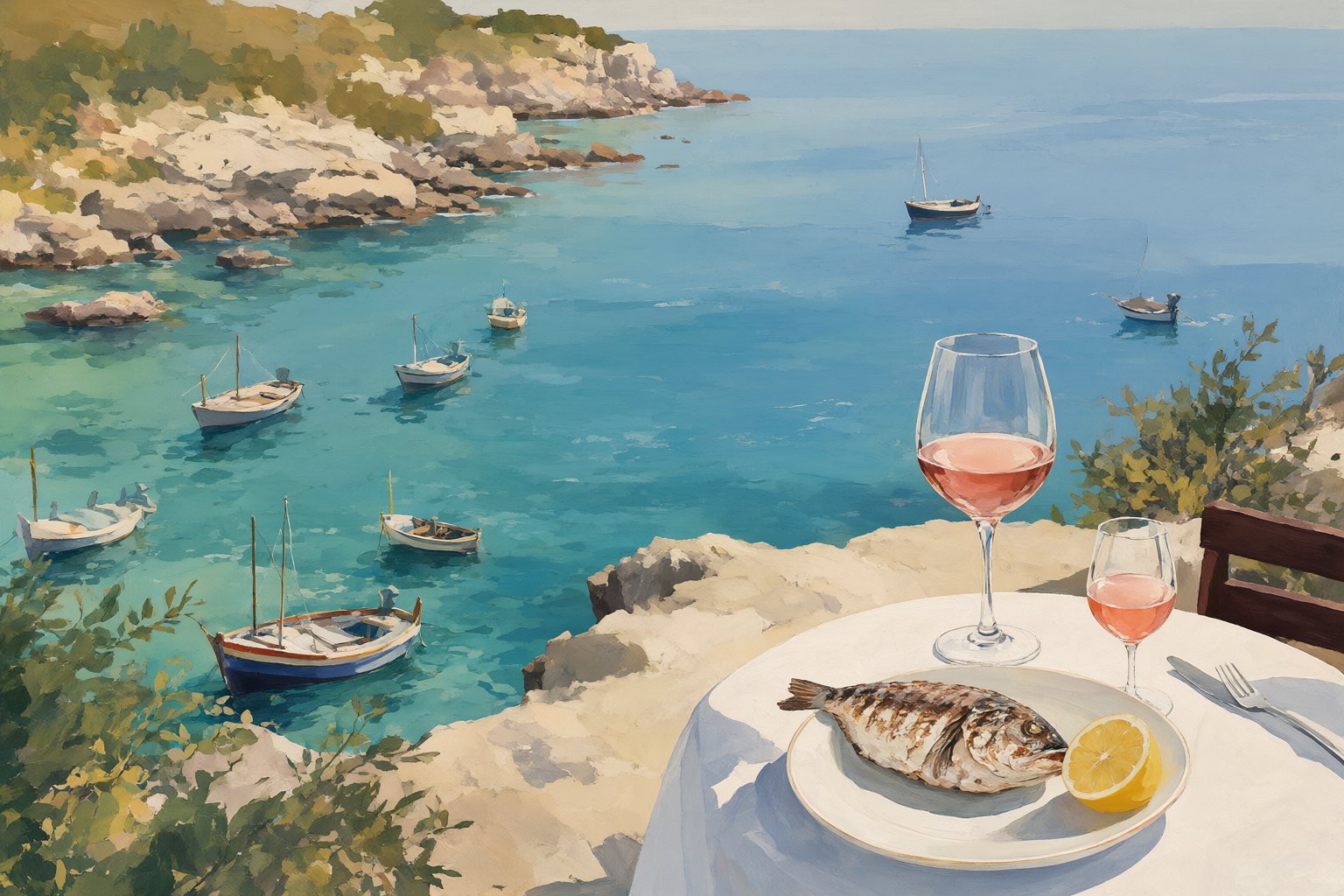
Somewhere, in every seafood restaurant in Italy, there is a waiter who raises an eyebrow when someone orders a red with the sea bream. It is a conditioned reflex, inherited from generations of menus and etiquette manuals, and like almost all conditioned reflexes it works until you ask why. The rule “fish means white wine” has a grain of truth in it, but it has been inflated into dogma. And dogmas, at the table, cost you a great many good bottles.
Where the rule comes from (and where it breaks)
There is a chemical reason, and it has even been measured. In 2009 two researchers from a Japanese wine company published a study in the Journal of Agricultural and Food Chemistry in which they had tasted 36 red wines and 26 whites alongside scallops. The culprit behind the unpleasant aftertaste, that metallic, “stale fish” note we all know, was not tannin as had been thought, but iron. The more iron in the wine, the more the fault was noticeable; bind the iron with another substance and the aftertaste disappeared. Reds contain more of it on average, but not all of them, and some whites have plenty.
The moral: the problem is not the colour. The problem is an unhappy meeting between certain wines and certain delicate flesh, especially raw or barely seared. Add to this plain gustatory common sense. A massive, oaky, alcoholic red flattens a steamed sea bass like a lorry hitting a bicycle. But the same goes for a fat, barrique-aged white. The right question is not “white or red?” but “how heavy is the dish, and what is in it apart from the fish?”. The dressing, almost always, matters more than the species.
Raw fish, where the rules are right
If there is one territory where caution is required, this is it. Carpaccio, tartare, oysters, raw langoustines and prawns call for taut, saline, almost cutting wines that clean the mouth without masking the sweetness of the flesh. Here white wins almost every time, and not out of conformity. A very dry traditional-method sparkling wine, a young Verdicchio, a coastal Vermentino, a Muscadet with oysters (a pairing so classic it has become a cliché, but for a good reason) do what is needed: acidity, salt, no oak.
Pale rosé, the onion-skin kind, comes into play with tuna or amberjack tartare dressed with oil and citrus, where the flesh is firmer and more sanguine. Reds, with raw fish, are the exception to be handled with tongs: if you must, a very light one served cool with tuna, but it is a gamble, not a rule.
Oven and grill, the free zone
As soon as fire comes in, the conversation changes. The grill adds toasty, bitter notes, the crust, the smoke; the oven concentrates flavours and often brings potatoes, olives, cherry tomatoes and herbs along with it. These are dishes that can take wines with more structure, and here young, lean whites actually risk vanishing.
With baked sea bream or sea bass, medium-bodied whites with a hint of ripe fruit work well: a Fiano, a Greco, a Verdicchio with a few years behind it. With the grill, especially if the fish is firm-fleshed (swordfish, tuna, amberjack, monkfish), characterful rosés take centre stage. Cerasuolo d’Abruzzo, with more colour and more fruit than many Provence rosés, Chiaretto from Lake Garda, the rosés of the Salento: they have the acidity of a white and a little of the substance of a red.
And this is where the light red stops being a scandal. A slender Pinot Nero, a Schiava from Alto Adige, a Sicilian Frappato, a Ciliegiolo, served at around 14 degrees, with a steak of grilled tuna or swordfish, are not remotely transgressive. Low tannin, lively acidity, crunchy red fruit: it is a red that behaves like a rosé with a little more conviction.
Stews, where red plays at home
If there is one dish that ought to silence the purists, it is cacciucco. In Livorno they say it without beating about the bush: with that thick soup of fish, tomato and chilli, served on toasted bread rubbed with garlic, you drink red. It makes sense. Tomato brings acidity and sweetness, chilli brings heat, the sieved fish base an almost meaty texture. A delicate white retreats into a corner; a young Sangiovese or a red from the Tuscan coast keeps pace.
The same reasoning applies to many Italian fish stews: the soups and brodetti of the Adriatic, polpo alla luciana (octopus stewed with tomato), cuttlefish with peas, baccalà alla livornese or alla vicentina. The richer the sauce in tomato, onion, olives and capers, the more sense it makes to think of a fresh, low-tannin red, or at least a structured rosé. Where the stew is in bianco, made with wine, garlic and parsley, you can happily go back to a full-bodied white.
Oily fish, the testing ground
Anchovies, sardines, mackerel, horse mackerel: the most democratic fish in our seas is also the hardest to pair. It is oily, full-flavoured, sometimes assertive to the point of aggression, and is often cooked in ways that amplify all of this: marinated in vinegar, fried, a beccafico with breadcrumbs and raisins, in saor with sweet-and-sour onions.
The key word is acidity. You need a wine that cuts through the fat and refreshes the mouth with every bite. Dry sparkling wines, even the simplest, are almost infallible with fried anchovies. Savoury, nervy whites such as a Ligurian Vermentino, a Falanghina or a Grillo go well with grilled sardines. With mackerel, which has the darkest and oiliest flesh of all, a dry rosé or a very light, fresh red often works better than an overly delicate white. The one thing truly to avoid is a soft, slightly sweet wine: with oily fish it becomes cloying within two sips.
The dogma, filed away
Nobody is arguing that an Amarone goes with oysters. The rule of white with fish grew from a sound intuition: wines that are too heavy, too tannic and, it seems, too rich in iron ruin delicate flavours. But turning it into an absolute ban means ignoring half of Italy’s seafood cooking, the half made of grills, tomato, chilli, olives and capers.
Our advice is simple: look at the dish, not the animal. Raw and delicate, a taut white or a sparkler. Fire and flavour, a rosé without shyness. Tomato and spice, a light, fresh red, served a little cooler than usual. And the next time the waiter raises an eyebrow at a Ciliegiolo with the cacciucco, you can return the look with all the serenity of someone who has chemistry and Livorno on their side.
❦