San Martino, the day every must becomes wine
11 November, Saint Martin’s Day: the origins of the feast, St Martin’s summer, Italy’s regional new-wine traditions and what to open on the day.
On Wednesday 11 November, rural Italy, the Italy that survives in proverbs more than in the fields, will declare the wine year closed. “A San Martino ogni mosto diventa vino”, “by Saint Martin’s Day every must becomes wine”: chemistry never signed up to this agreement, but the calendar did. And for once it pays to side with the calendar.
A soldier, a cloak, a funeral
Martin was born around 316 in Sabaria, in Pannonia, today’s Szombathely in Hungary. The son of an officer, he ended up in the army without having chosen it, and it was as a soldier, at Amiens, that he made the gesture which still earns him a place in pastry-shop windows today: with his sword he cut his cloak in half and gave one half to a beggar shivering with cold. Having left the army, he became a monk, founded Ligugé, near Poitiers, considered the first monastery in Gaul, and on 4 July 371 was acclaimed bishop of Tours.
The detail that matters to drinkers is another one. Martin died on 8 November 397 at Candes, where the Vienne meets the Loire, and was buried in Tours on the 11th. His feast day therefore marks a funeral, not a birth. But the date fell at the precise point where agricultural Europe settled its accounts: harvest over, fermentations nearly spent, livestock to slaughter before winter, contracts to renew. A charitable saint in the right place at the right time.
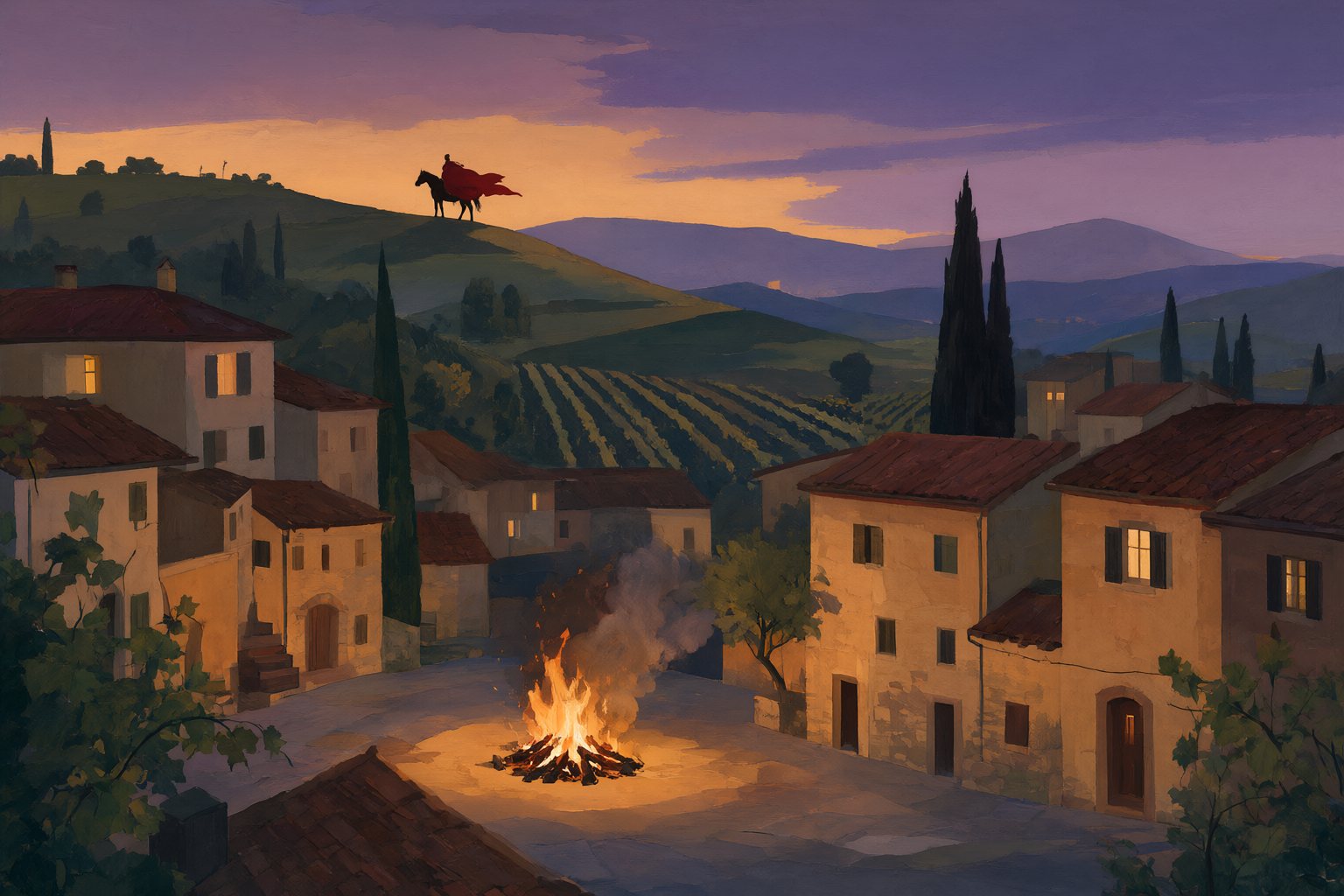
Then there is the weather. Legend has it that as soon as Martin had divided his cloak, the clouds parted and an unseasonable warmth returned, so that the saint would not suffer the cold. Hence the estate di San Martino, St Martin’s summer, that handful of mild days that often does arrive in early November and that farmers used for the last of the outdoor work. Carducci, in his Rime nuove, left the most famous snapshot of it: the mist on the hills, the sea howling under the mistral and, through the village streets, “from the seething of the vats / drifts the sharp smell of wines”. Sharp, precisely: not fragrant, not elegant. Young wine, still elbowing its way about.
Doing San Martino
For centuries 11 November was also moving day. Across much of the countryside of central and northern Italy, farm tenancies expired on Saint Martin’s Day itself: those whose contracts were not renewed loaded their belongings and their family onto the cart and set off for another holding, making the most of those mild days. Fare San Martino, “to do San Martino”, still means to move house, even if nobody does it by cart any more.
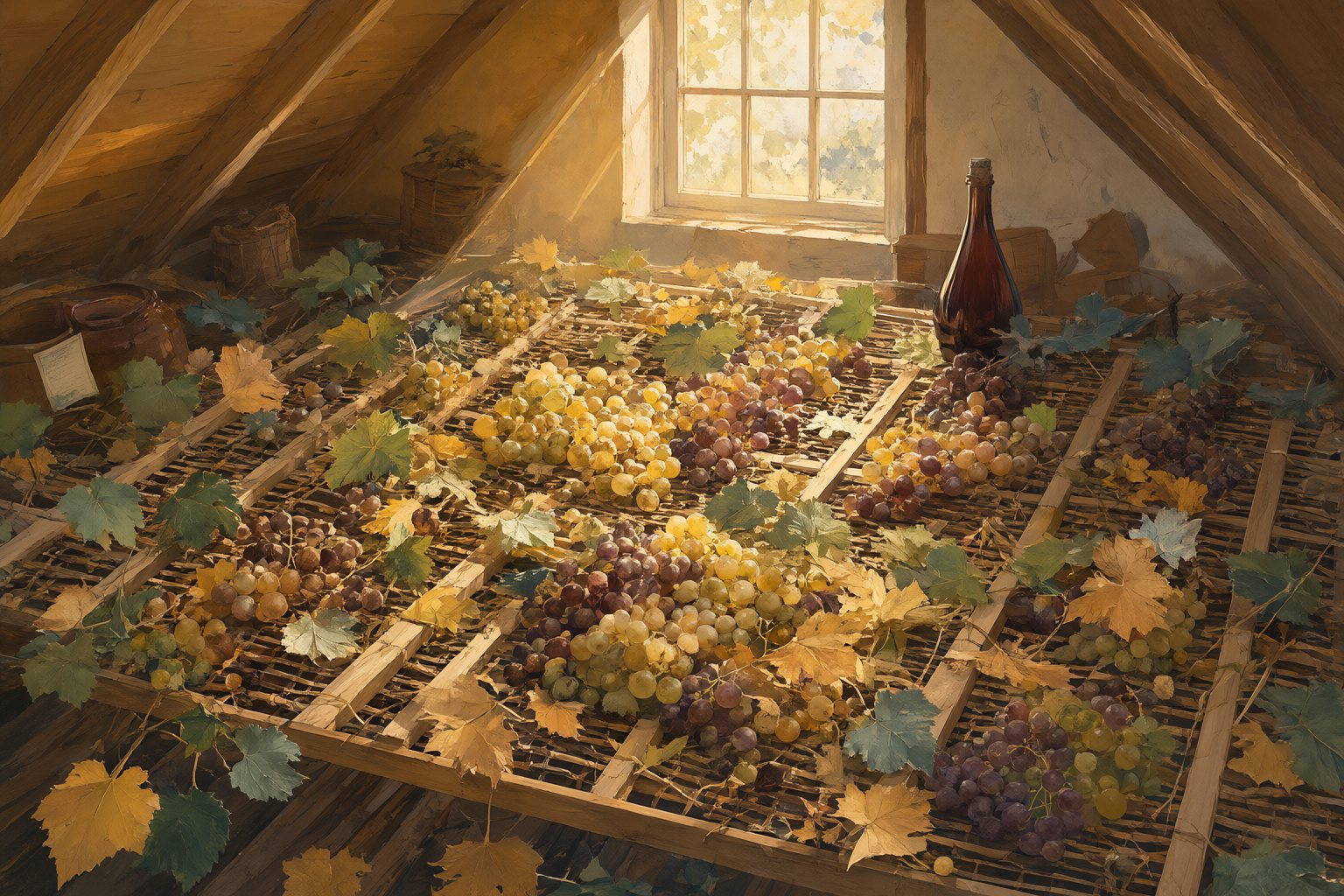
The link with wine is less romantic than it seems. Closing the farming year meant reckoning up: the harvest was divided, debts were settled, and the new wine, racked or drawn from the cask for the first time, was at once merchandise, currency and consolation. Tasting it on 11 November was not a gastronomic ritual; it was a stocktake.
Italy celebrates, region by region
The traditions are many and not always precisely documented; we confine ourselves to those with solid evidence behind them.
Sicily. Here the proverb goes “a San Martinu ogni mustu diventa vinu”, and this is perhaps the region that takes the feast most seriously at table. In Palermo and its province the star is the biscotto di San Martino, round and scented with aniseed, which by tradition is dunked in Moscato di Pantelleria; alongside it comes the muffoletta, a soft wild-fennel loaf dressed with oil, oregano, anchovies and tomato. Around Trapani the aniseed muffolette are filled with mortadella, in Siracusa they fry zippule with fennel seeds, and in Catania roast chestnuts smoke in braziers along the streets.
Abruzzo. In Scanno, on the evening of 10 November, the village’s young people set fire to the glorie: huge stacks of wood built over weeks and lit at sunset on three heights around the village, the Plaia, Cardella and San Martino. It is one of the oldest traditions in the village and, seen from below, one of the most spectacular in Italy. At table the local saying sums up the programme without beating about the bush: “A San Martino, pizza, cacio e vino”, “pizza, cheese and wine”, where the pizza is a sweet focaccia with honey, walnuts and dried figs.
Veneto. In Venice 11 November is above all a children’s festival: they roam the calli and campi banging pots and lids, ask shopkeepers for a few coins, and go home with the dolce di San Martino, a large shortcrust biscuit in the shape of the saint on horseback, covered in icing and sweets. Wine stays on the sidelines here, at least officially.
Calabria and the Marche. Biscuits filled with dried figs, nuts and vino cotto, cooked grape must, in Calabria; in the Marche, lonzino di fico, a fig loaf kneaded with almonds and sapa, reduced must. Dessert traditions, but born of the same logic: you use what the harvest and the autumn have just handed over.
Novello is not the point (but it’s there)
It is worth drawing a distinction. Vino novello has a release date fixed by law, 00.01 on 30 October, and a precise method: at least 40% of the volume must come from carbonic maceration. Saint Martin’s new wine is something else, far older and far less regulated: it is simply the wine of the vintage just made, tasted from the cask once fermentation has calmed down. The first is a product, the second a moment. The proverb is talking about the second.
What to open on 11 November
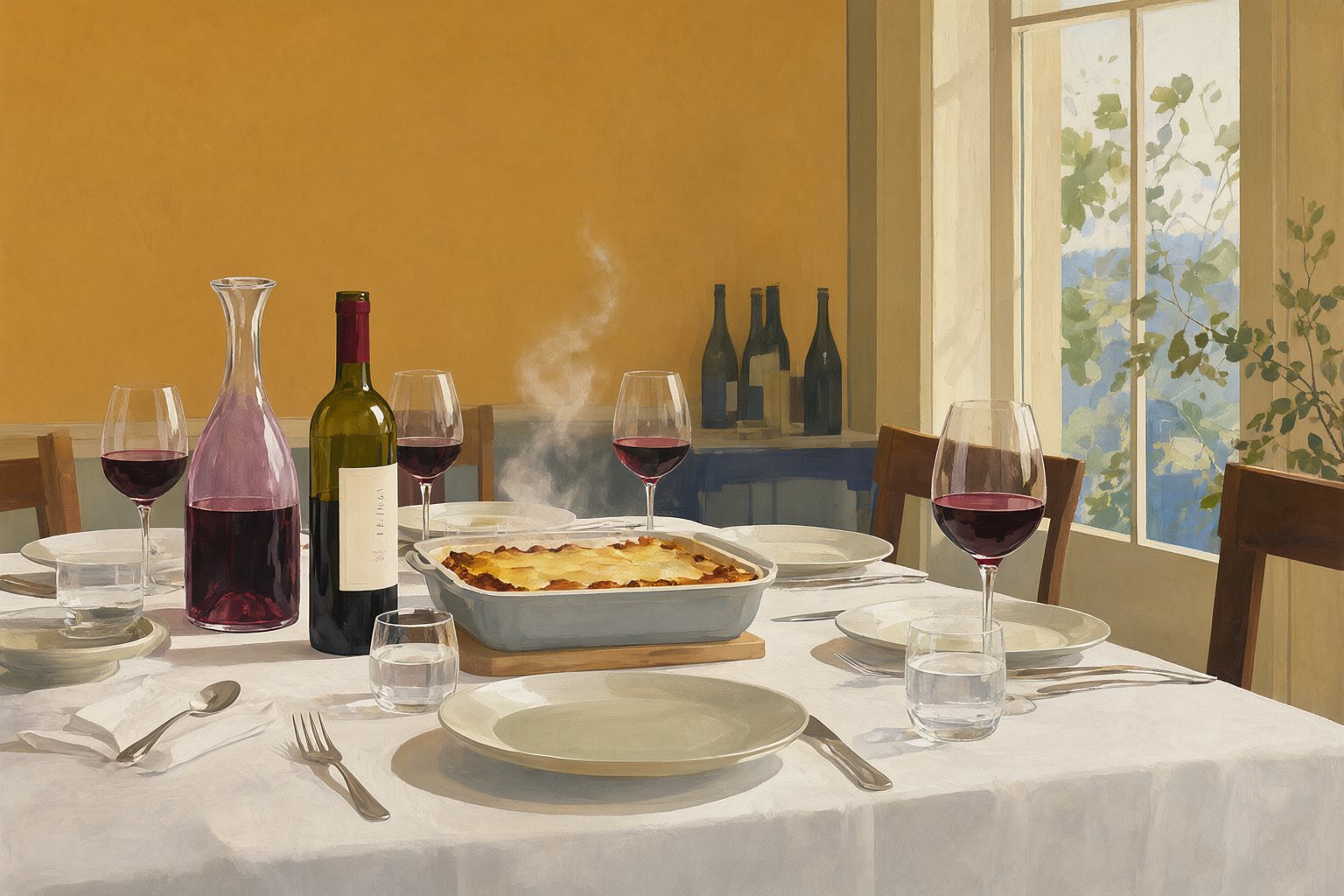
The most honest choice is also the least glamorous: the wine of the vintage, young, perhaps still a touch cloudy, bought loose or in bottle from a winery near home. Nobody expects complexity from a two-month-old wine; what you expect is fruit, freshness, a little roughness. It is Carducci’s “sharp smell”, and that is fine.
If you want to follow a region, the paths are clear. With Sicilian aniseed biscuits, a Moscato di Pantelleria, sweet but taut, does exactly what it has done for generations. With chestnuts, cured meats and the sweet Abruzzese pizza, a young, juicy red works, or else a Cerasuolo d’Abruzzo, which has the structure of a red and the thirst-quenching quality of a rosé. Anyone who wants a novello will have found it on the shelves for almost two weeks already: it is the most obvious companion for roast chestnuts, as long as you drink it cool and don’t expect miracles.
What we advise against is the important bottle set aside “for an occasion”. San Martino is not that occasion. It is a feast of settling accounts, of moving house and of bonfires, and it calls for wines that need no explaining.
In substance, the proverb is cleverer than it looks. It does not say the wine is ready; it says that from that day on you may call it wine. It is an act of faith in the vintage, made in public, with hands still stained with must. We have fewer of those than we need.
Practical information
- When: Wednesday 11 November 2026, the liturgical feast of Saint Martin of Tours.
- Where: throughout Italy, with particularly heartfelt celebrations in Sicily (Palermo and its province), Abruzzo and Veneto (Venice).
- The glorie of Scanno (AQ): traditionally on the evening of 10 November, lit at sunset on the heights around the village. Exact times should be checked locally or with the Comune di Scanno.
- Official website: there is no single website for the feast; for local events it is best to consult the websites of the Comuni and the pro loco, the local tourist associations.
❦