Smoke, fat and tannin: the best wine for a barbecue
Ribs, bistecca alla fiorentina, lamb, chicken, vegetables and fish from the grill: which Italian wine to choose, why it works and at what temperature to serve it.
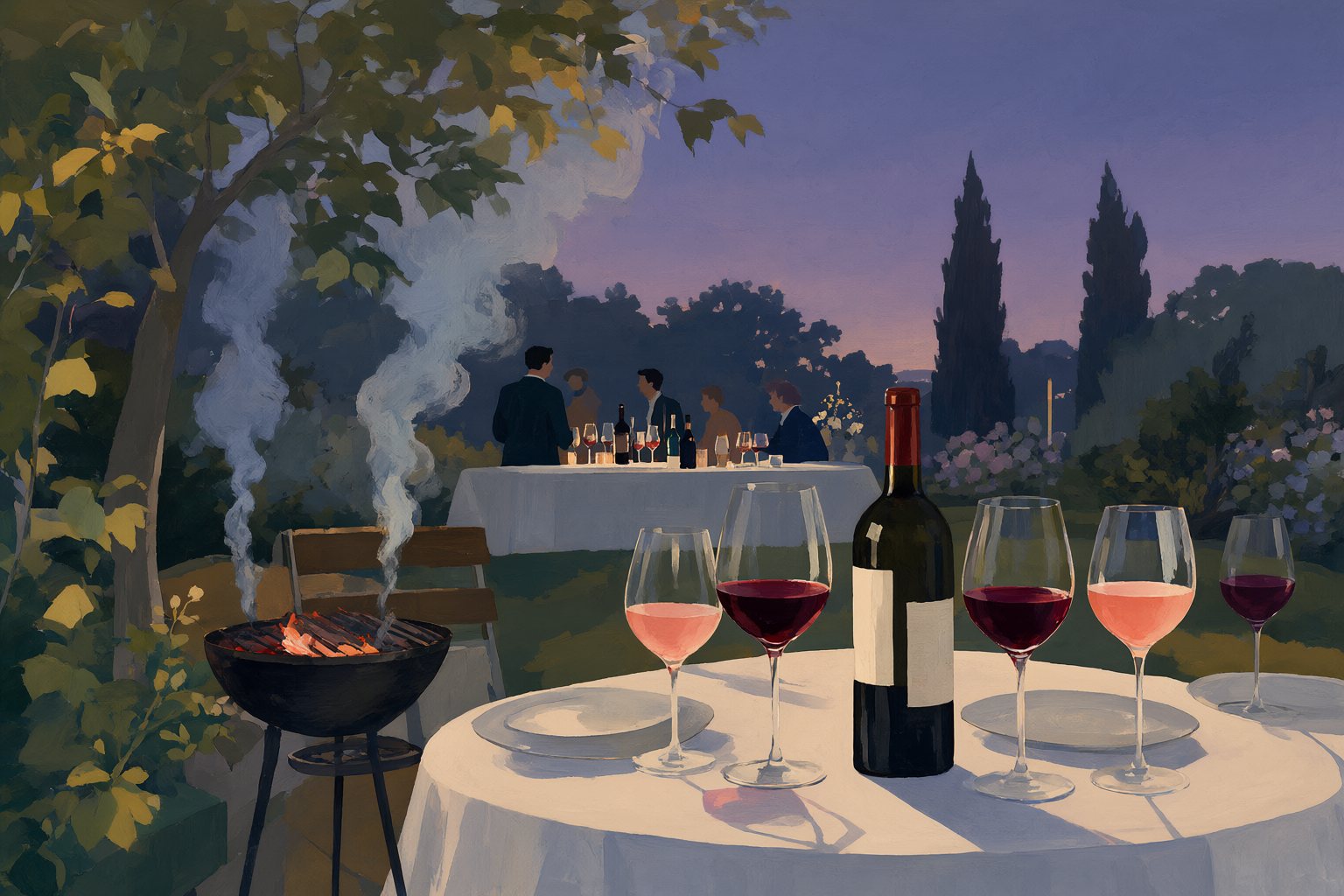
The barbecue is the most democratic meal there is and, paradoxically, the one at which people drink worst. The wine arrives lukewarm, in plastic cups, chosen because “a red goes with meat anyway”. Then the sausage tastes smoky, the red tastes like warm stock and nobody understands why. And yet the grill is one of the most generous grounds for food and wine pairing: you need only think about three things, namely fat, smoke and tannin, and remember that it is hotter outdoors than in the dining room.
Three forces at play
Fat is the first party to the conversation. Ribs, sausages, pancetta and lamb leave an oily film in the mouth that calls for something capable of “cleaning”: a wine’s acidity does this job, and so does tannin, that rough sensation that dries the gums. Tannin binds with proteins and fats and, in the presence of a well-marbled steak, stops seeming aggressive. That is why a young, slightly angular red, which seems hard on its own, suddenly turns gentle beside grilled meat.
Smoke is the second. The caramelised crust and toasty notes of the grill get on well with wines that have ripe fruit and a certain softness, while they exacerbate heavily oaked ones: smoke on smoke, in the long run, becomes tiring. And smoke amplifies bitterness, so a red with green or over-extracted tannins risks turning astringent.
The third element is sauces and marinades: sweet barbecue sauce, chilli, citrus, herbs. The sugar in a sauce makes wine seem thinner and more acidic; heat from chilli gets on famously with fruit but suffers with high alcohol, which only fans the flames. If jars of sauce are doing the rounds of the table, choose wines that are fruity rather than austere.
Ribs, sausages and Puglia in the glass
For pork, fatty, sweet and often glazed, the South sets the example. Primitivo, above all in its Manduria version, has dark, ripe fruit, soft tannins and generous alcohol: it holds up to a glazed rib without being crushed, and its roundness copes well even with a slightly sweet sauce. The only caveat is its often high alcohol: with chilli it needs to be handled with judgement.
Salento’s Negroamaro is darker in its spice and a touch more bitter on the finish, and it is perfect with sausage, which needs that slightly bitter flick to balance the salt and wild fennel. Salento, moreover, is rosé country: Leone de Castris’s Five Roses, from 1943, is often cited as the first rosé bottled in Italy. A Negroamaro rosé with some body is one of the best wild cards at a barbecue, because it has the freshness for white meats and the structure not to disappear in front of pork.
A more northerly route is Barbera: restrained tannin, very lively acidity, crunchy fruit. With sausages and ribs it does exactly the fat-cutting job required, and it takes happily to being drunk cool.
Tagliata, fiorentina, lamb
Steak is when tannin really earns its place. Faced with a bistecca alla fiorentina, cooked as Tuscan tradition demands, thick and rare, the natural reference is Chianti Classico, in which Sangiovese must make up at least 80% of the blend. High acidity, dense tannin, notes of cherry and violet: it is a wine born to sit beside meat and coarse salt, not to be sipped in the drawing room. A young vintage works beautifully; the more evolved Riservas risk losing their nuances amid the smoke and the noise.
Montepulciano d’Abruzzo, which by regulation contains at least 85% Montepulciano grapes, offers more flesh and more colour, with abundant tannins that are usually less taut than Sangiovese’s. It is the red for tagliata, sliced grilled steak, with rocket and grana, but also for arrosticini, the little lamb skewers that in Abruzzo have never needed an introduction to this wine. The same grape gives Cerasuolo d’Abruzzo, a designation in its own right since 2010: an intensely coloured rosé, almost a light red, ideal when there is a bit of everything on the grill.
For lamb, with its more aromatic fat and wild note, Cannonau di Sardegna is an almost obvious choice. It is the same grape known in Spain as Garnacha and in France as Grenache; the basic production rules require at least 85% Cannonau. Ripe red fruit, spice, herbs of the macchia, the Mediterranean scrub: with scottadito lamb cutlets, rosemary and a wisp of smoke, they understand each other perfectly.
Chicken, vegetables and fish: red is not compulsory
Pollo alla diavola, spatchcocked devilled chicken, or marinated wings sit halfway: lean meat, but crisp skin and often spices. Here structured rosés and light reds give their best, from Barbera to Cerasuolo by way of Salento rosé. The same goes for grilled vegetables: peppers, aubergines and courgettes have sweetness and bitter, charred notes that a substantial tannin exacerbates. Better a full rosé, or a white with some substance.
Fish from the grill is the case where it pays to shake off dogma. An oily fish, such as mackerel, sardines or a steak of tuna or swordfish, copes very well with a structured rosé or a low-tannin red served cool. High tannin in contact with fish, on the other hand, tends to leave a metallic sensation: it is one of the easiest wrong pairings to taste. For gilthead bream and sea bass, more delicate, you go back to whites.
The detail that changes everything: temperature
The most useful advice concerns not the label but the ice bucket. The classic guidelines place reds between 16 and 20°C, the lighter ones towards the bottom of the range and the more structured towards the top. But those figures assume a cellar, not a garden at the end of July, where a bottle left on the table climbs above 25°C within minutes. At that temperature the alcohol takes over, the fruit flattens and even a good Primitivo tastes like warm jam.
The solution is simple: serve reds a little cooler than you would indoors, with half an hour in the fridge or a few minutes in a bucket of water and a little ice, and let them warm up in the glass. Lighter reds and Barbera cope well with an even lower temperature; rosés should be served cool but not ice-cold, otherwise aromas and body vanish. And ice in the glass, however common, waters the wine down and solves nothing.
In the end, a barbecue does not call for great bottles but for the right ones. A well-chosen southern wine served at the correct temperature beats a prestigious red left out in the sun, no contest. If you must err, let it be on the side of coolness: in front of a lit grill, it is the easiest mistake to forgive.
❦