Italia Nostra’s Red List: the beauty we risk losing
The Red List of endangered cultural heritage is now online. Why it matters to wine lovers too, since wine comes from the very landscape that needs protecting.
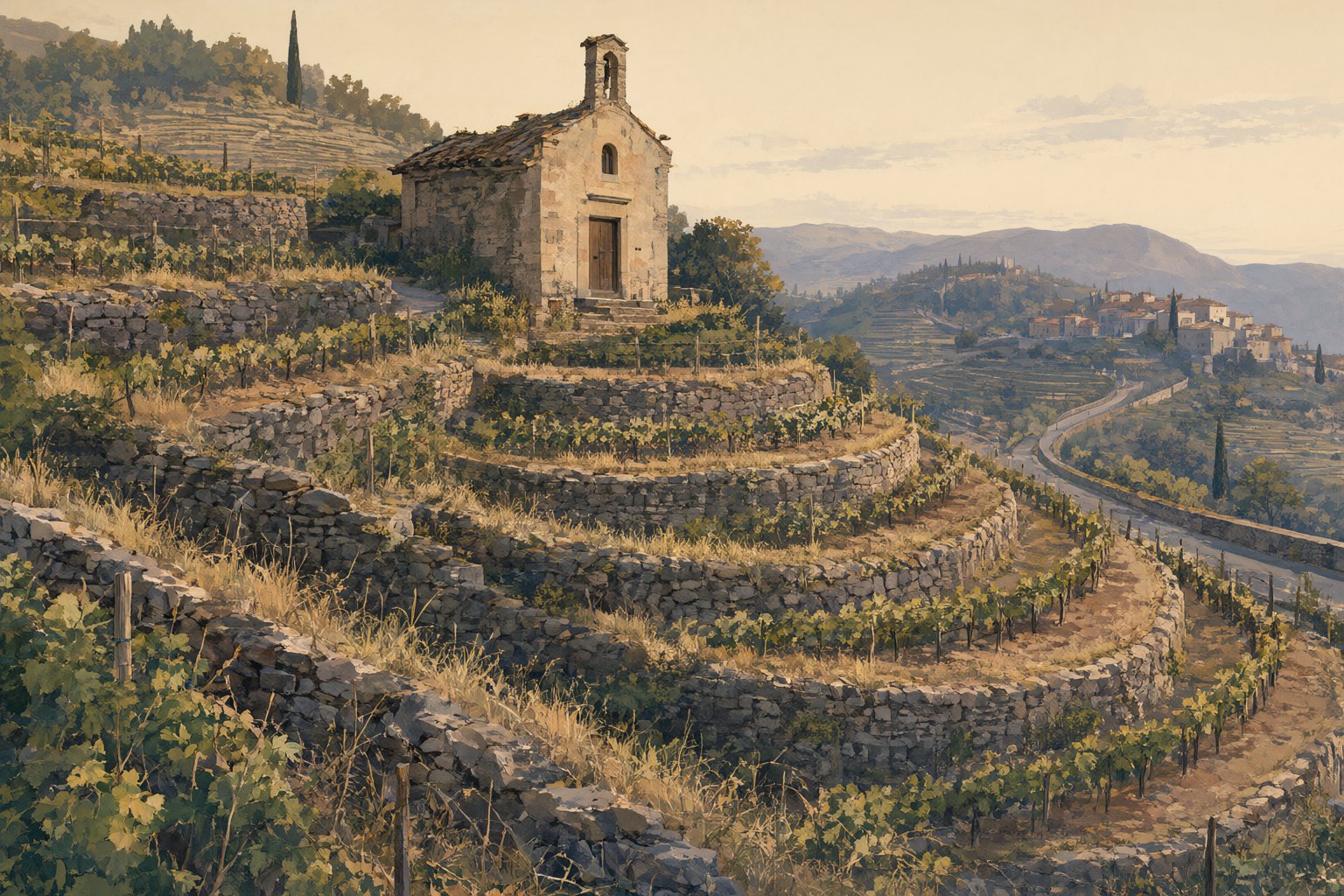
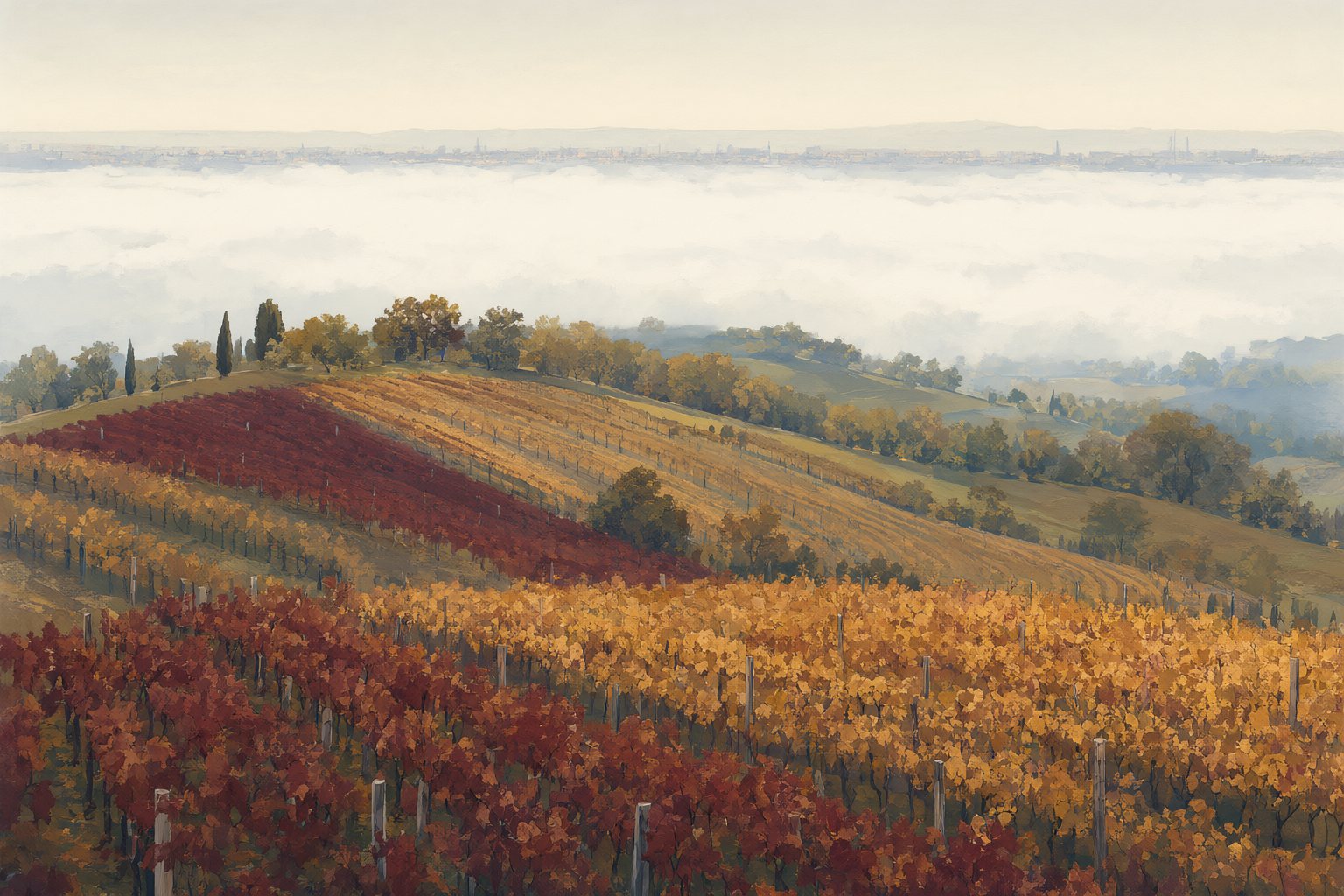
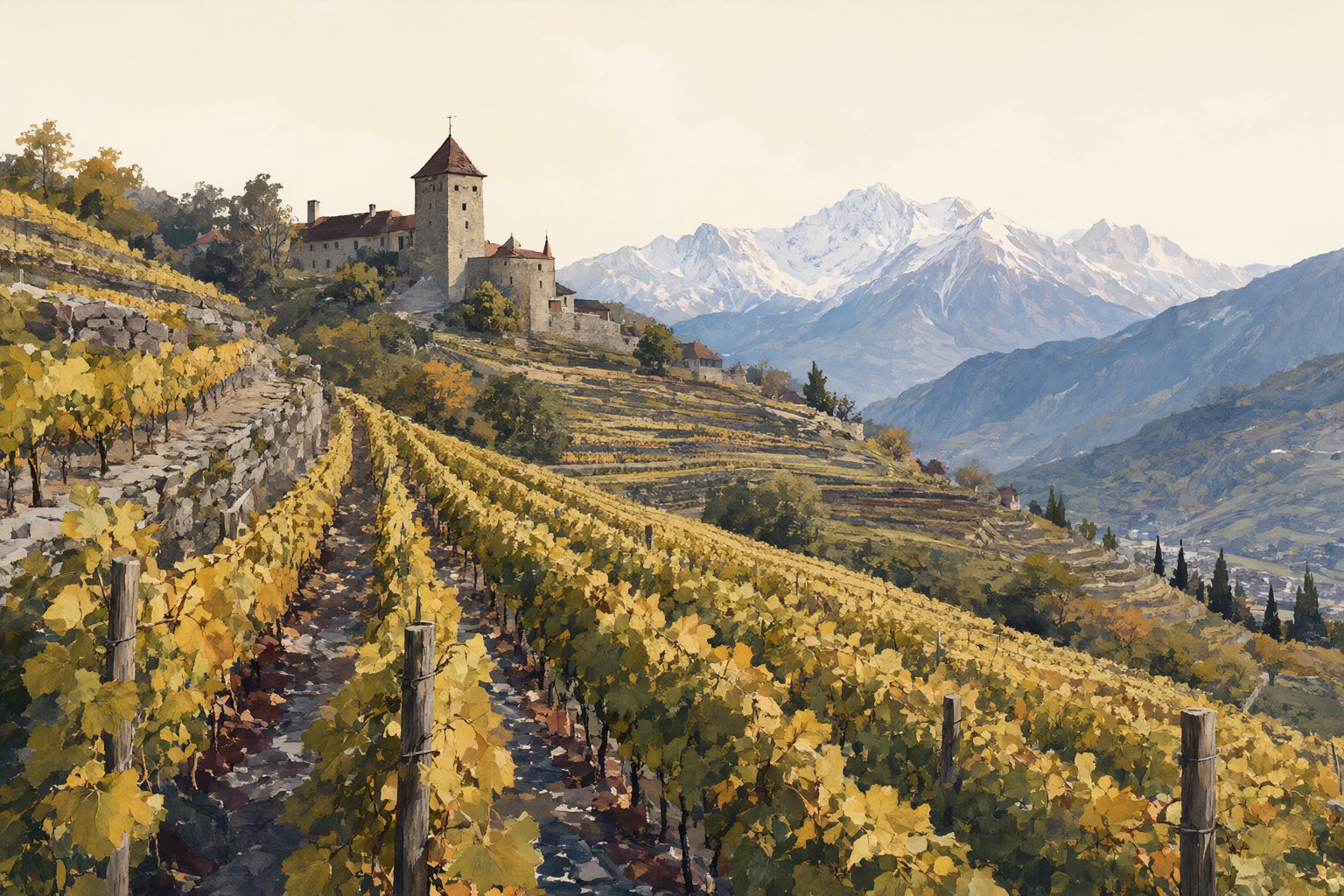
Every Italian bottle carries a place on its label. Not an invented brand, not just any grape: the name of a village, a hill, a valley. Barolo, Montalcino, Soave, Cirò. When we drink a wine of place, we drink a landscape too, with its country chapels, its hilltop villages, its dry-stone walls, the villas and farmsteads that have held it together for centuries. That is why a piece of news that seems far from the glass matters to anyone who loves wine: Italia Nostra’s Red List, the census of Italy’s endangered cultural heritage, has been open to anyone online since this autumn.
What the Red List is
Italia Nostra, the association founded in 1955 to defend the country’s historical, artistic and natural heritage, has been collecting reports of at-risk sites since 2011. The project was born after the collapse of some ancient walls at Pompeii on 6 November 2010, when it became plain that even the most famous places could crumble in a climate of indifference. The first campaign gathered more than 150 reports.
It works from the bottom up. Ordinary citizens point to a closed church, an abandoned palace, a historic garden overrun with brambles, a forgotten archaeological area; the association checks, and if the report holds up, the site goes on the list. In fifteen years 520 reports have come in, 402 of them validated. Today the Red List contains 341 sites, divided into 23 categories, from places of worship to disused industrial sites, from gardens to landscapes.
The novelty, presented by president Edoardo Croci, is that what was an internal working tool is becoming public. There is an interactive map, and a page for each site with photographs, ownership, original and current use, accessibility and a state of conservation measured on six levels, from good to irreversibly compromised. And there is a form for reporting new cases.
The numbers of a fragile geography
The regions with the most sites at risk are Lazio with 44, Campania with 41 and Piedmont with 40; Valle d’Aosta has one. Places of worship are the most exposed category. Alongside the main list there are two others that tell the possible outcomes. The Green List collects 58 resolved cases, sites saved through interventions and restorations. The Black List, the shortest and the bitterest, holds three irreversible losses: the former Anzani factory in Monza, the former fruit and vegetable market in Piacenza and the remains of the little church of San Poletto in Monfalcone.
It must be said honestly, as Italia Nostra itself acknowledges: the census rests on spontaneous reports and does not cover the territory systematically. The numbers do not say how many sites are truly in danger in Italy; they say how many someone took the trouble to point out. It is a map of attention before it is a map of decay.
The landscape that ends up in the glass
Anyone who spends time in wine country knows this fragility well. The hills where the great Piedmontese reds are born are dotted with country chapels and farmsteads; the Tuscany of Sangiovese is made of Romanesque pievi (rural parish churches) and farmhouses; in the South the vines live alongside masserie (fortified farms), towers and palmenti carved into the rock, the ancient basins where grapes were trodden and left to ferment. It is a widespread heritage, often minor, almost never in the spotlight. And it is exactly the kind of heritage that a list built from the bottom up can intercept.
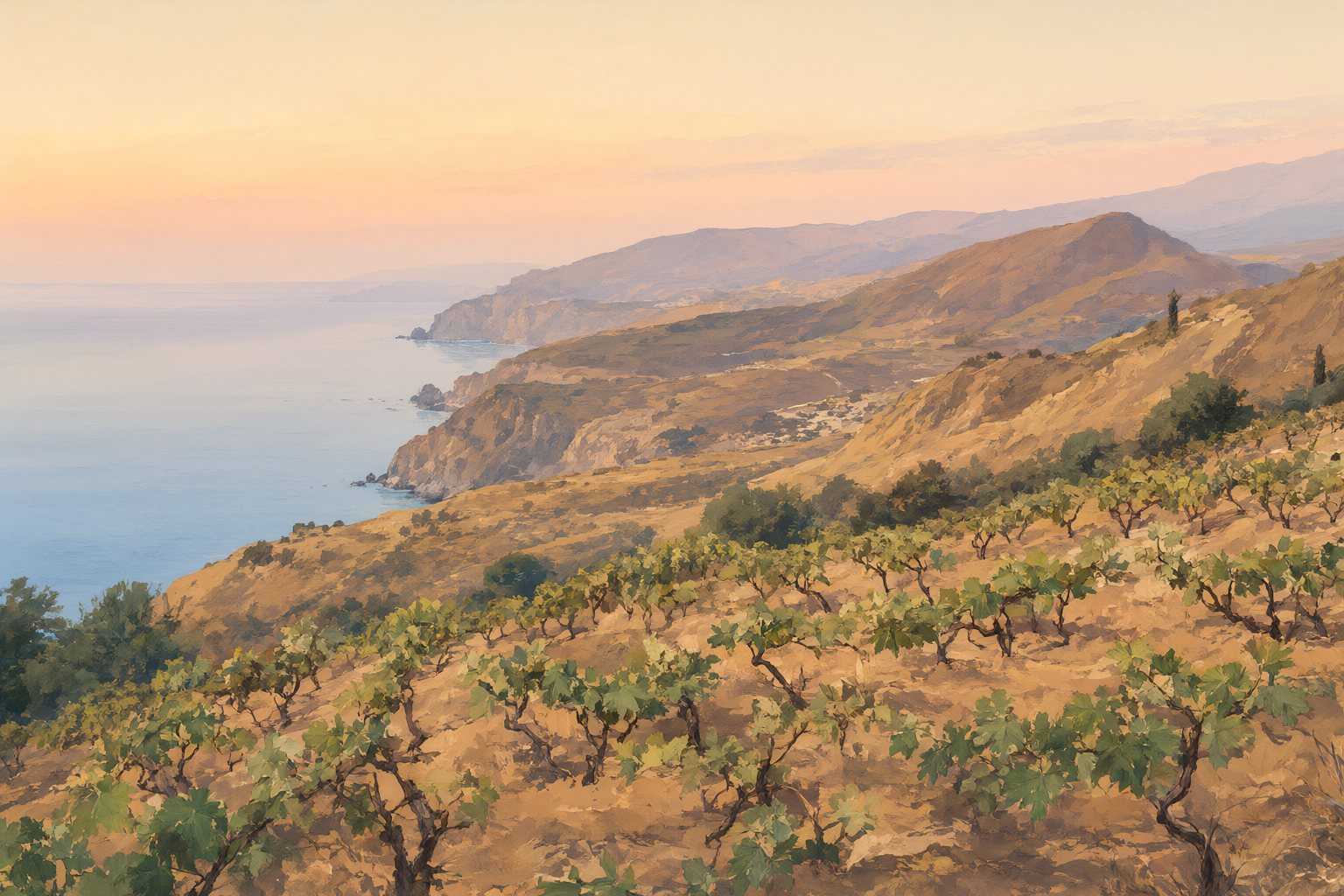
The wine world, after all, has already shown that it knows what a landscape is worth. In 2014 UNESCO inscribed the wine landscapes of Langhe-Roero and Monferrato on the World Heritage List, and in 2019 the Prosecco hills of Conegliano and Valdobbiadene; the agricultural practice of the head-trained vine of Pantelleria was added to the intangible heritage list, also in 2014. These are recognitions that reward precisely this interweaving: the soil, the grape, the work of people and the architecture that accompanies it.
Terroir, a word we love to use, is not only geology and climate. It is also the built memory of a place. A dry-stone wall collapsing on a terrace, a country church losing its roof, a village emptying out will not take a single degree off the alcohol, but they take something from the meaning of that wine. In 2011 Italia Nostra had already placed the terraces of Liguria, the famous fasce, among the most endangered rural landscapes in the country: a warning that applies to all of Italy’s heroic viticulture, from Valtellina to the Cinque Terre.
What wine lovers can do
The first step is the simplest: look at the map. The next time you plan a winery visit or a weekend among the vines, it is worth checking whether there is a Red List site nearby. These are often extraordinary places that appear in no wine-tourism guide, and a visit, a photograph, a story are already a way of keeping them alive.
The second is to report. Anyone who wanders hills and back roads sees things that escape the institutions: the chapel with cracks in its walls, the farmhouse with its roof caved in, the old press abandoned under a portico. The online form exists for this.
The third concerns producers. Many wineries have restored historic buildings, recovered terraces, reopened private chapels to visitors. This work deserves to be recognised and told, because it shows that the wine economy and the protection of the landscape can move in the same direction.
Beauty is not renewable
It is often said that Italian wine sells an idea of Italy before it sells a liquid. That is true, and it carries a responsibility. That idea is made of real places, and real places wear out, are forgotten, collapse. A vineyard can be replanted in a few years; a Romanesque pieve, once lost, does not come back. The online Red List will not save a single building on its own, but it takes away everyone’s alibi of not knowing. Those who raise a glass to the territory would do well to take a look.
❦