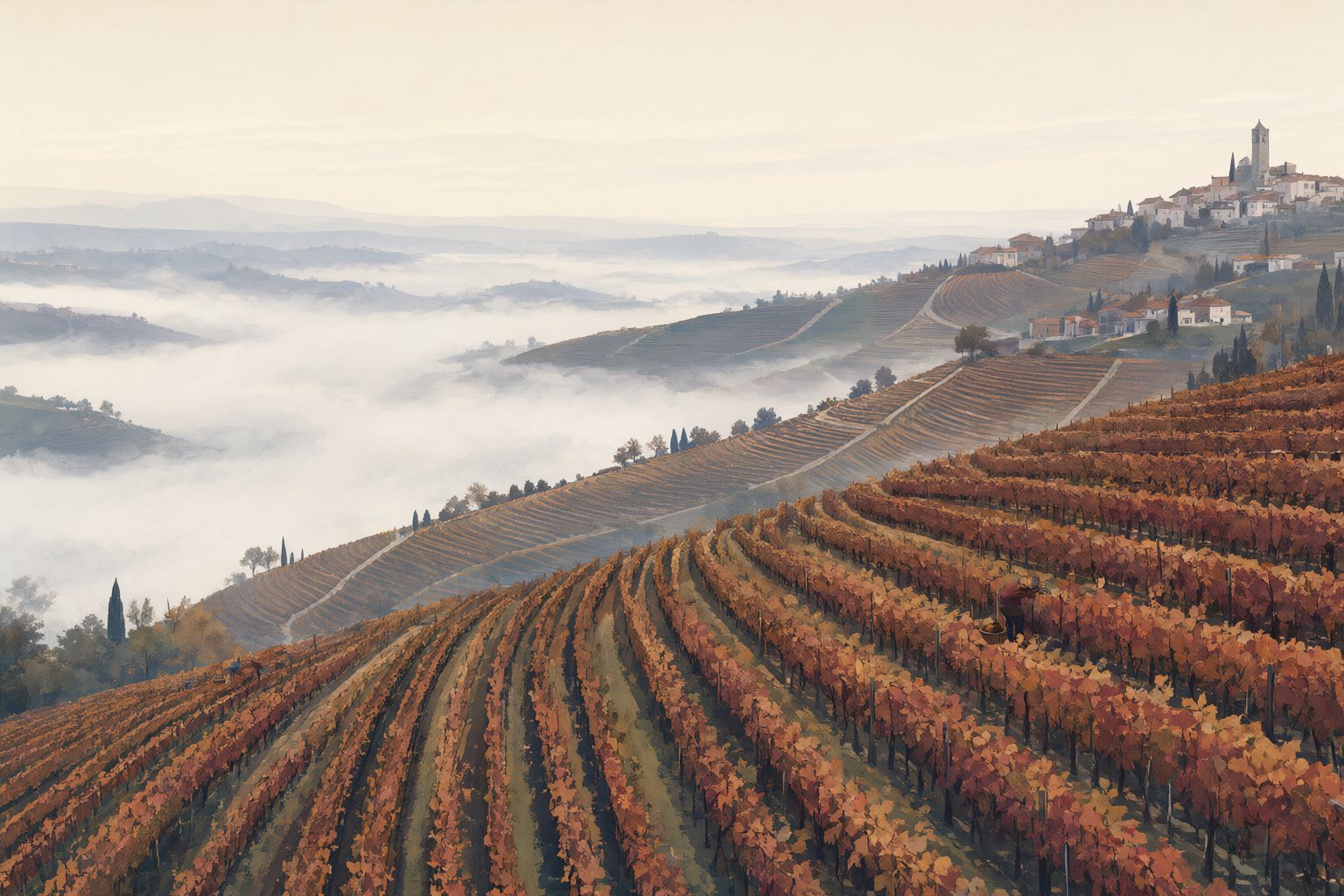
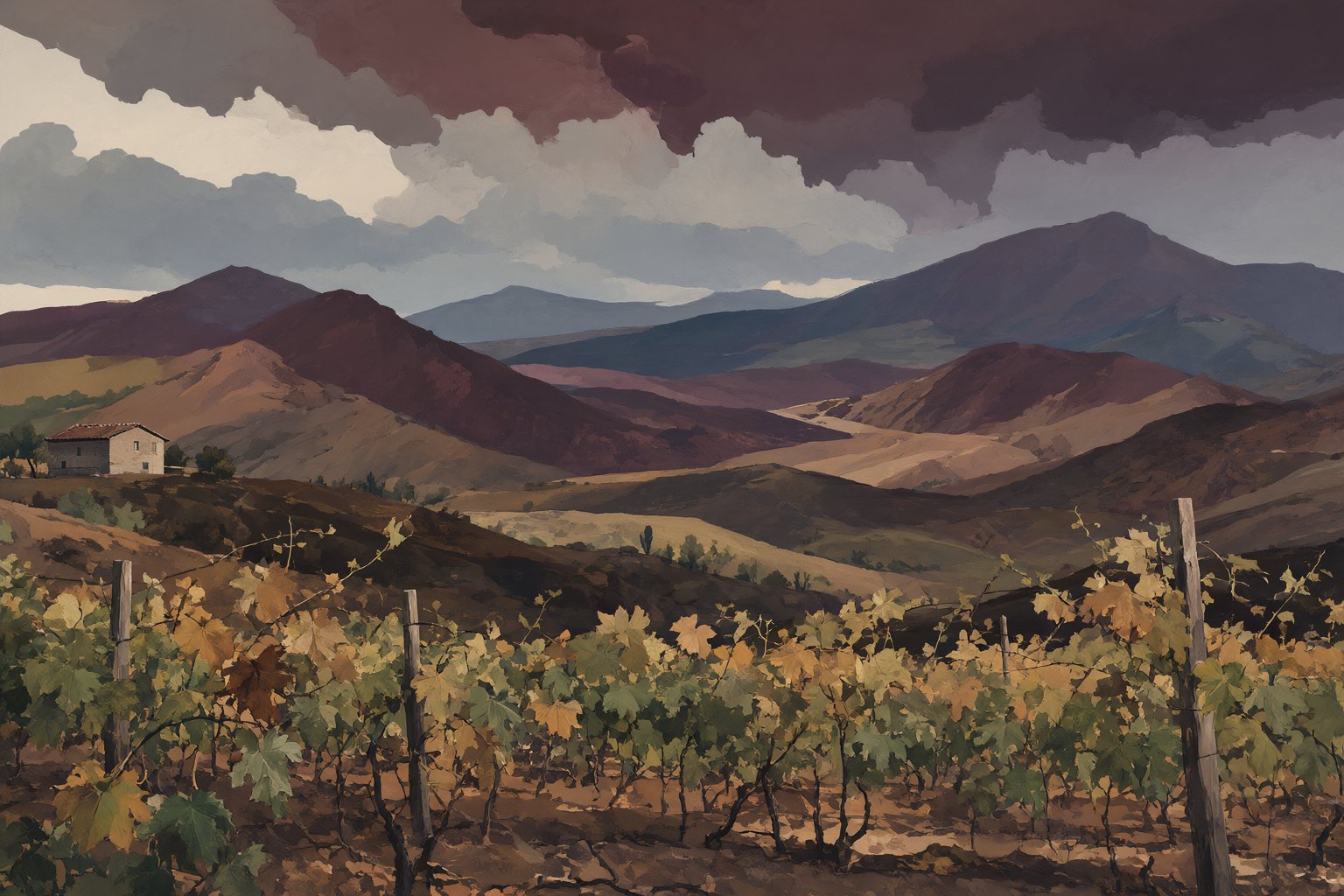
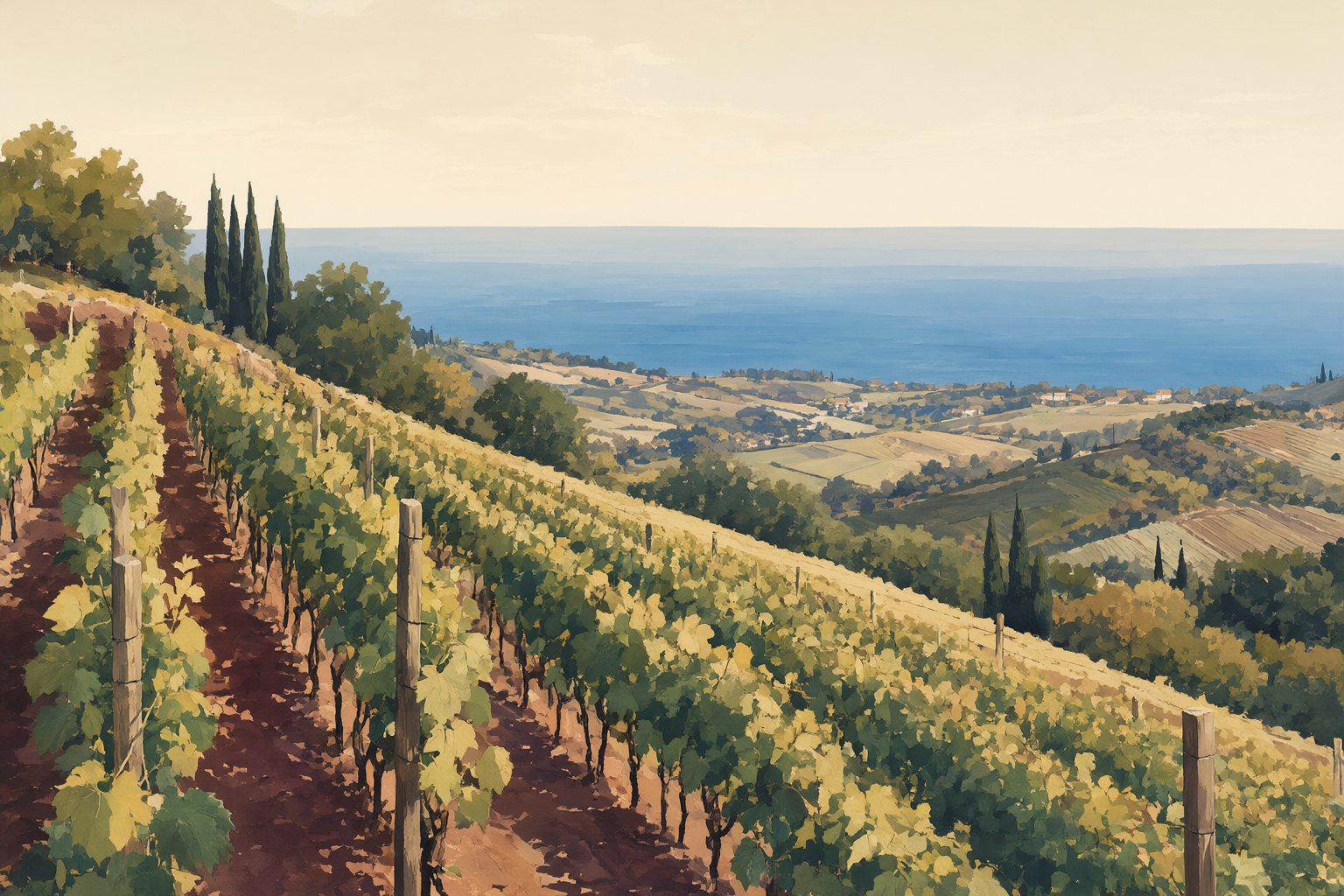
Sangiovese, one grape with a hundred faces (and no identity papers)
Chianti Classico, Brunello, Nobile, Morellino, Romagna: why the same Sangiovese changes its face on every hill, and why it fools everyone blind.
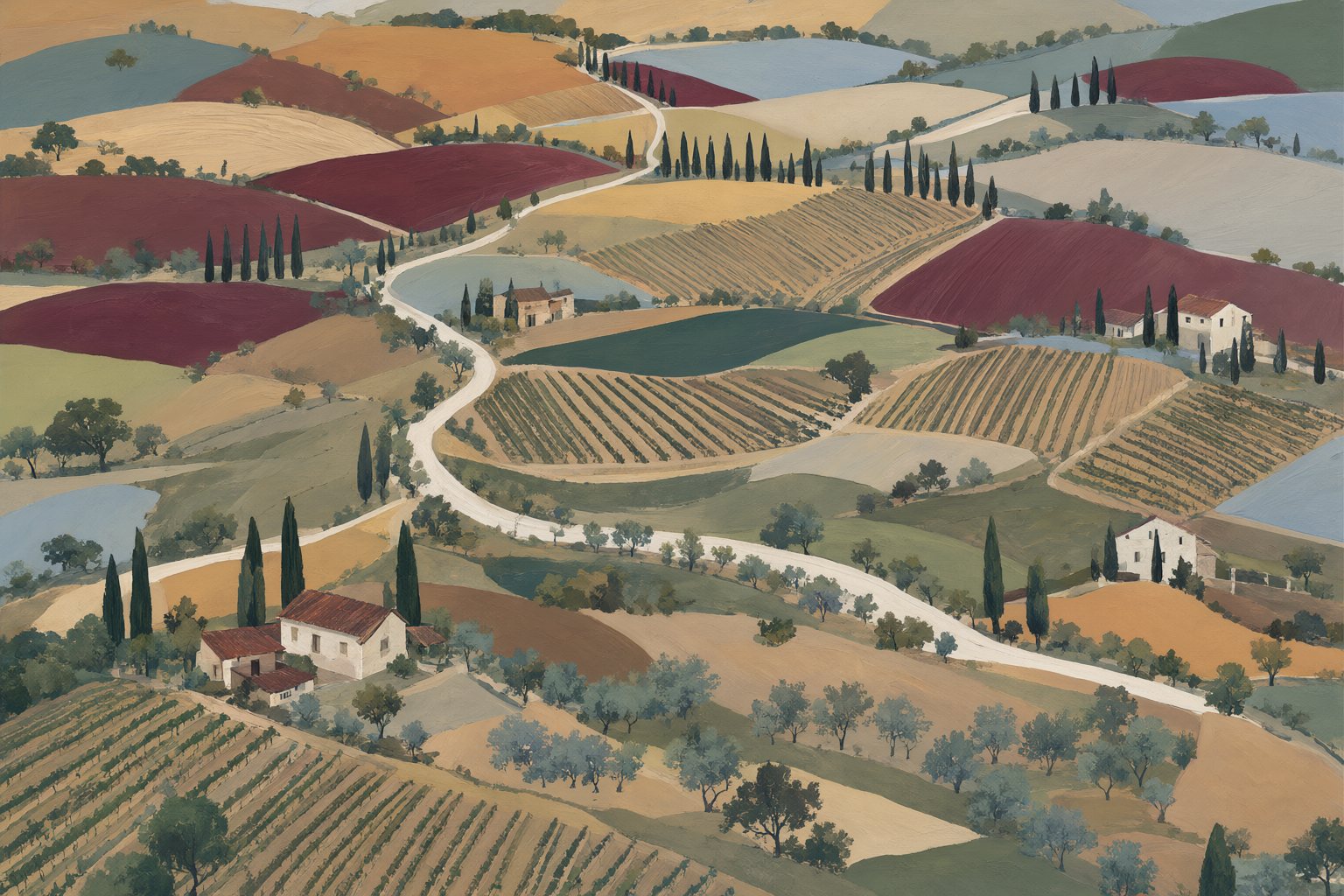
If Sangiovese were a person, it would have a wardrobe full of passports. In Chianti Classico it goes by Sangioveto, in Montepulciano by Prugnolo Gentile, in Scansano by Morellino, and in Montalcino it has simply taken the name of the wine and is called Brunello. In Romagna, where it was perhaps born, nobody has ever asked it to change its name. And that is precisely the paradox: Italy’s most widely planted red grape, present on about a tenth of the country’s vineyards according to data gathered in the early 2000s, is also one of the hardest to recognise once the label is removed.
It is not a flaw. It is its character. Sangiovese does not stamp its signature on the land: it is the land that signs it.
One DNA, many identity cards
The first written mention accepted by historians dates back to 1590, when the Florentine agronomist Giovanvettorio Soderini wrote of a “Sangiogheto” capable of making excellent wine, provided one knew how to handle it, and otherwise inclined to turn to vinegar. Four centuries later the warning still holds.
Its origin has long been debated. A DNA analysis carried out at San Michele all’Adige with the participation of the geneticist José Vouillamoz identified as its parents Ciliegiolo, from Tuscany, and Calabrese di Montenuovo, an extremely rare grape from the South. Another study later cast doubt on the direction of the relationship with Ciliegiolo, and the debate among geneticists is not entirely settled. As for the name, the most romantic etymology derives it from “sanguis Jovis”, the blood of Jupiter, and attributes it to the monks of Santarcangelo di Romagna. It is a lovely story; whether it is also true is another matter.
More useful, for understanding the hundred faces, is the distinction proposed in 1906 by the ampelographer Girolamo Molon between Sangiovese “grosso” and “piccolo”. Today we know the reality is more fragmented: Sangiovese is a population of biotypes and clones that differ in berry size, bunch compactness and skin thickness. In the 1970s and 1980s many vineyards were replanted with clones chosen for quantity, and the result showed in the glass: pale, acidic, rather thin wines. The best-known response was the Chianti Classico 2000 project, launched in 1987 with the University of Pisa: after sixteen years of work, out of more than two hundred clones identified in the vineyard, seven of Sangiovese were registered (plus one of Colorino), with smaller berries, thicker skins and looser bunches. In plain terms: more colour, more concentration, less rot.
In Montalcino the Biondi Santi family history credits Ferruccio, at the end of the nineteenth century, with the decision to vinify only a large-berried Sangiovese selected on the Greppo estate, and names 1888 as the first vintage of Brunello. From that line descends the clone bearing the house’s initials, BBS11. How much the clone counts compared with everything else, however, remains a matter of debate.
The map of the rules
Then there are the disciplinari, the production rules, which already explain half of the differences. Brunello di Montalcino, a DOC since 1966 and a DOCG since 1980, must be pure Sangiovese, with at least two years in wood and release no earlier than 1 January of the fifth year after the harvest. Chianti Classico, an independent DOCG since 1996, requires at least 80% Sangiovese; for the Gran Selezione, the changes approved in 2023 raise the minimum to 90% and ban international varieties from the blend, alongside the arrival of the Unità Geografiche Aggiuntive, which allow the commune or village to be named on the label.
Vino Nobile di Montepulciano, a DOCG since 1980 like Brunello, starts from a minimum of 70% Sangiovese, but the new category bearing the name of the Pievi, the twelve historic subzones, rises to 85% and requires vines at least fifteen years old. Morellino di Scansano, a DOCG since the 2007 vintage, demands at least 85%. In Romagna, basic Sangiovese requires at least 85%, while the subzones, from Modigliana to Predappio to Bertinoro, can impose higher thresholds.
That alone is enough to show that “Sangiovese” on a label is no guarantee of identity: a Nobile may contain almost a third of other grapes, a Brunello not a single berry.
Soil, altitude, sea
The hills do the rest. Sangiovese ripens late, has thin skins and is sensitive to every variation in exposure and temperature: it is a seismograph that records everything.
In the heart of Chianti Classico the vineyards often climb above 400 metres and sit on galestro, a schistous marl that crumbles between your fingers, and on alberese, a compact limestone. Here the grape tends to give taut, lifted wines, with acidity to the fore and aromas recalling violets and cherries that are not quite ripe. In Montalcino the climate is warmer and drier, Monte Amiata shields the vineyards from storms, and the differences between the cooler northern slope and the sunnier southern one are enormous: Sangiovese gains body, tannin and depth, and the long compulsory ageing does the rest.
In Montepulciano, clays and sands often give wines with softer tannins and a rounder texture. Heading down towards the Maremma, at Scansano, the closeness of the sea and the heat produce a sunnier, more immediate, fruit-driven Sangiovese, more often designed to be drunk young. And in Romagna, on the hills rising towards the Apennines, among sandstones, marls and the calcareous spungone of certain areas, the grape can be rustic and generous on the plain or surprisingly fine and vertical in the higher subzones, on which Romagna is staking its bid to shake off its reputation as a tavern wine.
The blind-tasting problem
And here we reach the sore point. Anyone preparing for sommelier exams knows it: blind, Sangiovese is a trap. The colour is a ruby of medium intensity, often already showing orange glints after a few years, and it can suggest Nebbiolo. The high acidity and red-cherry fruit bring it close to Pinot Noir from certain areas. The tobacco, leather and wood notes of long ageing can recall a Tempranillo from Rioja. The descriptors the manuals attribute to it, sour cherry, violet, tea leaf, dried herbs, a certain earthy note, are real but not exclusive.
The real difficulty, though, is not telling it apart from other grapes: it is recognising where it comes from. A Brunello from a cool vintage on the northern slope may resemble a high-altitude Chianti Classico more than the latter resembles a Chianti Classico from Castelnuovo Berardenga, the warmest and most southerly part of the appellation. International blending partners, where permitted, and new oak muddy the waters further still. In practice, the question “is it Sangiovese?” has reasonable answers; the question “which Sangiovese?” often does not.
A hundred faces, no mask
One could read all this as a weakness, a grape with no personality of its own. We read it the other way round. Grapes with an unmistakable character, the ones you can recognise from three metres away, talk above all about themselves. Sangiovese talks about the place, the vintage, the hand of whoever made the wine, and it does so with an almost embarrassing sincerity: if the vineyard is wrong, if the yield is excessive, if the vintage was difficult, you can taste it.
The recent reforms, from the UGAs of Chianti Classico to the Pievi of Montepulciano to the subzones of Romagna, all point in the same direction: stop selling “Sangiovese” and start selling its places. It is the right choice. A grape with a hundred faces does not need a single mask: it needs more precise maps.
❦