Timorasso, the white wine Piedmont had forgotten it had
From half a hectare in the 1980s to the Derthona name: how Timorasso from the Colli Tortonesi came back from extinction, and why it now divides opinion.
At the end of the 1980s Timorasso covered less than a hectare of vineyard. Not less than a hectare within one appellation: less than a hectare in the world, scattered across a few mixed rows in the hills behind Tortona, kept alive more out of habit than conviction. Today it exceeds five hundred hectares, counts more than a hundred estates in the growers’ consortium, and the consortium itself has decided to halt new planting authorisations because the rush was getting too fast. In under forty years a grape variety has gone from intensive care to a waiting list. It is worth understanding how.
A noble grape nobody wanted any more
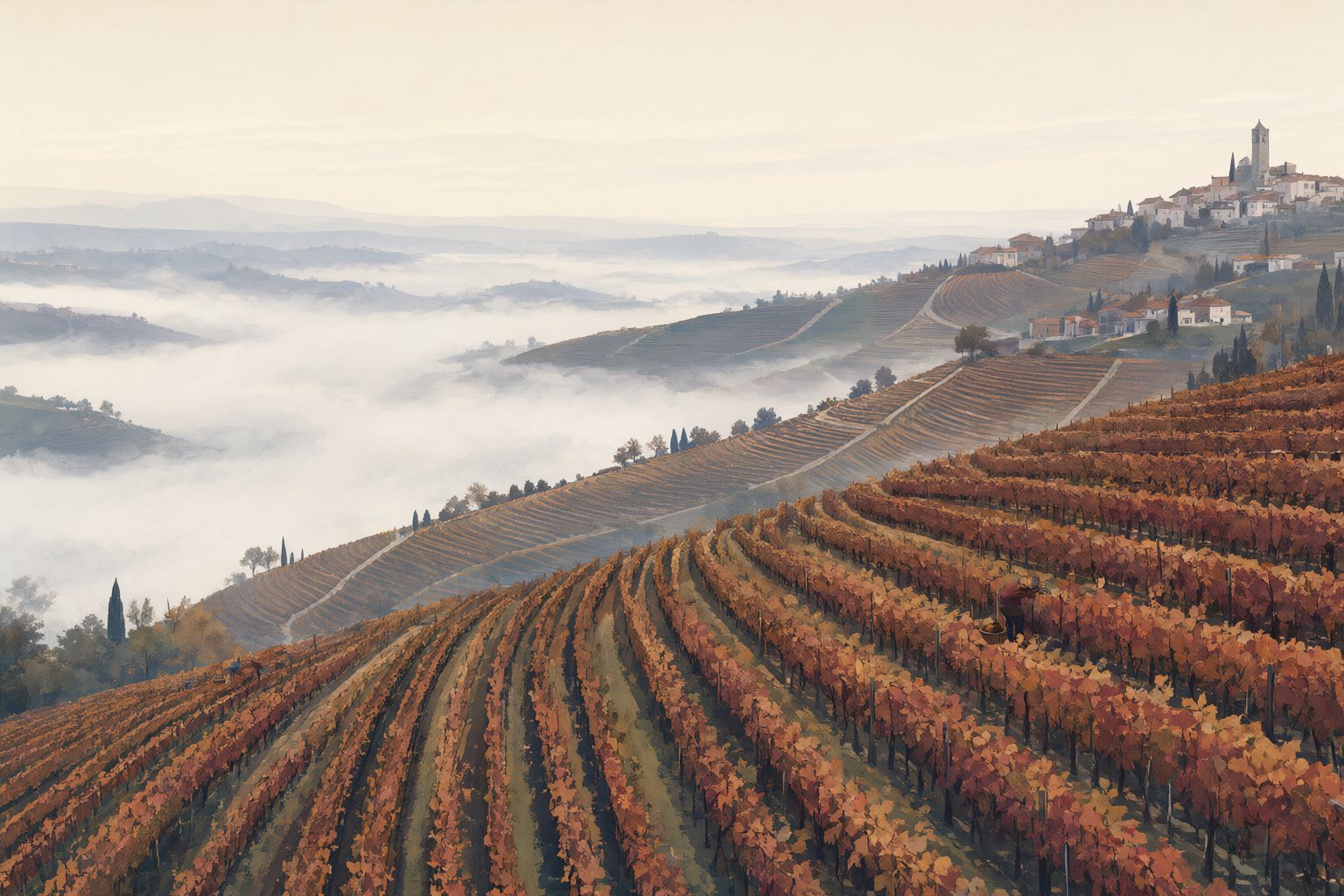
Timorasso is not a recent invention sold back to us as something ancient. In the Tortona hills, in the south-eastern corner of Piedmont where the province of Alessandria already looks towards Lombardy and Liguria, it has been documented for centuries, and until the nineteenth century it was considered a quality grape, grown well beyond the Colli Tortonesi.
Then came phylloxera, and with the replanting of the vineyards came the peasant common sense of the twentieth century. Timorasso is an awkward variety: it ripens late, yields little, has compact bunches that fear humidity, and fruit that oxidises easily if handled carelessly. Those replanting after the catastrophe were looking for something else. In the Colli Tortonesi the choice fell on reds, Barbera and Croatina, and, for white, on Cortese, more generous and easier to sell. Timorasso remained in the mixed vineyards as a supporting player, then not even that. The appellation rules themselves now allow it maximum yields well below those of Cortese: a technical detail that tells you, in figures, why the grandparents gave up on it.
Walter Massa and the five hundred bottles
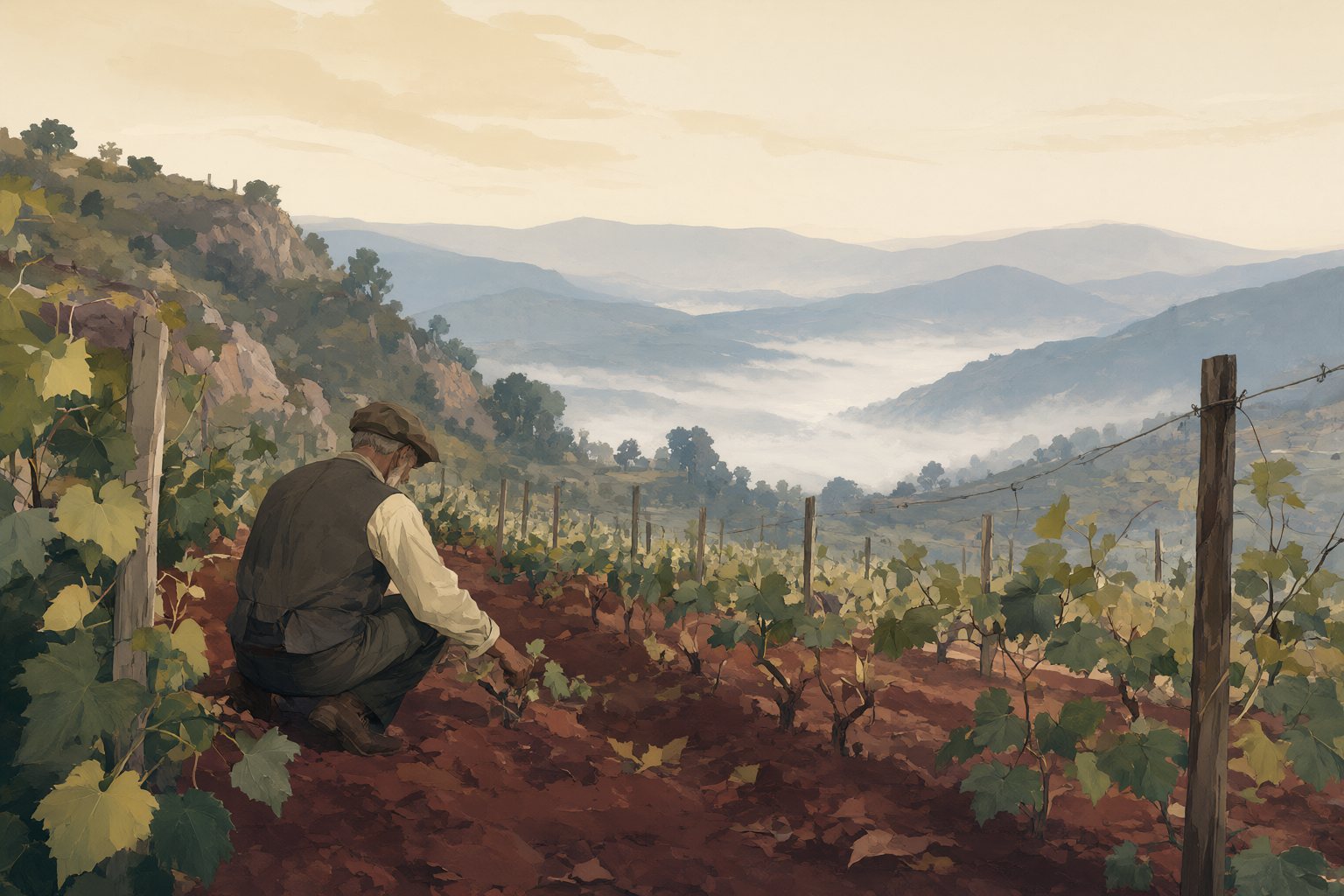
The story of the revival has a first name and a surname, and it is one of those rare cases in which the heroic narrative actually stands up to scrutiny. Walter Massa, a grower in Monleale, took over the family estate at the end of the 1970s. Sources agree that he began working on Timorasso around the middle of the 1980s; the date most often cited for the first single-varietal vinification is 1987, with a little over five hundred bottles (some sources put the start of the work back to 1986). In 1990 he planted the first vineyard devoted entirely to it.
Massa had no model to imitate, and perhaps that was his advantage. Instead of treating Timorasso as a white to be drunk young, he let it mature: skin maceration, long waits before release, an idea of Piedmontese white built to last like a red. He also did what in Piedmont is usually done with Nebbiolo: he separated his vineyards and bottled them individually, as crus.
He did not stay alone for long. Around the turn of the 1990s other producers in the area, including Andrea Mutti and Paolo Poggio, began to follow him, and by the end of the decade some twenty estates were already making Timorasso. The hectares, meanwhile, were climbing back: a handful at the start of the Nineties, around thirty by 2010, then the acceleration.
Derthona, or how to name a wine
The most interesting part of the recent story concerns not the vineyard but the name. Derthona was the Roman name for Tortona, and Massa had long been using it for his blended Timorasso. In recent years the Colli Tortonesi consortium has adopted it for the whole appellation: the designation was officially presented in January 2020, and today labels read Derthona alongside, or instead of, the name of the grape.
The reasoning is simple and rather far-sighted. A grape name cannot be protected: anyone can plant Timorasso, anywhere, and success always invites imitation. A place name, on the other hand, ties the wine to its hills, as Barolo ties Nebbiolo to a couple of valleys. It is the same logic that made the fortune of Europe’s great appellations, applied decades before it would have become urgent. Meanwhile, a revision of the production rules is under study to make Derthona Timorasso the main designation, and a future application for DOCG status is not ruled out.
The current rules already sketch out a small hierarchy: a younger version, called Piccolo Derthona; Derthona proper, with a minimum ageing of around ten months; and a Riserva that requires more than twice that. And there are sub-zones such as Monleale and Terre di Libarna, added in 2011. In terms of form, then, Timorasso is dressing up as a great wine.
Why everyone is talking about it
Timorasso gets people talking for at least three reasons, and not all of them are compliments.
The first is stylistic. Few Italian whites have this combination of structure, acidity and ageing potential. With time it often develops notes reminiscent of hydrocarbons, and the comparison with Riesling, overused as it is, is not entirely lazy in this case. In a region the world knows for its reds, a white that demands time in bottle is almost a provocation.
The second is economic. Success has drawn capital: several major Langhe wineries have bought vineyards or grapes in the Colli Tortonesi, and the big names of Barolo now have a Derthona in their range. That is good news for grape prices and for the area’s visibility; it is a risk for the identity of a territory that until yesterday was made up of small family estates. The consortium estimates that Timorasso now accounts for around sixty per cent of the appellation’s volume, and the bottles declared for the latest vintage run to more than a million, although the figures circulated over the past two years vary considerably depending on the source and should be treated with caution.
The third is the question every fashionable grape is eventually asked: is growing this fast good for quality? Young vines do not give the wines of old vines, and many of the new plantings are not yet old enough to prove anything. The freeze on new authorisations is the consortium’s answer, and it is a rare signal: an appellation choosing to brake just as the market is asking it to accelerate.
The worth of a stubborn man
Stories of rescued grapes tend to become fables, and fables need a hero. In Timorasso’s case the hero really exists, but Walter Massa’s greatest achievement was not bringing a grape back to life: it was imagining that this grape could become a great wine, and then waiting long enough to prove it. The Derthona name is the natural consequence of that idea, because a wine that claims to age must be able to say where it comes from.
The risk now is the opposite of extinction: fashion. Whether Timorasso remains Piedmont’s most interesting white will depend less on how many hectares are planted and more on how many producers have the patience, somewhat stubborn, of the man who brought it back. Those betting on speed would do well to remember that this grape almost disappeared precisely because nobody could be bothered to wait for it.
❦