Sardinian wine, an island that drinks its own way: Cannonau, Vermentino, Carignano
Cannonau and the debate over its origins, Vermentino di Gallura DOCG, Carignano del Sulcis: a guide to Sardinian wine among bush vines, mistral and sea.
Sardinia has never been very keen on being explained by the mainland. It has a language of its own, a prehistory made of stone towers unlike anything else in the Mediterranean, and a wine that for decades was described as a provincial variant of something born elsewhere. Which, looked at closely, is a simplification the Sardinians have never been able to swallow. And not entirely without reason.
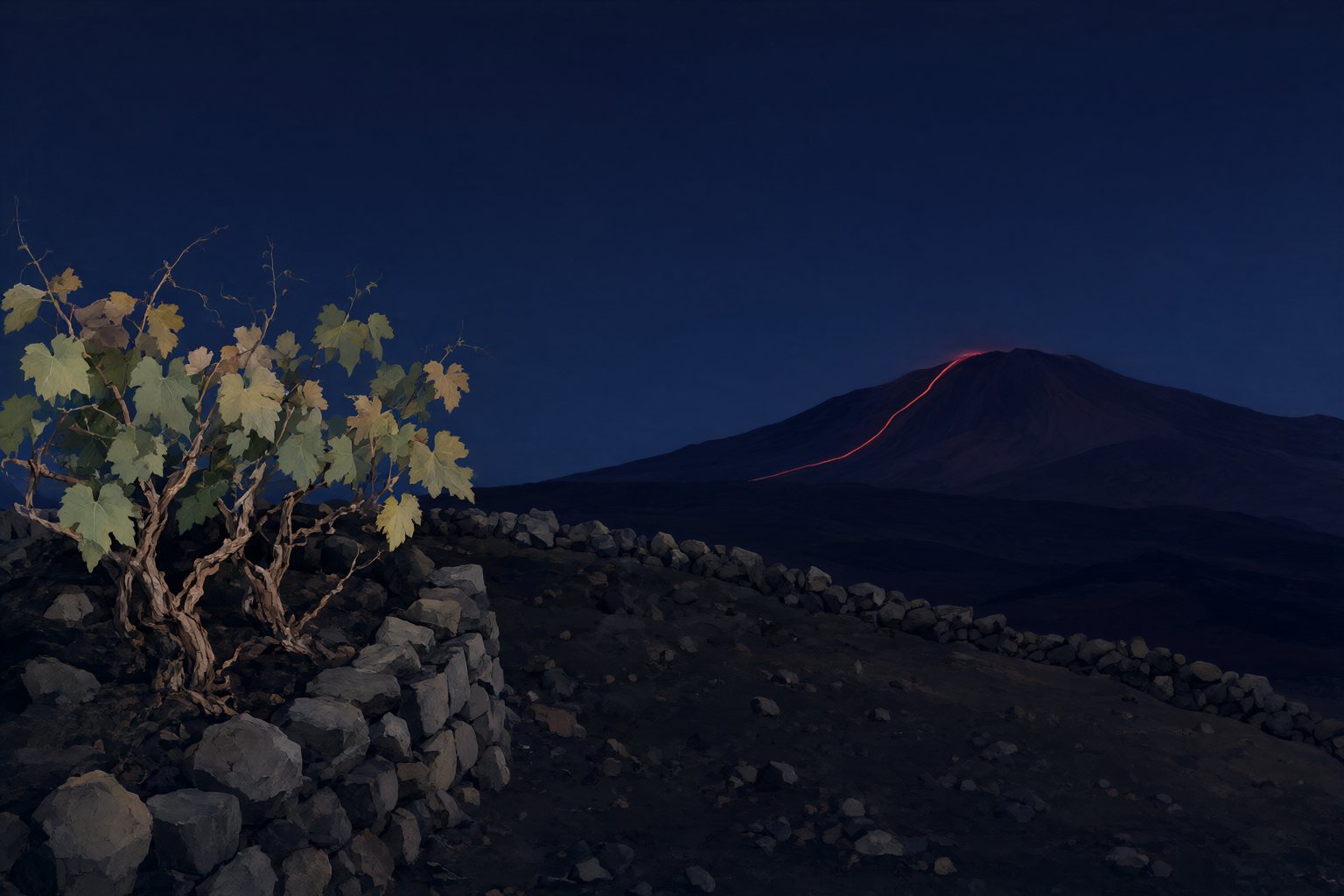
The landscape helps to understand. Low vines, trained as alberello, free-standing bush vines that look more like stubborn shrubs than orderly rows. A wind, the mistral, that arrives from the north-west and sweeps everything away: humidity, disease, sometimes even patience. And the sea, never far off, which gets into the soils, the air and, many say, the glass. Against this backdrop move three protagonists: a red with a disputed identity card, a white that has won the island’s only DOCG, and a red from the south-west that grows, quite literally, in the sand.
Cannonau, a question of passports
Cannonau is genetically the same variety that in Spain is called Garnacha and in France Grenache. On this the DNA studies agree. The problem is the direction of travel, and this is where things get interesting.
The classic version, found in almost every textbook, has the grape born in Aragon and arriving in Sardinia during the island’s long Iberian rule, which began in the fourteenth century. A linear, plausible, convenient story.
Then there are the arguments of those who think the opposite. The name “canonau” appears in a Sardinian notarial deed of 1549, while the term “garnacha”, according to supporters of the Sardinian thesis, entered Spanish dictionaries only in the early eighteenth century, and what is more referred to a white wine. And there is archaeology: at the Nuragic site of Duos Nuraghes, at Borore, carbonised grape pips dated to around 1200 BC have been found. Some scholars have linked them to an ancestor of Cannonau; others urge caution, because a burnt seed from three thousand years ago says a great deal about the presence of the domesticated vine and far less about the precise identity of a modern variety.
The truth, honestly, is that the debate remains open. DNA confirms the relationship but does not tell us who left and who arrived, and the documentary evidence on both sides has gaps. What can be said without stretching things is that Cannonau has had centuries to become Sardinian, whatever its port of embarkation. The Cannonau di Sardegna DOC was created in 1972 and includes subzones such as Oliena (also known as Nepente di Oliena, a name owed to a famous description by Gabriele D’Annunzio), Jerzu and Capo Ferrato, as well as a Classico category reserved for the provinces of Nuoro and Ogliastra. Within that appellation there is everything: warm, full-blooded reds from the mountains of Barbagia, slimmer and brighter versions, rosés, even passiti and fortified wines.
Vermentino di Gallura, granite turned to salt
If Cannonau is the question of identity, Vermentino di Gallura is the question of prestige. It is Sardinia’s only DOCG: a DOC since 1975, promoted to the top tier in 1996. The production rules require at least 95% Vermentino and also provide for a Superiore version, with a higher minimum alcohol level.
Gallura, in the north-east of the island, is granite country. The soils are coarse sands formed by the breakdown of that rock, poor, free-draining and far from generous. Under the appellation’s rules the vineyards cannot exceed 500 metres in altitude, and the wind keeps them dry and healthy. The result, at its best, is a white that combines structure and tension, with that salty, slightly bitter note on the finish that the Sardinians defend as a trait of character rather than a flaw to be filed away.
It is worth remembering that Vermentino is not exclusive to Gallura: there is also the Vermentino di Sardegna DOC, which covers the whole island, and the grape is grown successfully in Liguria, in Tuscany and in Corsica, where it is called Rolle. But it is in Gallura that it has found its most recognisable form, and the DOCG is its bureaucratic certification.
Carignano del Sulcis, vines that never met phylloxera
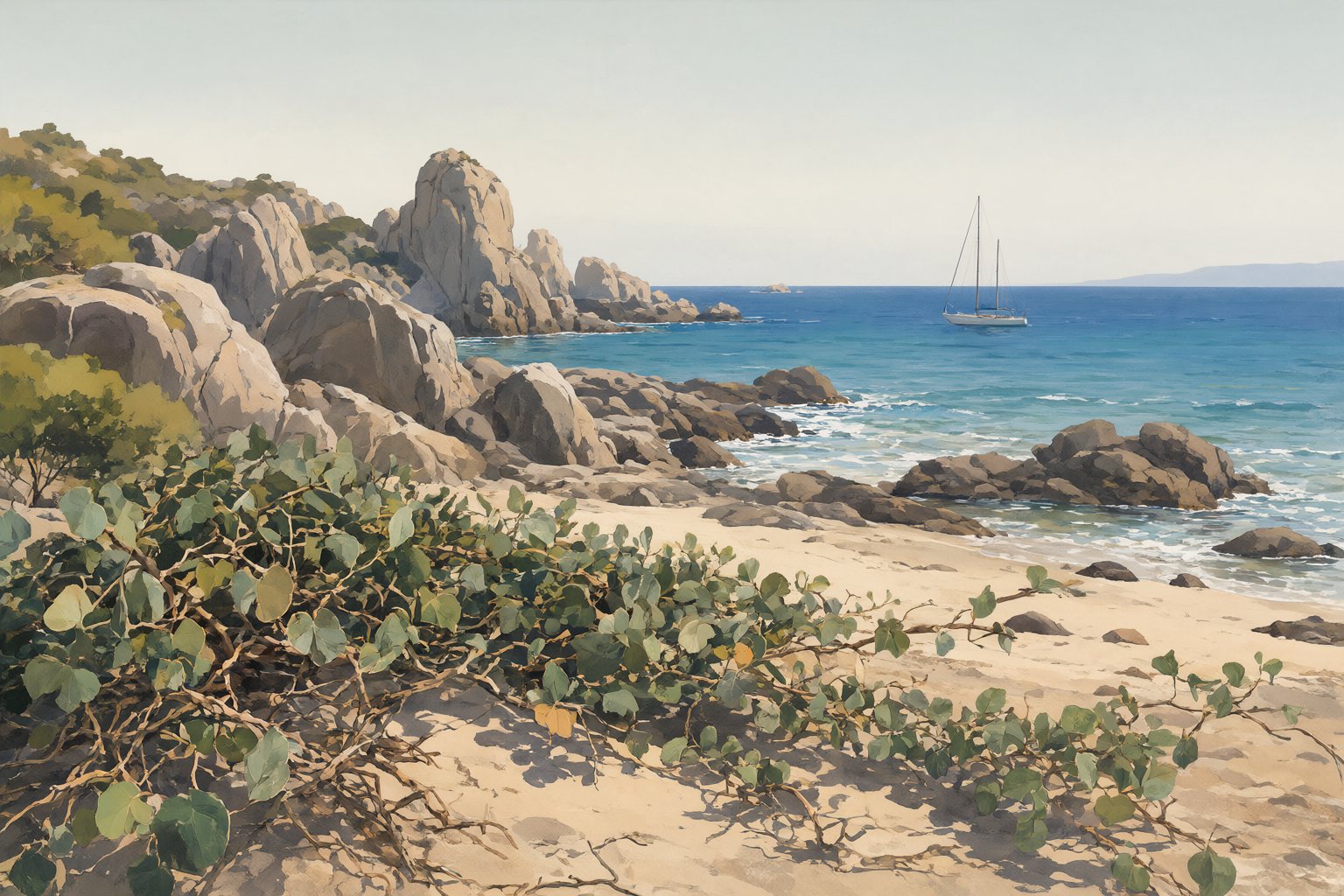
Heading down to the south-western corner, the Sulcis and the islands of Sant’Antioco and San Pietro tell yet another story. Here the protagonist is Carignano, another grape with Iberian roots, which has found a special refuge in these sandy soils. Sand, in fact, is hostile to phylloxera, the insect that between the nineteenth and twentieth centuries devastated Europe’s vineyards, forcing growers almost everywhere to graft their vines onto American rootstock. In the Sulcis some of the vineyards have remained a piede franco, ungrafted, on their own roots, and there is no shortage of vines many decades old.
Trained as bush vines, battered by the mistral and the salt spray, these plants produce very little per vine. The Carignano del Sulcis DOC has existed since 1977 and requires at least 85% Carignano; it provides for red, rosé, Superiore, Riserva and a passito. For a long time Sulcis grapes ended up in bulk wines; the shift towards quality, according to the most widely accepted accounts, began in the 1980s. Today it is one of the island’s most interesting reds: dark fruit, Mediterranean scrub, a savoury streak you do not forget.
Blue zones and other tales to handle with care
It is impossible to talk about Cannonau without running into a certain kind of article: Ogliastra and Barbagia as a “blue zone”, lands with an unusual share of centenarians, and the local red named as one of the secrets of that longevity. It is a narrative that has enjoyed enormous success in the media and in marketing, but it is not proven: a population’s longevity depends on a tangle of factors, and no study has established that wine is one of the causes. Even the very concept of a “blue zone” has been debated among demographers. Better to give Cannonau the credit it deserves, which is that of being a great wine, and not to burden it with promises that are not its to keep.
Why Sardinia is a world apart
Let us put it this way: Sardinia is not an island version of Tuscany, nor is it a branch office of Spain. It is a place where varieties spread throughout the Mediterranean have been reshaped by isolation, wind, granite and sand until they became something else. Whether Cannonau was born in Borore or in Zaragoza matters less than one might think; what matters is that a mountain Cannonau today resembles neither a Garnacha from Rioja nor a Grenache from Châteauneuf, and that a Carignano del Sulcis has little in common with the industrial Carignan of the Midi of yesteryear.
Our view is that Sardinian wine still has enormous room to grow, and that its main limitation has long been describing itself in other people’s words. Old bush vines, ungrafted roots in the sand, the mistral acting as a natural fungicide: these are heritages that many more celebrated regions no longer possess. The day Sardinia stops wondering where its wine comes from and starts insisting that the rest of the world ask the question instead, it will have won the argument.
❦