Merlot Day, 7 November: rehabilitating the grape Sideways mocked
International Merlot Day falls on 7 November: from Pomerol to Ticino by way of Friuli and Bolgheri, the grape’s story and what to open on the day.
There is a grape that for twenty years has had to apologise because of a fictional character. Merlot is the most widely planted red variety in Bordeaux and signs some of the most expensive wines on the planet, and yet for a generation of drinkers it remained “the one Miles wouldn’t drink”. Saturday 7 November 2026 is International Merlot Day, and the right occasion to set the record straight.
A day, no ceremony
Merlot Day is not a festival with exhibition halls and wristbands at the door. It is one of the many grape days dotting the wine calendar, from Furmint in February to Beaujolais Nouveau at the end of November, and WSET includes it in its 2026 list on 7 November, with the hashtags #InternationalMerlotDay and #MerlotDay. It is celebrated above all in a scattered way: wine bars opening a few bottles by the glass, wineries telling the story of their Merlot on social media, enthusiasts seizing the excuse to pull a cork.
The date falls in the heart of autumn, when the harvests are over and the new vintage’s wines are finishing fermentation. That is no accident: Merlot is a cold-weather red, soft, enveloping, made for November tables.
Bordeaux, where Merlot truly rules
The name comes from merle, the blackbird: according to the most common version, because of the dark colour of the berries, according to another because of the greed with which the birds peck at them. DNA analysis has clarified its genealogy: it is the offspring of Cabernet Franc and an almost vanished variety, Magdeleine Noire des Charentes. A half-sibling, then, of Cabernet Sauvignon, with which it shares a father and often a bottle.
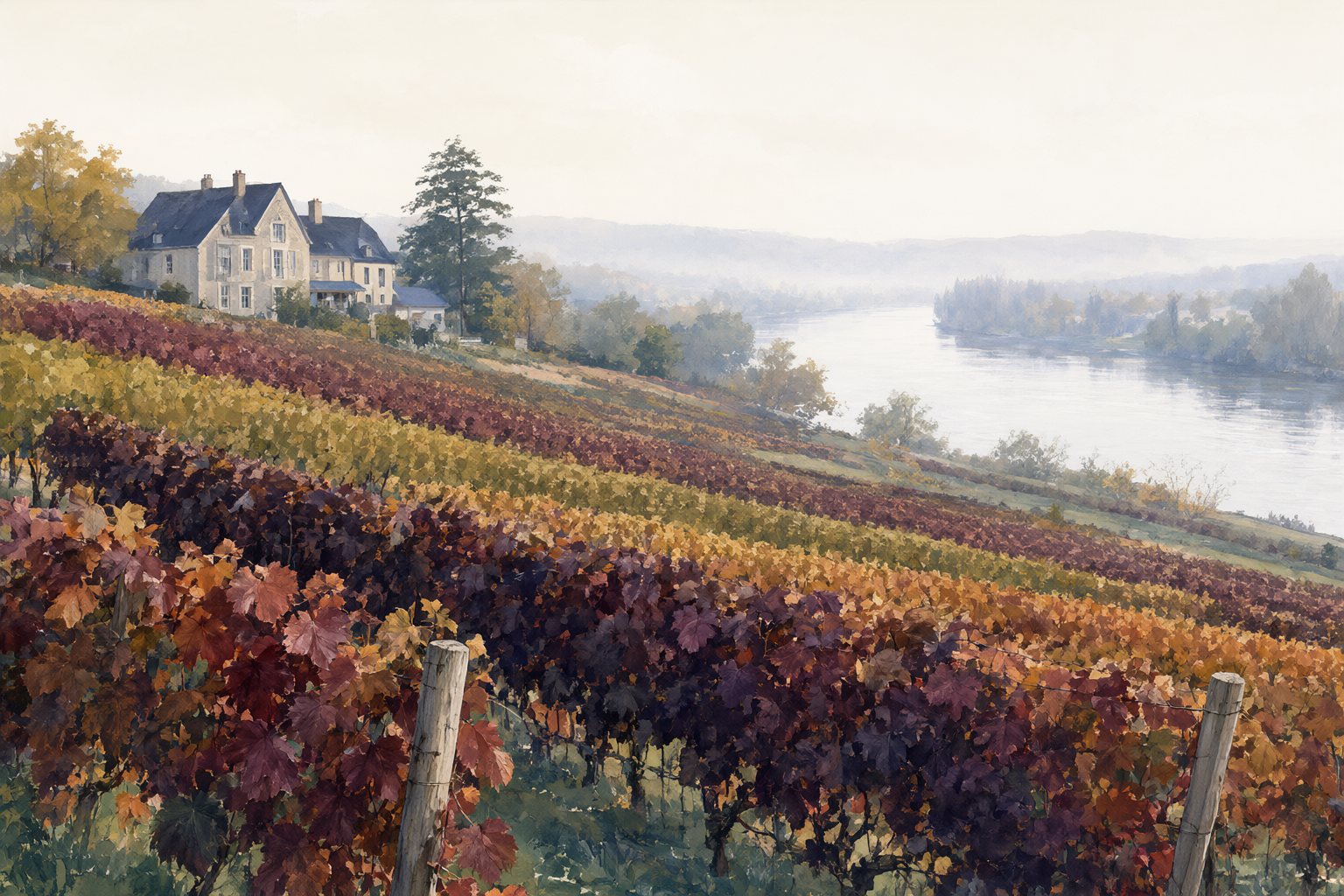
In Bordeaux, Merlot accounts for around 60% of the area under appellation, far more than the Cabernet Sauvignon to which popular imagination assigns first place. On the left bank of the Gironde, in the Médoc, it plays a supporting role and softens Cabernet’s structure. On the right bank, by contrast, it takes the lead. In Saint-Émilion, on the limestone and clay of the slopes around the medieval town, it carries most of the blends together with Cabernet Franc. In Pomerol, a tiny appellation with no official classification, the cool, deep clays give it that combination of opulence and tension that has made some of the world’s most sought-after labels famous.
It is a paradox worth repeating: the same grape that ends up in everyday reds is the basis of wines sold at auction like works of art. Merlot is neither an easy nor a difficult grape: it is a grape that gives back exactly the soil and the ambition of whoever grows it.
The Sideways affair
In 2004 came Sideways, Alexander Payne’s film in which Paul Giamatti plays Miles, a depressed teacher with a passion for Pinot Noir, touring California’s wineries with a friend on the eve of his wedding. At one point Miles warns that if anyone orders Merlot he is leaving, and that he will not drink that wine, with an unrepeatable adjective in the middle. The line became proverbial; the film won the Oscar for best adapted screenplay.
The effect on the market has been studied. Steven Cuellar, an economist at Sonoma State University, analysed US sales in the years following the release and found a fall of around 2% for Merlot against 16% growth for Pinot Noir, above all in the higher price brackets. Not a collapse, then, but a brake and above all damage to its image: Merlot became the wine of people who know nothing about wine, the soft, characterless red ordered to play it safe.
The film hides its tastiest detail in the ending. The bottle Miles guards like a relic is a 1961 Château Cheval Blanc, Saint-Émilion: a wine made from roughly two-thirds Cabernet Franc and the rest from none other than Merlot. He drinks it alone, from a plastic cup, in a fast-food restaurant. The screenwriters knew what they were doing.
In fairness, it should be said that Miles’s target was not Merlot in the abstract but a certain kind of 1990s Californian Merlot: produced in enormous quantities, ripe to the point of jam, oaky, all alike. A critique of a style more than of a grape. But nuance never survives a good line.
Italy’s Merlot: from Friuli to Ticino
Merlot arrived in Italy in the nineteenth century and soon became an everyday presence, especially in the North-East. In Friuli it was for decades the house red, the wine of the osterie and the end-of-day glass, on the plains of the Grave as in the eastern hills, where the best producers have also made it into wines for ageing. In the Veneto it is found along the Piave, in the Colli Berici and the Colli Euganei, often blended with the Cabernets following the Bordeaux tradition the region adopted long ago.
Then there is Tuscany, which has shown how high it can climb. At Bolgheri, on the coast, a vineyard of a few hectares on blue clays of marine origin gave birth to Masseto, a pure Merlot created in the mid-1980s on the Ornellaia estate and now one of the most famous Italian wines in the world, bottled as Toscana IGT. Less a wine to buy than a historical fact: proof that Merlot, in the right place, need envy no one.
And just across the border, Ticino. Merlot arrived here in 1906, after phylloxera had devastated the local varieties, and was chosen because it proved the hardiest and best suited to the climate. Today it is by far the canton’s dominant grape, and Merlot del Ticino has become a small flag of identity for Italian-speaking Switzerland, made even in a white version, by vinifying the grapes without skin contact.
What to open on 7 November
The most instructive way to celebrate is to open two or three bottles that tell the Merlot story from different angles, rather than hunting for “the best”.
- A right-bank Bordeaux. A Saint-Émilion or another satellite appellation, such as Lalande-de-Pomerol or the Côtes de Bordeaux, to understand Merlot in its habitat: dark fruit, plum, a texture that is soft but not flabby.
- A Merlot from Friuli or the Veneto. To rediscover the most straightforward, everyday version, often fresher and less polished, perfect at the table.
- A Merlot from Ticino. For the curiosity of an alpine, lakeside territory that has made it its signature grape. If you can find it, try the white Merlot alongside the red.
- A coastal Tuscan Merlot. To measure the difference the Tyrrhenian sun makes: more flesh, more warmth, rounded tannins.
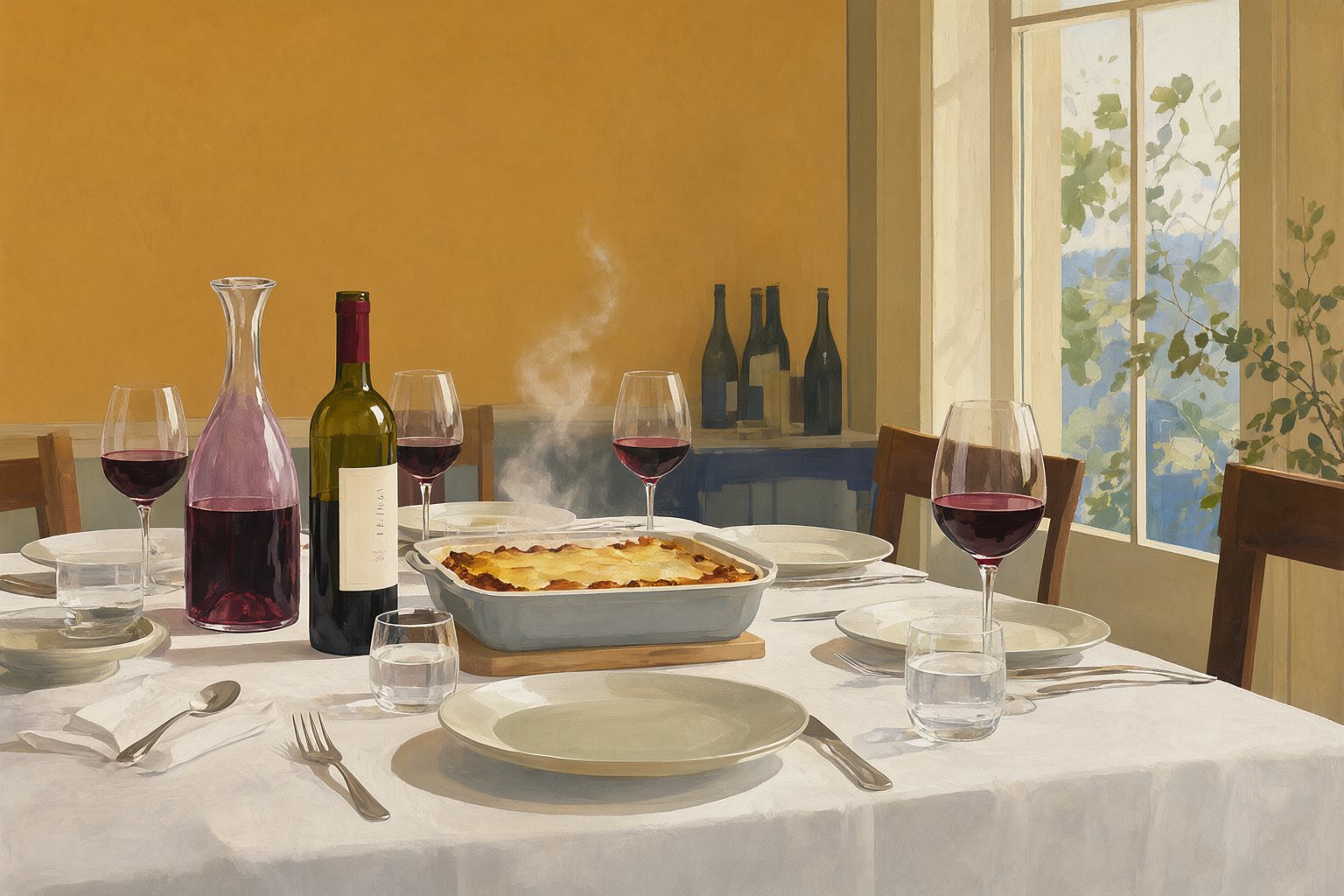
At the table Merlot asks for simple, autumnal things: roasts, mushrooms, pumpkin risotto, medium-aged cheeses. Serve it at around 16-18 degrees, not at the temperature of a heated living room.
Practical information
- When: Saturday 7 November 2026
- Where: everywhere; it is a scattered celebration with no single venue. It is worth checking what wine shops and wineries in your area are planning.
- Official hashtags: #InternationalMerlotDay and #MerlotDay
- Reference calendar: wsetglobal.com
Merlot does not need defending, it needs drinking with attention. Miles was right about a certain kind of wine and wrong about the grape, and his most treasured bottle proves it better than any review. On 7 November, the most elegant small revenge is to open a good Merlot and drink it from a proper glass.
❦