Barolo en Primeur 2026: buying a wine that does not yet exist
On 23 October at Grinzane Cavour, Barolo 2025 still in barrel goes under the hammer: what en primeur means and why in Italy it is an anomaly.
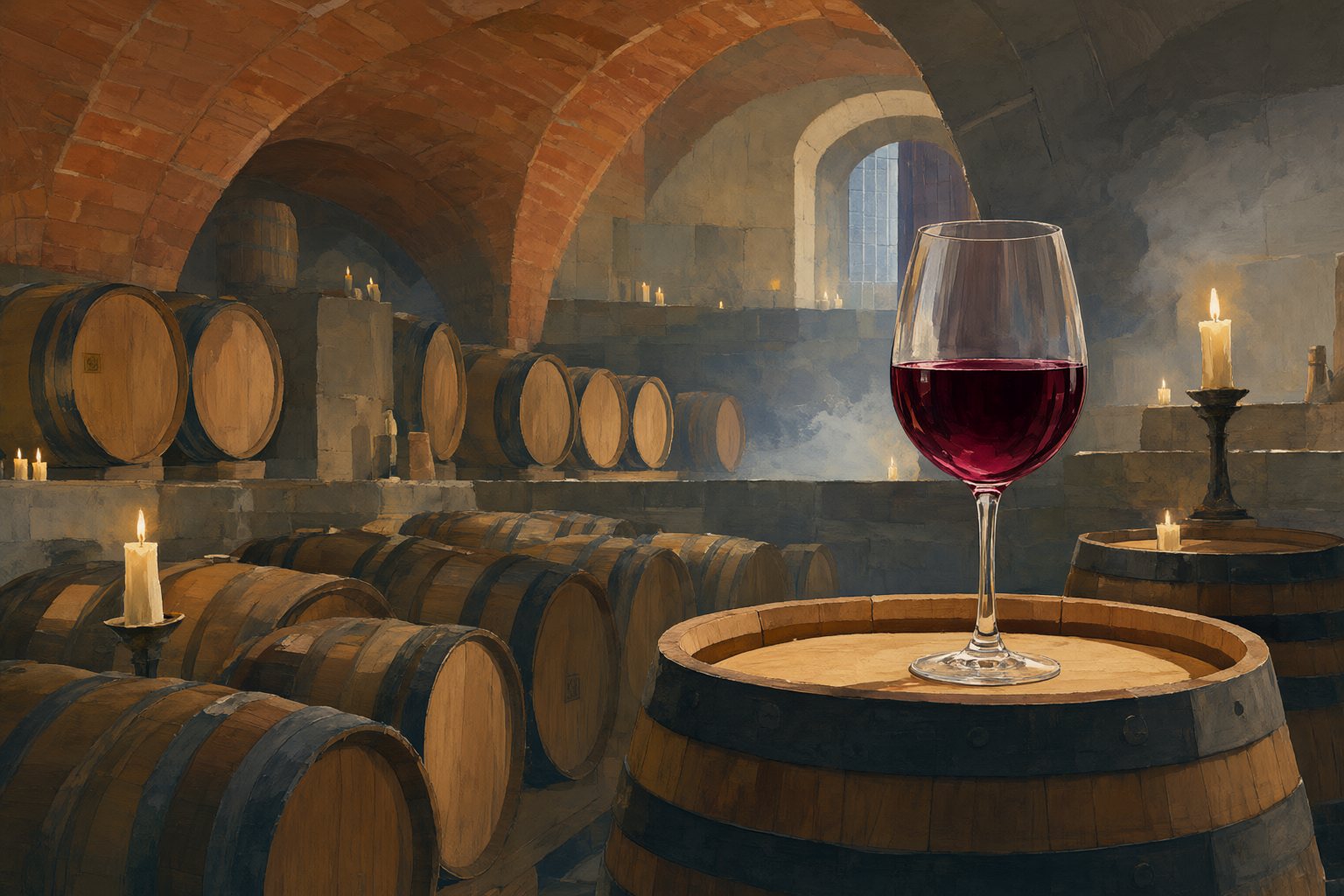
Buying a wine you cannot drink, cannot even see in bottle, and paying for it before it is finished: put like that, it sounds like a reckless gamble. In Bordeaux it has been normal practice for centuries. In the Langhe, however, it is still something of a curiosity, and on 23 October it will happen for the sixth time beneath the vaults of the Castello di Grinzane Cavour, where the Fondazione CRC will auction Barolo from the 2025 vintage, still resting in wood.
What “en primeur” means
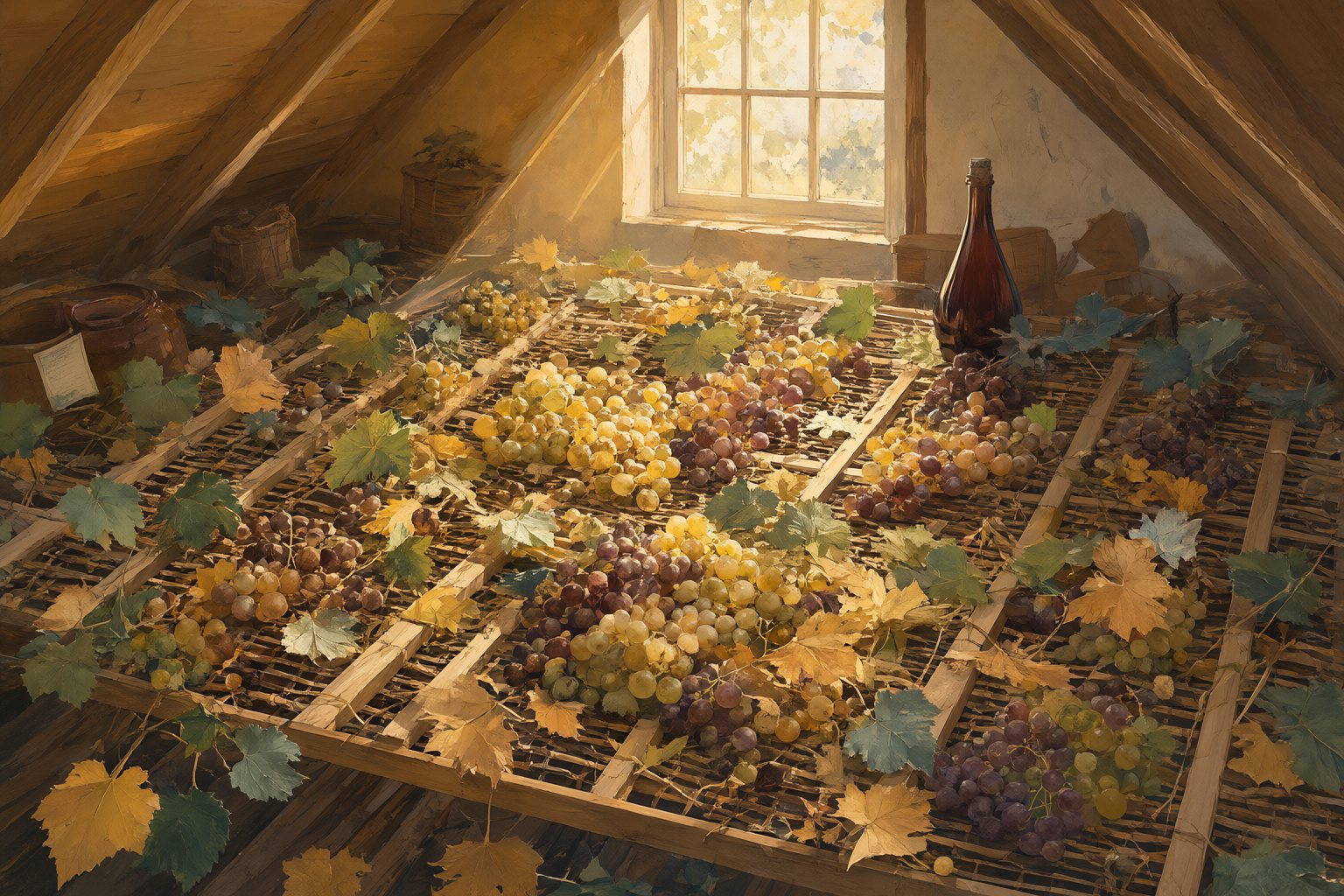
The French phrase describes an advance sale: the wine is bought while it is still in the cellar, in barrel, months or years before bottling. The buyer pays at once and receives the bottles later, when the producer releases them. In theory you secure a better price than you will later find on the shelves; in practice you are buying, above all, a place in the queue for wines that would otherwise be hard to find.
The model of reference is the Bordeaux one: every spring, after tasting the barrel samples, the châteaux set their prices and entrust them to a system of intermediaries, the courtiers and négociants of the so-called Place de Bordeaux, who in turn distribute them around the world. The bottles usually reach their destination a couple of years later. It is a financial mechanism even before it is a commercial one: the producer is paid in advance, and the market takes on the risk of the vintage.
Then there is a nobler relative, closer in spirit to Grinzane: the Hospices de Beaune auction in Burgundy, where since the nineteenth century the barrels of new wine produced from the vineyards of an ancient hospital have been sold every November, with the proceeds going to charitable works. There too you buy wine in barrel, there too there is an auctioneer, there too the declared aim is charity.
Why in Italy it is almost a heresy
Fine Italian wine has always been sold differently: bottled, labelled and released from the cellar when the producer considers it ready. Italy has no marketplace of intermediaries comparable to that of Bordeaux, and most estates, even the most famous, are family-sized and prefer to deal directly with importers, wine shops and restaurants.
In Barolo’s case there is an additional reason. The production code requires minimum ageing of 38 months, at least 18 of them in wood, before the wine can be released. Selling a barrel of Barolo in October therefore means asking the buyer to trust, for more than three years, a wine that at the fall of the hammer has only just finished fermenting. It is a request nobody in Bordeaux finds odd, but in Piedmont it breaks a deep-rooted habit: here a vintage is judged in the glass, not on paper.
That is precisely why, when the first edition took place in 2021, international critics hailed it as something new for the appellation, a clever way of combining visibility and philanthropy. It is no coincidence that the project was born outside the traditional commercial circuit: its promoters are a foundation of banking origin and the Consorzio di tutela, the appellation’s protection body, not a company that has to balance its books.
Cavour’s vineyard and the barrels at auction
At the centre of it all is the Vigna Gustava, the vineyard at the foot of the castle that historically belonged to Count Camillo Benso di Cavour, for years mayor of Grinzane. The Fondazione CRC bought it in 2020: it amounts to a little over eight hectares, long used by the Scuola Enologica di Alba, the town’s wine school, to train its students. Before the auction that vineyard had never been bottled on its own, and its reputation rested more on its proximity to celebrated crus than on any wine people actually knew.
The oenologist Donato Lanati vinifies the different sections of the vineyard separately, distinguished by exposure, altitude and vine age, so that each barrique becomes a lot in its own right. This year there will be fourteen, all Barolo Vigna Gustava 2025, going under the hammer of Cristiano De Lorenzo of Christie’s Italia, while the wines will be assessed, as in previous editions, by the critic Antonio Galloni. A fifteenth barrique will be sold on 8 November during the Asta Mondiale del Tartufo Bianco d’Alba, the world auction of Alba white truffles. Every bottle that comes out of them will carry an artist’s label, designed for 2026 by the Venezuelan Sol Calero, and an NFC digital certification system to guarantee authenticity and traceability.
What to expect on 23 October
The novelty of this sixth edition is 31 historic bottles, auctioned for the first time, with vintages going back to 1996: among them are much-loved years such as 2010 and 2016, a vertical of Cannubi from 2009 to 2011 and a five-litre bottle of Bussia 2012. Alongside them will be seven village lots of Barolo and Barbaresco, with bottles contributed by 39 Consorzio wineries, for a total of 681 bottles in magnums and large formats.
The evening will be linked live with other countries: the sources agree on London and New York, while whether Hong Kong will be connected on 23 October is unclear (a link with Hong Kong is confirmed for the 8 November auction). Taking part is not restricted to the trade: you simply need to register on the foundation’s portal.
The figures explain why the initiative has become a fixture. The first five editions raised more than 4.5 million euros, allocated to almost a hundred health, social, educational and cultural projects, in the Langhe and beyond; the 2025 edition alone exceeded 1.1 million.
If you are following from home
For those who will not be at Grinzane, the best way to take part is to open a Barolo with a few years under its belt and watch the auction while reflecting on how long it takes a Nebbiolo to become what it promises. If you have a 2010 or a 2016 in your cellar, the two vintages the historic catalogue puts in the spotlight, this is the right moment. Alternatively, a Barolo from Grinzane Cavour, a small commune less talked about than La Morra or Serralunga, is a fitting tribute to the vineyard at the heart of the evening.
Practical information
- When: Friday 23 October 2026; a second auction with one barrique on 8 November 2026, during the Asta Mondiale del Tartufo Bianco d’Alba
- Where: Castello di Grinzane Cavour, Grinzane Cavour (Cuneo)
- Organisers: Fondazione CRC, Fondazione CRC Donare ETS and Consorzio di Tutela Barolo Barbaresco Alba Langhe e Dogliani
- Taking part: registration on the foundation’s portal
- Official website: fondazionecrcdonare.it
It remains to be seen whether en primeur has a future in Italy outside the world of charity. Probably not, and that is no bad thing: the charm of Grinzane lies precisely in its being an exception. A wine bought blind for a good cause makes sense; a whole market speculating on barrels still warm from fermentation is something Barolo can perhaps go on leaving to Bordeaux.
❦