Forgotten grapes: why Italy is rediscovering its lost varieties
From Verdiso to Pecorino, from Raboso to Cagnulari: how a near-extinct grape variety is saved, and why the fashion for native grapes also carries risks.
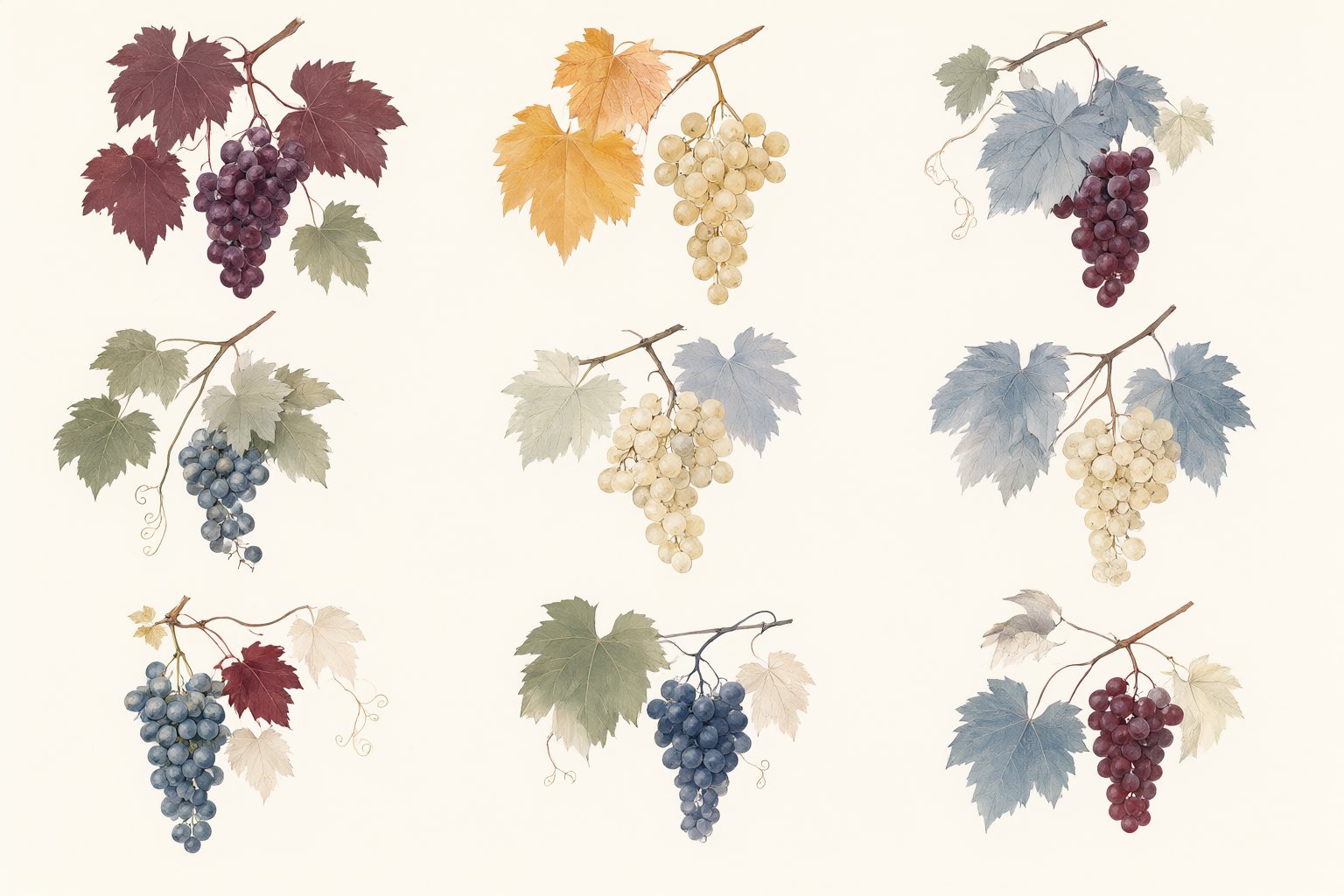
Every so often, in an old vineyard, a grower finds a vine that doesn’t add up. The bunch is wrong, the leaf has an odd cut, grandfather called it by a name no book records. Almost always it is a curiosity destined for the stove. Sometimes, though, it is the beginning of a second life: years later that name is on a label, in a production rulebook, on the wine list of a Milan wine bar. Italy is full of these resurrections, and it is worth understanding how they work before raising a glass to them.
A country with too many grapes
The starting point is a number few countries can boast. The National Register of Grapevine Varieties, the official catalogue that determines which grapes may be propagated and planted, today lists more than six hundred wine varieties (an article in Decanter a few years ago cited 644 entries; the count changes with every ministerial update, so the exact figure should be taken as indicative). And not all of them are native: Cabernet, Merlot and the rest of the international company are in there too. Ian D’Agata, who devoted an entire book to the subject, estimates that more than five hundred varieties have inhabited the peninsula for centuries, and admits that many more are still waiting to be identified.
Why so many? Because Italy was for a long time a mosaic of valleys, lordships and local markets, where each community selected the plants that worked on its own corner of hillside. Then came phylloxera, wars, the depopulation of the countryside and, after the Second World War, the race for yield: replanting was done with whatever produced the most and sold best. Hundreds of varieties survived only through inertia, a few rows on the margins, a pergola behind the house.
How a grape is saved
Bringing a grape variety back to life is not a romantic gesture; it is long and largely bureaucratic work. It begins with a survey: the surviving vines, often just a few dozen, are tracked down and described using the tools of ampelography, that is, the shape of the leaf and the bunch, the timing of budburst and ripening. Then comes DNA. The genetic profile serves to establish whether that “mysterious” plant really is a variety in its own right, or a grape already known under a local name. Surprises are not lacking: Sardinia’s Cagnulari, for example, appears in several lists of synonyms as the same variety as Spain’s Graciano, although accounts of its kinship with the Bovale family do not entirely agree.
Next comes the less photogenic part. The vines must be checked for viruses, because propagating diseased material means spreading the problem. They are planted in collection vineyards, observed over several vintages, and micro-vinified to see whether the wine is worth the effort. Only then can registration in the National Register be requested and, at regional level, authorisation to cultivate it. Without these steps a grower can neither plant it legally nor write its name on a label. Between the discovery and the first bottle, ten or fifteen years may pass.
Three stories, three models
The Treviso area is a good laboratory. Alongside Glera, the rules of Conegliano Valdobbiadene Prosecco DOCG allow up to 15% of other grapes, including three white varieties of local tradition: Verdiso, Bianchetta Trevigiana and Perera. For decades they were Prosecco’s supporting cast, the ones that lent acidity or perfume to the blend. Today Verdiso is once again being vinified on its own by some producers, but the area under vine remains tiny: there is talk of around a hundred hectares, a figure that circulates in popular sources and should be treated with caution. A little further south, Raboso del Piave, a rough and fiercely acidic red that tradition holds to be hard to tame, obtained the Piave Malanotte DOCG in 2010: at least 70% Raboso Piave, a share of dried grapes between 15 and 30%, three years of ageing before release. Here recovery comes through regulation: giving an awkward grape a recognisable form.
The second model is Pecorino, which shows how quickly a rediscovery can become a mass success. According to the most widely told version, at the beginning of the 1980s Guido Cocci Grifoni went looking for its last vines in the area of Arquata del Tronto, in the upper Piceno, and took cuttings from them for his estate in Ripatransone. In Abruzzo, in 1997, Luigi Cataldi Madonna was among the first to write the variety’s name on a label. From there it grew: in 2011 the Offida DOCG was created, which provides for a Pecorino with at least 85% of the grape, and today estimates in Abruzzo speak of more than a thousand hectares. From relic to aperitivo wine in a generation.
The third model is the Sardinia of Cagnulari, grown mainly in the province of Sassari, around Usini. Here the recovery is tied to one specific figure: Giovanni Maria Cherchi, who from the 1970s worked on a grape in decline and turned it into a bottled wine. Cagnulari also appears among the types of the Alghero DOC, but many labels use the island’s IGT designations. A case in which a single stubborn grower counted for more than any public programme.
The other side of the coin
So much for the fairy tale. But the fashion for native grapes also has its side effects, and it is right to name them.
The first is the “forgotten, therefore good” fallacy. Many varieties were abandoned for concrete reasons: they ripened poorly, they fell ill, they gave unbalanced wines. Not all of them deserve a comeback, and a rare grape is not automatically an interesting one. The second is the marketing of rarity: when the adjective “native” sells, the temptation is to plant it everywhere, even where it makes no sense, and turn a local identity into one more shelf product like any other. Pecorino, with its lightning expansion, is already the subject of debate over how much style, and how much standardisation, it is accumulating.
Then there is an almost paradoxical risk. If every area stakes everything on its own rediscovery, the result may be a new monoculture, just with a more exotic name. The biodiversity that recovery is supposed to protect shrinks once again, around the winning grape of the moment. And finally there is the confusion of names: regional synonyms, genetic identities shared with foreign grapes, spellings that differ from one village to the next. For the drinker, the label risks promising a uniqueness that the DNA does not confirm.
Who saves what
That said, I prefer an Italy that questions itself about its lost grapes to one that plants Chardonnay out of habit. The value of these rediscoveries lies not in rarity for its own sake, but in what they force you to do: look at a place, study it, accept wines that are less polished and more eloquent. The grape worth saving is not the one that makes headlines; it is the one that, after ten years of trials, proves it still has something to say. The others can stay in the collection vineyards, like books in a library: preserved, available for consultation, and not necessarily in the shop window.
❦