Chilled red wine: which Italian reds can take the fridge and which can’t
Schiava, Frappato, Bardolino, Rossese and Lambrusco at 12-14 degrees: why cold flatters some red wines and ruins others.
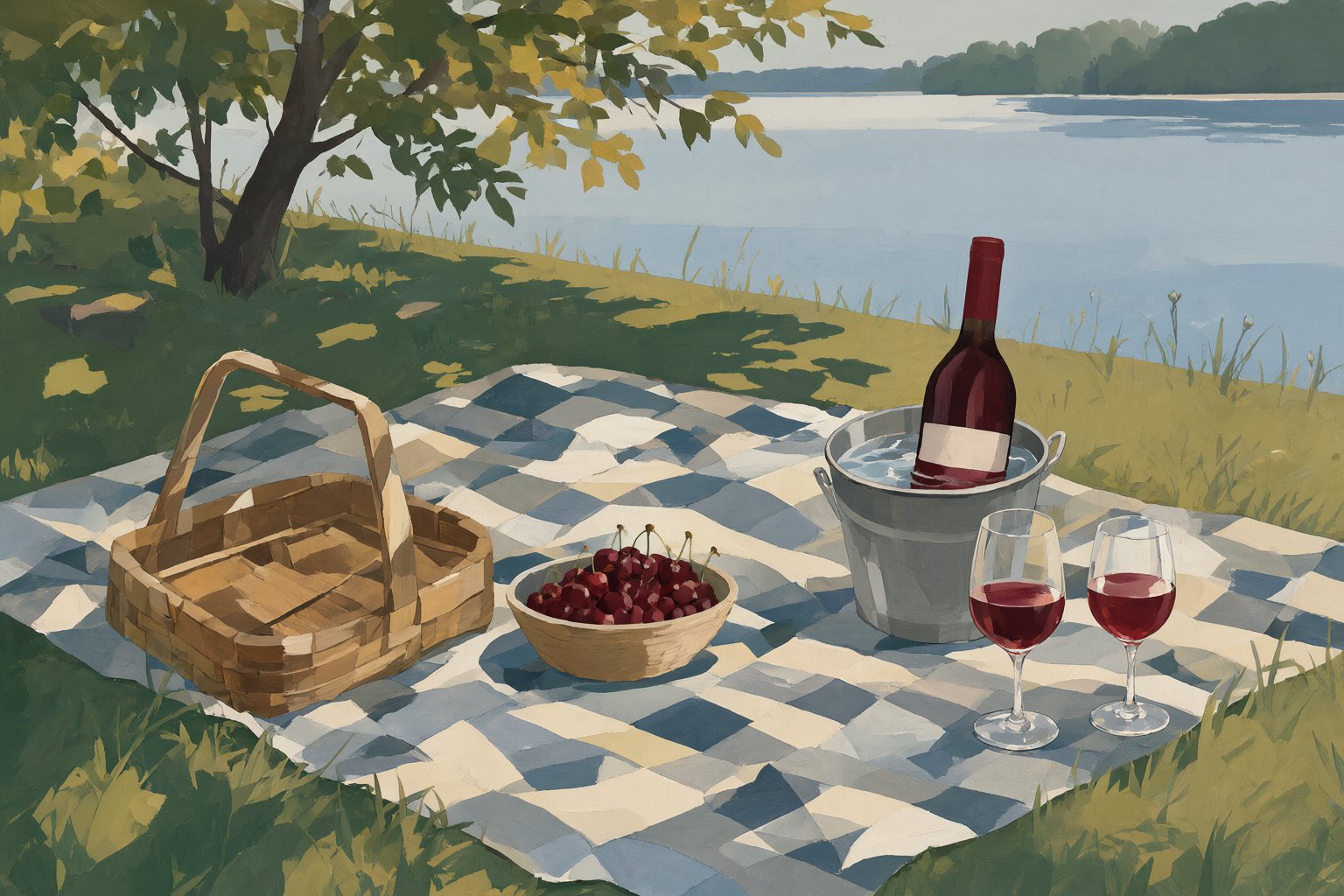
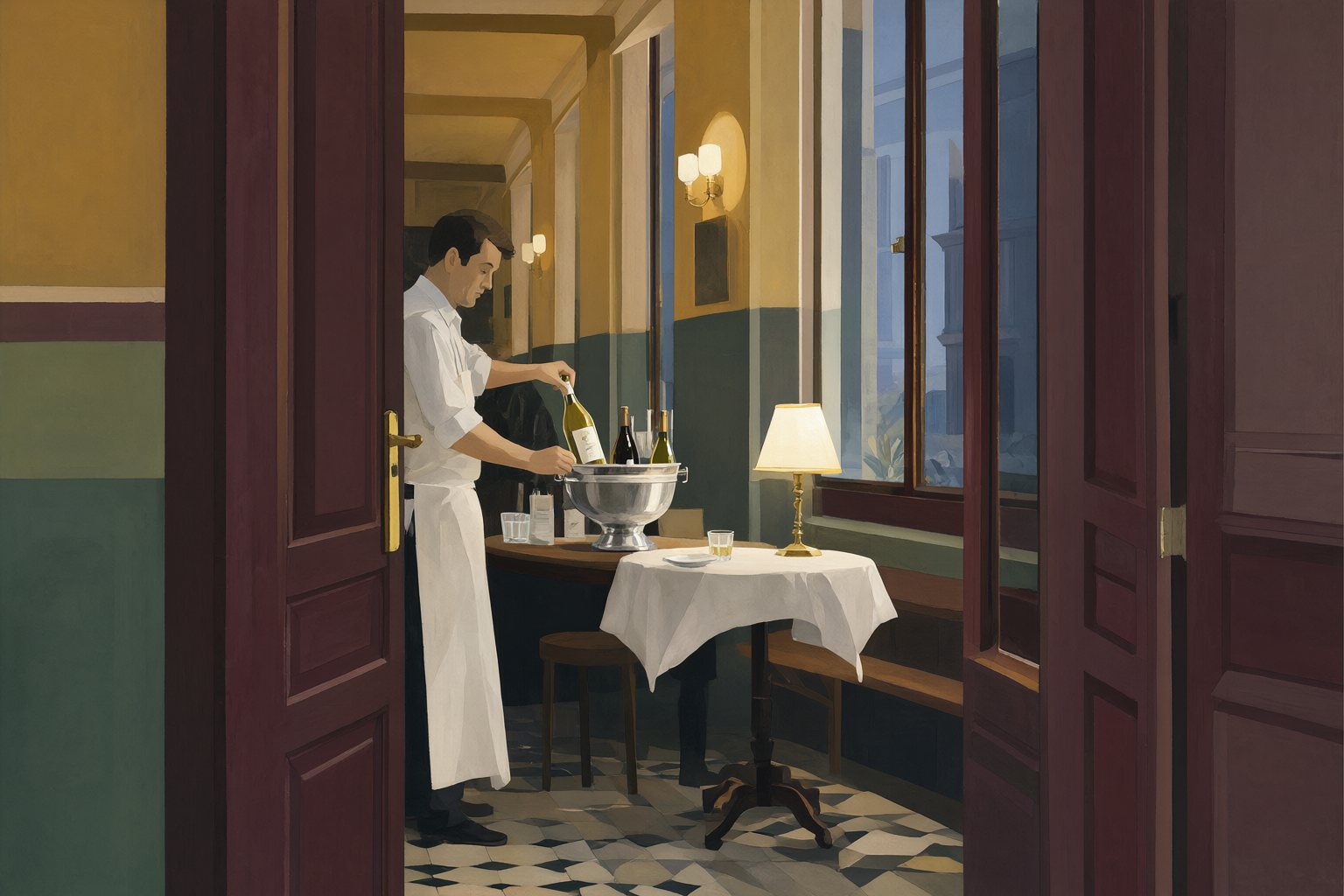
For a few generations, chilled red was a sin to be confessed in a low voice, the stuff of trattorias in August or of the uncle who doesn’t know how to behave at table. Today it has become almost a manifesto: wine lists that put a little snowflake icon next to certain labels, sommeliers who pull a bottle of Frappato out of the ice bucket without the slightest embarrassment. The fashion is real, there is no denying it. But beneath the fashion lies something more interesting and much older: some reds were born to be drunk this way, and the people who drank them long before it became a trend knew it perfectly well.
The real question is not whether chilled red is permissible. It is which red, and how chilled.
The magic number (which isn’t magic)
The range quoted most often is 12-14 degrees, with some authoritative voices going as low as 10-12 for the slightest reds. To put that in perspective: it is warmer than a white straight out of the fridge, which sits at around 4-6 degrees, but distinctly cooler than the 16-18 that guides usually recommend for a light red served the traditional way.
In practice it means a bottle that spends half an hour, sometimes a little more, in the domestic fridge, or about ten minutes in a bucket of iced water. Ice straight in the glass is another matter: it dilutes, and anyone who does it to a wine they care about usually regrets it by the third sip.
One point is worth more than any chart: wine in the glass warms up quickly, especially in summer. Starting a couple of degrees below the target is not a mistake, it is foresight.
Why it works: the physics of the palate
Cold is not a neutral filter. It shifts the balance between the components of a wine, and does so in a fairly predictable way.
Low temperatures accentuate the perception of the hard elements: acidity and, above all, tannin. At 12 degrees tannin seems rougher, more bitter, more astringent than it does at 18. Conversely, warmth heightens the soft, warm sensations, namely alcohol, glycerol and any residual sugar. A red served too warm can seem heavy and alcoholic; the same red served cool seems tauter and drier.
Hence the rule, so simple it almost sounds trite: cold rewards wines with little tannin, lively acidity and fragrant fruit, and punishes those built on structure, oak and alcohol. A light wine at summer room temperature risks turning flabby, almost syrupy; chilled, it regains its nerve and that drinkability the French call glou-glou and which we, with less grace, describe as “it drinks itself”. The aromas change too: cold compresses them a little, which for a wine with exuberant fruit is an advantage and for a complex wine, living on tertiary nuances, is a dead loss.
Italy’s chilled-red squad
Italy has a very deep bench for this game, and almost all of it is out of the spotlight.
Schiava. In Alto Adige they call it Vernatsch, and for decades it was the region’s everyday wine, before the fashion for muscular reds relegated it to a supporting role. Pale colour, almost imperceptible tannin, aromas of cherry and almond: it is perhaps the most natural candidate on the whole list. Lago di Caldaro is its best-known expression.
Bardolino. On the Verona shore of Lake Garda, from Corvina and Rondinella, the appellation has existed since 1968. It is a pale, savoury red, with red fruit and light spice, that for years suffered from the overbearing proximity of Valpolicella and Amarone. Chilled, it shows its best side, the crisp, lakeside one. It is no coincidence that the same area also produces Chiaretto, the lake’s rosé.
Frappato. In south-eastern Sicily, around Vittoria, it is Nero d’Avola’s blending partner in Cerasuolo di Vittoria, but vinified on its own it gives translucent, floral reds, almost perfumed with strawberry and pomegranate. It is the grape that, more than any other, has carried the flag for the revival of Italian chilled red.
Rossese. In Liguria, in the hinterland of Ventimiglia, Rossese di Dolceacqua became the region’s first DOC in 1972. Vines clinging to dizzying terraces, light-bodied and highly perfumed wines, with a briny note that becomes more evident at 13 degrees.
Lambrusco. Here the question hardly arises: it is a sparkling red, and a sparkling wine is served cool by definition. But it is worth mentioning because Lambrusco, in its dry and more serious versions, is proof that chilled red in Italy is no recent import: in Emilia it has always been drunk this way, alongside very rich dishes that this very freshness serves to cut through.
Light Pinot Nero. With one important qualification: light. A mountain Pinot Nero, perhaps from Alto Adige or Oltrepò, built on fruit and without too much oak, is perfectly happy at around 14 degrees. An ambitious Pinot Nero, aged at length, deserves the classic temperature instead.
The Grignolino case
Grignolino deserves a paragraph of its own, because it is the perfect trap. In the glass it looks like the ideal chilled red: pale colour, somewhere between light ruby and deep pink. And yet its name comes from the Piedmontese grignolè, linked to the pips, of which its berries are particularly rich. And pips bring tannin, sometimes a lot of it.
The result is a wine that looks delicate and tastes surprisingly dry, almost scratchy. Cold can make it livelier, but overdo it and the tannin takes over. Better to stay at the upper end of the range, around 14 degrees, and taste before pushing further. It is a good general lesson: a pale colour is no guarantee of soft tannin.
Who should stay out of the fridge
The list of exclusions is simpler to explain. Barolo and Barbaresco, with Nebbiolo’s stern tannin; Brunello and the more structured Sangiovese wines; Aglianico and Sagrantino, which have tannin to spare; Amarone, where alcohol and concentration need room to express themselves. In all these cases cold does two kinds of damage at once: it hardens the tannin and closes down the aromas, which are the main reason these wines are drunk at all.
The same goes, more generally, for any red that has spent a long time in new oak. Cold does not erase the oak, it only makes it more bitter.
A trend that puts things right
One can view the chilled-red fashion with a certain suspicion, and to some extent that is legitimate: like every fashion, it risks becoming automatic, with ice buckets filled regardless of what is in the bottle. But its net effect, all things considered, is positive. It has restored dignity to grapes that the taste of the 1990s and 2000s, in love with concentration and oak, had pushed into a corner. It has reminded us that “light” is not a synonym for “lesser”. And it has forced those who serve wine to think case by case instead of relying on a one-size-fits-all rule.
That, in the end, is precisely the point: there is no such thing as the temperature for red wine, only the temperature for that particular red. A Schiava at 18 degrees is a wasted opportunity, a Barolo at 12 a minor crime. In between lies all the room in the world for thought, and for fun.
❦