Good Italian white wines under €10, and where to really find them
A guide to Italian white wines under €10, with the appellations and styles that, at that price, give you more than you pay for.
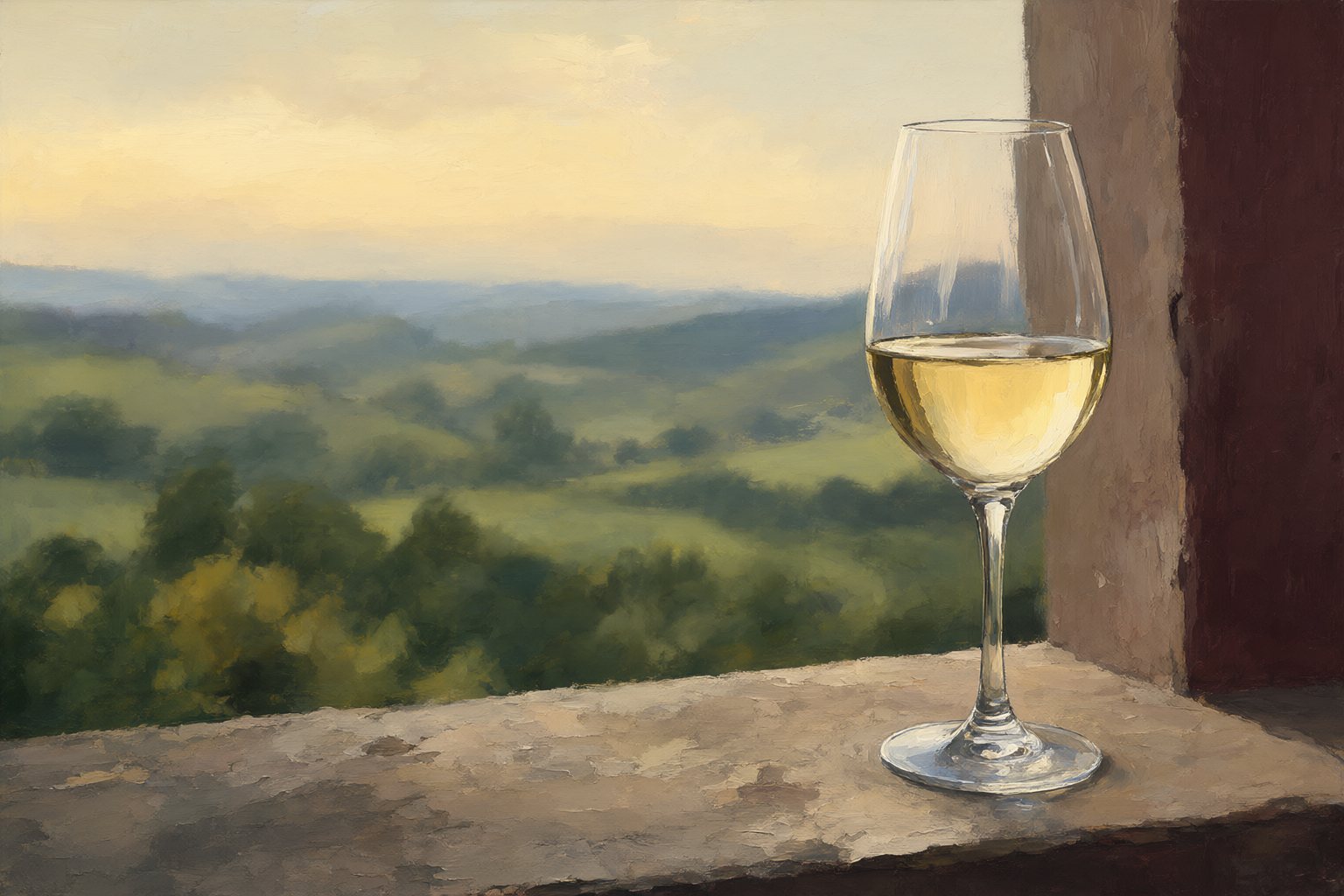
Ten euros is a psychological threshold more than an oenological one. Below it, many people expect to find nothing but cooking wine; above it, they feel entitled to hope. The truth is that the Italian white wine shelf is full of honest bottles at under ten euros, but they are not scattered at random. They are concentrated in certain appellations, almost always far from the fashionable names, where the price has stayed anchored to an era when those wines were drunk out of habit rather than for status. The trick, if it can be called that, is knowing where to look.
The rule of the unglamorous name
The price of a wine does not depend only on what it costs to make: it depends on how desirable its name is. A famous appellation, with few bottles and plenty of demand, inflates the prices of even its simplest versions. A large, old and slightly neglected appellation does the opposite: it forces producers to compete on what is in the bottle.
That is why Italy’s best-value whites are often found in areas with production codes half a century old and a reputation that swings between “trattoria classic” and “what my father used to drink”. They are wines made in significant volumes, from local grapes that cope well with simplicity and that, in the right hands, give a great deal more than is required.
The figures that follow are approximate: prices change from shop to shop, from vintage to vintage and with promotions. Treat them as a compass, not a price list.
Verdicchio, the quiet champion
If I had to pick a single appellation to explain the idea of value for money, I would choose Verdicchio dei Castelli di Jesi. A DOC since 1968, it is made in the province of Ancona from at least 85 per cent Verdicchio, and it has an internal hierarchy that helps you find your way: the Classico designation indicates the historic zone, the oldest one around Jesi; Classico Superiore adds lower yields and an extra half degree of alcohol. The Riservas, with a longer minimum ageing, have had their own DOCG since 2010 and usually cost more.
The trade guides have been saying it for years: few Italian whites offer so much for so little. In supermarkets you will find Verdicchio Superiore and Classico Superiore at roughly between 6 and 10 euros. At that price the grape already shows its character, that combination of taut acidity, savouriness and a faintly bitter note on the finish that makes it a serious white for the table, capable even of a few years’ life in bottle. The practical advice is simple: among the labels under ten euros, go for the Classico Superiore.
Soave, in need of rehabilitation
Few wines have paid for their success as dearly as Soave. In the years of mass production the name became synonymous with anonymous white, and its image has never fully recovered. The result, for today’s drinker, is an advantage: average quality has risen a great deal, its reputation much less so, and prices have stayed humane.
The DOC also dates from 1968 and requires at least 70 per cent Garganega, possibly alongside Trebbiano di Soave and Chardonnay. Here the word to look for on the label is Classico: it indicates the historic zone between the communes of Soave and Monteforte d’Alpone, already delimited in 1931, where the hills offer soils that are partly volcanic and basaltic, partly limestone. A good young Soave Classico has aromas of white flowers and almond, a palate that is soft but not flabby, and a certain saline note that explains why locally it is matched with everything, from risotto to lake fish.
The South and the islands, where sunshine comes cheap
Heading down the boot, the map of good-value whites widens.
In Campania, Falanghina del Sannio has been a DOC since 2011, created by bringing together under a single name the Falanghinas of four historic zones in the province of Benevento: Guardia Sanframondi, Sant’Agata dei Goti, Solopaca and Taburno. The production code calls for at least 85 per cent Falanghina. It is a sunny, crisp white, often with notes of citrus and yellow fruit, easily found on the shelves at around ten euros or a few euros less. In the same region, even a Fiano di Avellino, which is a DOCG and normally sits a rung higher, may turn up just below the threshold: when that happens, it is worth grabbing.
In Sardinia, Vermentino di Sardegna has been a DOC since 1988, covers the whole island and requires at least 85 per cent Vermentino. Not to be confused with Vermentino di Gallura, Sardinia’s only DOCG, which has stricter rules and generally higher prices. The island-wide Vermentino is a fragrant Mediterranean white, often with a slightly almondy, salty finish: in the under-ten-euro bracket it is one of the most reliable choices in Italy.
In Sicily, Grillo deserves attention. A historic grape of Marsala, it was already widely grown in the province of Trapani at the end of the nineteenth century; in recent decades it has become the flag-bearer of the island’s dry whites. It copes with the heat while keeping its freshness, and in its simpler versions gives citrusy, immediate wines, perfect for summer and not only then.
Cards to keep up your sleeve
Then there are less well-trodden appellations worth getting to know.
Pecorino, for instance, was a grape that had almost disappeared: in the Marche its rediscovery began in the early 1980s, when a few old vines were rescued at Arquata del Tronto. Today it is grown mainly in the Marche and Abruzzo, has had a DOCG, Offida, since 2011, and many simpler versions from Abruzzo and the Marche, with lively acidity and a fuller body than you might expect.
In Liguria, Pigato from the Riviera Ligure di Ponente can sometimes be found for under ten euros even in supermarkets: it is an aromatic, saline white that tells the story of the coast better than many more expensive bottles.
A few practical rules that apply across the board. Under ten euros, buy the most recent vintage available: these are wines made for freshness, and a simple white from three or four years ago rarely improves on a brightly lit supermarket shelf. Prefer designations that indicate a narrower area, such as Classico or a subzone, which at the same price often give you something more. And be wary of fanciful names with no clear appellation on the label: they are not necessarily bad, but they ask you to trust them without telling you anything.
The right price is a matter of curiosity
A good white under ten euros is neither a miracle nor an exception: it is the rule, provided you are willing to drink outside fashion. Those who chase only famous names pay for the name. Those who allow themselves a Verdicchio, a Soave Classico or an unpretentious Vermentino discover that Italian wine still has a rock-solid middle class, made up of old appellations and local grapes that need no expensive introductions. The smartest buy, at that price, is not hunting for a bargain. It is hunting for the right appellation.
❦