Wine with mushrooms and truffles: what to pour when the forest comes to the table
Porcini, white Alba truffle and black truffle: why Nebbiolo, Barbera, Pinot Nero and structured whites work, and which kind of oak to avoid.
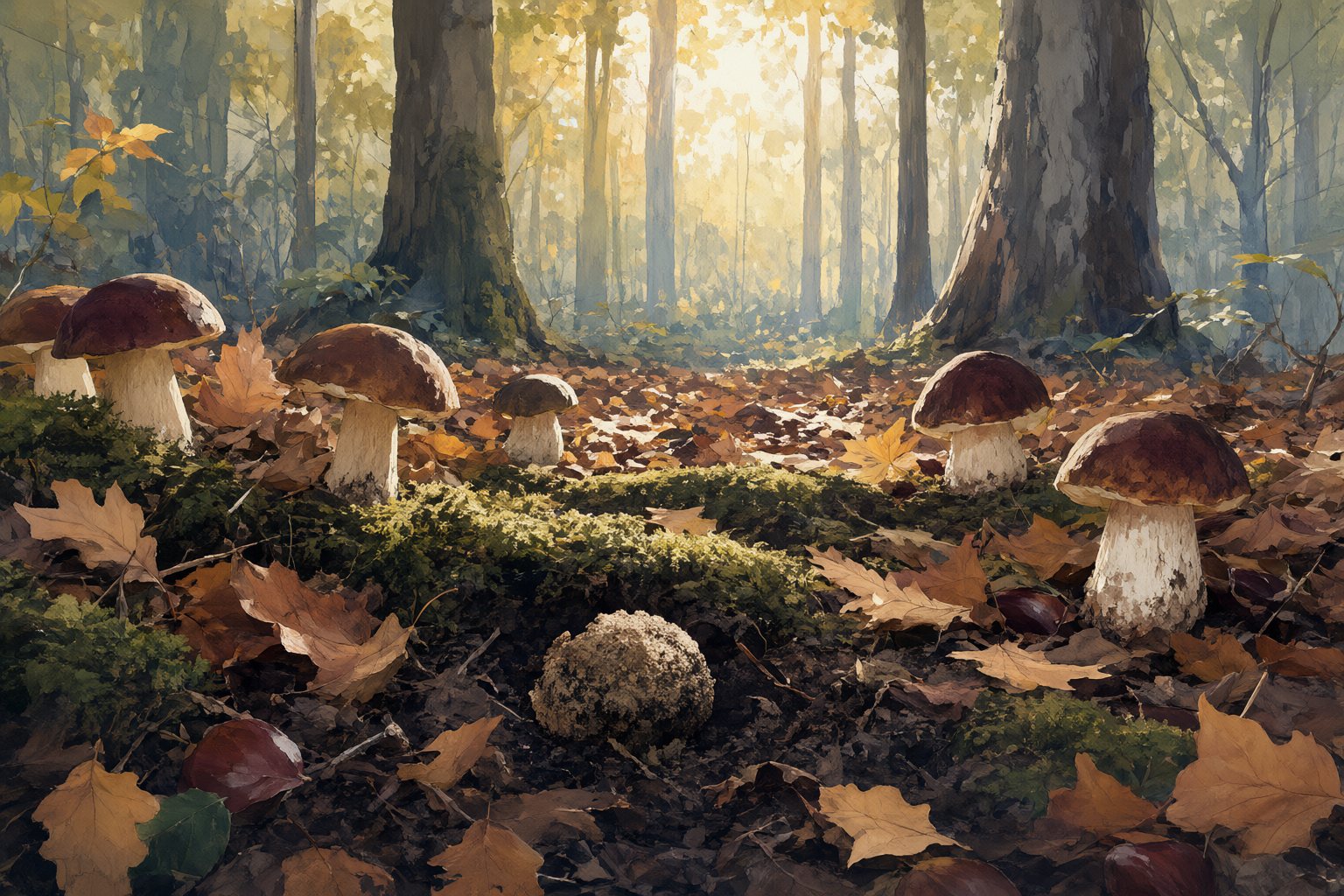
October has a very particular smell: wet earth, leaves rotting with dignity, a hint of hazelnut in the background. It is the smell of mushrooms and truffles, and anyone who has spent an autumn in the Langhe knows that, at that point, the problem is not what to eat but what to pour. Because the forest, on the plate, is an overbearing dinner guest: it does not shout like chilli nor sting like vinegar, but it fills every inch of space, and the wrong wine ends up in there like a guest who talks over everyone else.
The good news is that the rules are few. The bad news is that one of them, the one about oak, is ignored with surprising regularity.
The porcino, or three different dishes
Saying “wine for porcini” makes as much sense as saying “wine for meat”. It depends on how you treat them.
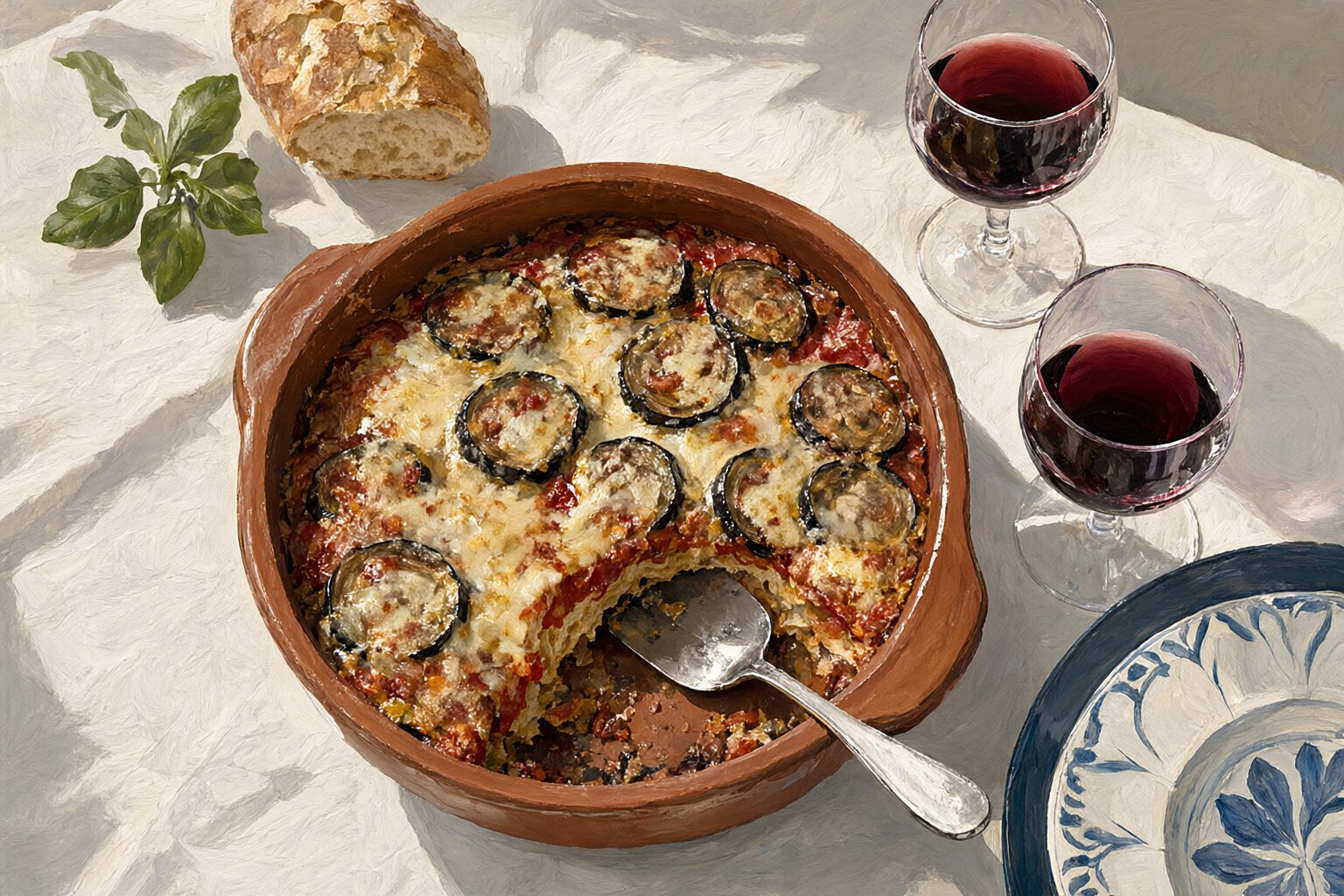
Risotto ai porcini is a dish of soft fats, butter and Parmigiano, with the mushroom bringing savouriness and an almost brothy note. Here an overly tannic red crashes into the starch and leaves the mouth rough. Better a Barbera, with its high acidity and gentle tannin: it cleans the palate without scratching it. Those who prefer white can aim for a wine with some body and some age, able to hold its own against the mantecatura, the final beating-in of butter and cheese.
Porcini trifolati, sautéed with garlic, oil and parsley, are more nervy. The garlic calls for freshness, the oil for something to cut through it. A mountain Pinot Nero, light in extraction, is the ideal companion: it has that forest-floor note that seems made to measure, and an acidity that stands up to the garlic. A young Nebbiolo also works well, a Langhe Nebbiolo for instance, provided it has not been kept too long in barrique.
Fried porcini are another story, and the answer is almost obvious: bubbles. Frying calls for fizz and acidity, and a dry metodo classico, Italy’s traditional-method sparkling wine, does the job better than any red. It is no coincidence that Alta Langa, the Piedmontese metodo classico based on Pinot Nero and Chardonnay, has for years been the official sparkling wine of the Alba Truffle Fair: the partnership has been formal since 2017. You can read it as an exercise in regional marketing, and it is that too, but the pairing has a logic of its own.
White truffle: let it speak
The white truffle of Alba, that is Tuber magnatum Pico, has a scent that resembles nothing else: garlic, honey, aged cheese, gas, earth. It is eaten raw, shaved, over deliberately simple dishes: tajarin, the fine egg pasta of the Langhe, with butter, a fried egg, hand-chopped raw beef, fonduta. The dish is a pedestal; the truffle is the statue.
Its season coincides with the International Alba White Truffle Fair, which this year reaches its 96th edition and runs from 10 October to 6 December 2026. In Piedmont the gathering season usually opens between late September and early October (in recent years the Region has pushed back the opening because of the climate) and closes at the end of January.
With white truffle, the classic choice is Nebbiolo in its most important guises: Barolo and Barbaresco. The reason is not just geographical, although geography matters (the same hills, the same fog that gives the grape its name). Mature Nebbiolo develops notes of dried rose, tar, forest floor and, precisely, truffle: wine and dish speak the same language. The point is age. A young Barolo still has tight-knit tannins which, on a dish as delicate as tajarin, smother the aroma instead of accompanying it. A Nebbiolo with a few years in bottle, in which the fruit has made way for tertiary aromas, is another matter entirely.
Then there is the question of eggs. A fried egg with white truffle is perhaps the purest dish of the season, and also the most awkward for wine: the yolk coats the mouth and flattens reds. Here a structured white is the better bet, with good acidity and a little evolution: a Timorasso from the Colli Tortonesi, a Roero Arneis with a few years behind it, a Langhe Chardonnay made without excess. The white has the acidity to cut through the yolk and no tannin to react badly. Those who try it for the first time usually never go back to red, at least with this dish.
Black truffle: more cooking, more wine
The black winter truffle (Tuber melanosporum) is a different creature. It ripens in the coldest months, its perfume is less explosive but longer-lasting, and above all it is cooked: it goes into sauces and fillings, and it tolerates heat. This changes everything, because dishes with black truffle are richer, often involve meat, and can take sturdier wines.
A Pinot Nero with some body, a Nebbiolo younger and more tannic than the one you would choose for white truffle, even a Sangiovese with a few years on its shoulders if the dish hails from central Italy: black truffle accepts more assertive conversation partners. With a black truffle cream on fresh pasta, on the other hand, you are back in Barbera territory, because the cream is rich and calls for acidity.
What to avoid: oak that shouts
And so we come to the rule that gets ignored. Mushrooms and truffles have fine, volatile, earthy aromas. New oak, the toasted wood of first-fill barriques, brings vanilla, coconut, coffee, smoke. Put them together and the oak always wins: the truffle vanishes, the porcino becomes a memory, and you have paid for an expensive dish only to taste the inside of a barrel.
This applies to reds, but even more so to whites. A heavily oaked Chardonnay with a truffled egg is a textbook mistake: butter on butter, vanilla over everything. Better to look for wines aged in large casks, in used wood or in steel, where fruit and earth stay centre stage.
Also to be avoided are very alcoholic, jammy reds: the perceived sweetness of overripe fruit clashes with the earthy bitterness of the mushroom. And with white truffle, beware of overly aromatic whites: a dry Moscato or a Gewürztraminer will fight the truffle for the same stage.
The only rule that matters
It could all be summed up in one sentence: with mushrooms and truffles, the wine must take a step back. Not disappear, but accept the role of supporting actor. It is an idea that runs against a certain Italian habit of opening the most important bottle for the most important dish, a habit that often leads to wasting a great young Barolo, closed and tannic, on tajarin that deserved something else.
My view is that autumn is the season in which wine is best judged precisely by what it knows how to leave unsaid. An honest Barbera with a well-made risotto ai porcini is worth more than a prestigious bottle chosen for its label. And if you really want to spend, with white truffle it makes sense to do so on mature Nebbiolo, the kind that has had time to learn how to smell of the forest. The rest is oak, and oak, in October, is better off in the fireplace.
❦