Franciacorta vs Trento DOC: Italy's Two Sparkling Capitals Compared
Lake against mountain: how Franciacorta and Trento DOC differ in history, climate, rules, Satèn and Riserva, and what it means in the glass.
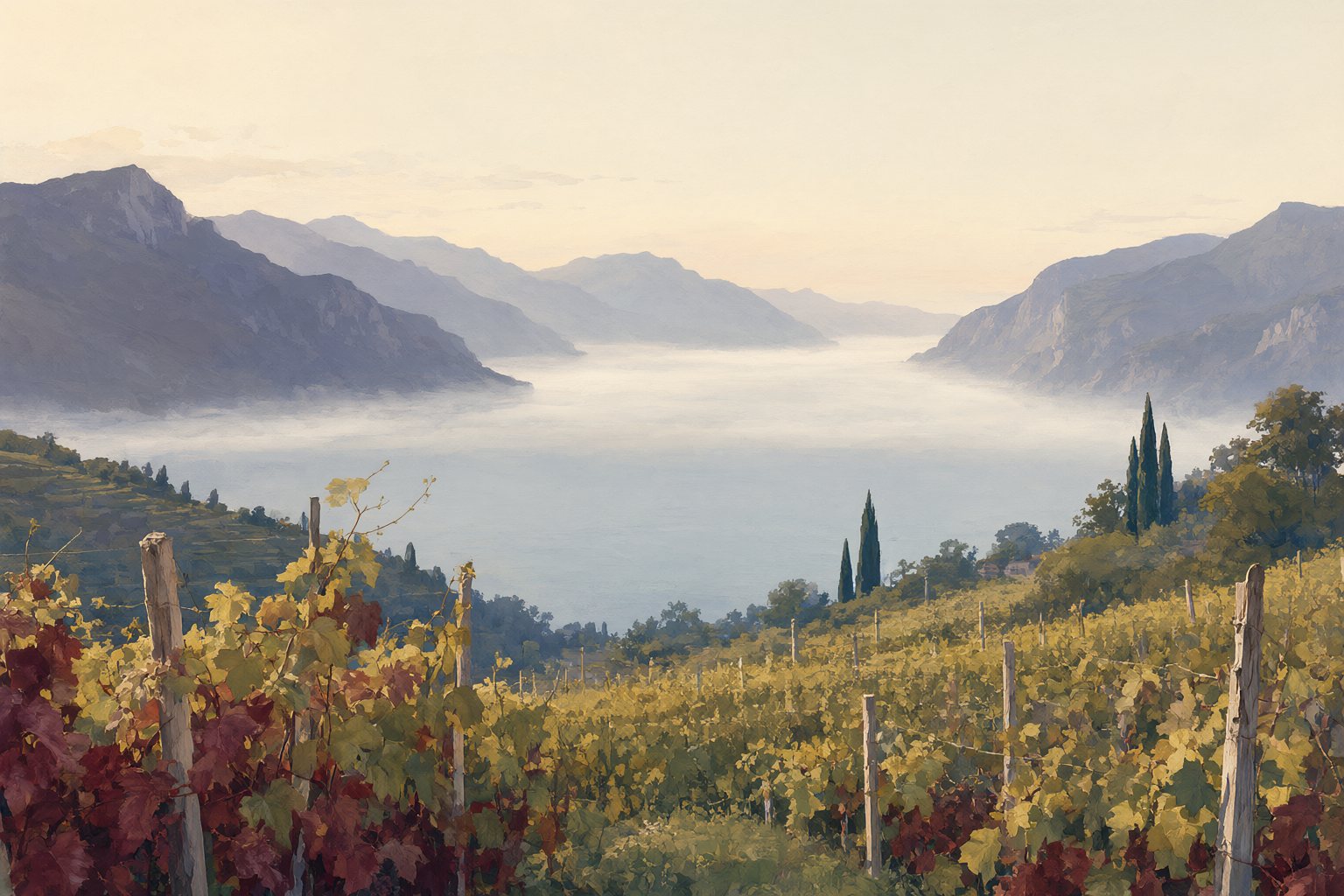
Ask a wine lover which is Italy’s capital of traditional-method sparkling wine and be ready for a long evening. On one side, gentle hills south of Lake Iseo; on the other, a province of valleys and terraces climbing towards the Dolomites. Franciacorta and Trento DOC do the same thing with the same grapes, yet they tell the story of two almost opposite landscapes. That is precisely what makes them worth setting side by side.
Two births, two temperaments
Trento has the longer history. In 1902 Giulio Ferrari founded his cellar in the city, after a period of training in France, intending to make ambitious sparkling wines from Chardonnay: a wager that in time set the standard and grew into an entire wine district. The Trento DOC itself arrived in 1993.
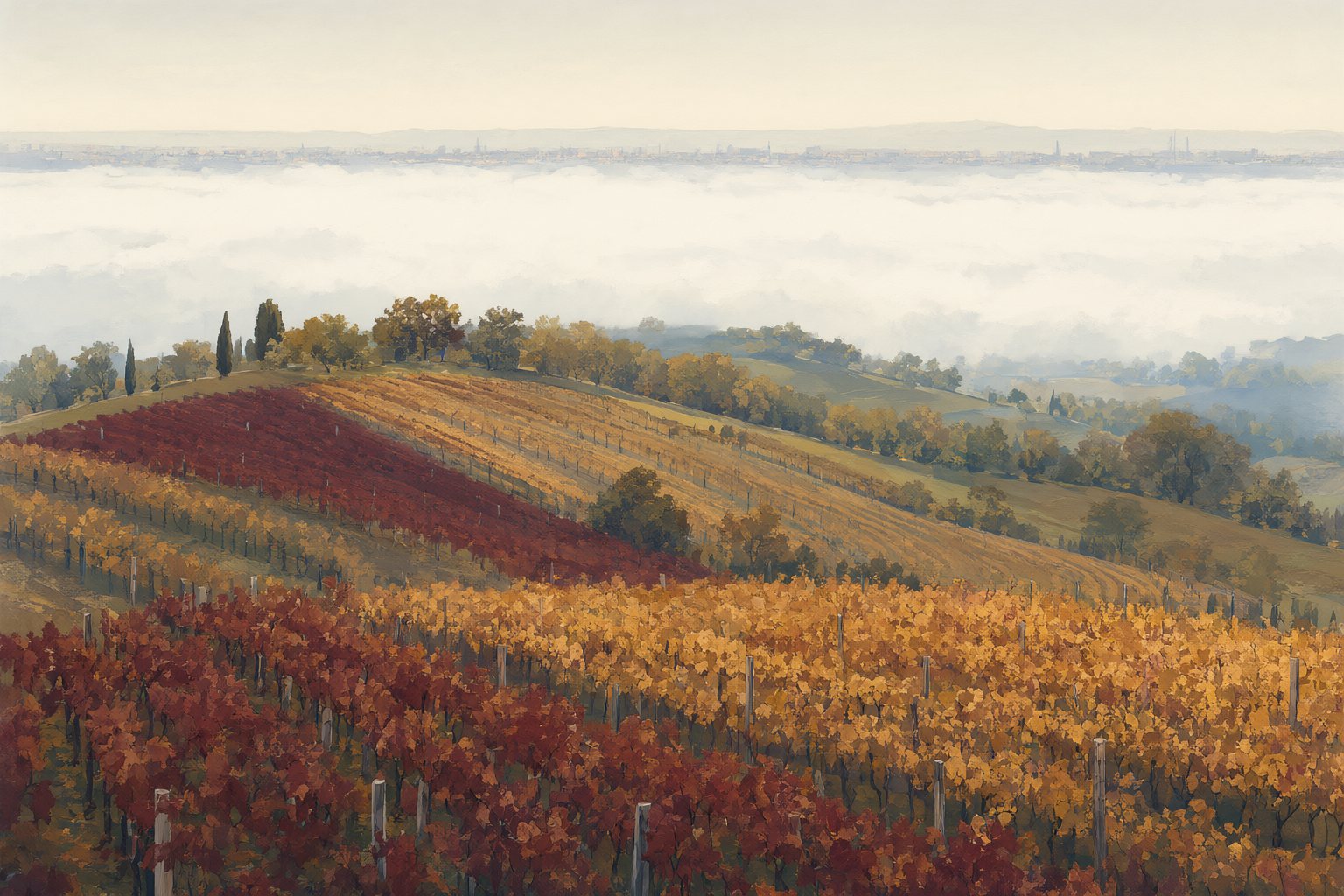
In Franciacorta the script is more recent and more theatrical. In 1961 Franco Ziliani, winemaker at Berlucchi, produced some 3,000 bottles of what was still called Pinot di Franciacorta. The area gained its DOC in 1967 (at the time mainly for still wines), the Consorzio was born in 1990, and in 1995 came the DOCG, reserved exclusively for sparkling wines. In a single generation it went from experiment to guaranteed denomination, a pace that explains much of that territory’s ambition.
Lake against mountain
Here lies the difference that matters. Franciacorta is an amphitheatre of morainic hills, deposits left by glaciers, between the southern shore of Lake Iseo and Brescia. The soils are gravelly, sandy and partly calcareous, and the lake tends to soften the extremes: milder winters and less scorching summers than the neighbouring plain might suggest. The grapes ripen with relative generosity, and the result, on average, is a sparkling wine with fuller fruit and a rounder profile.
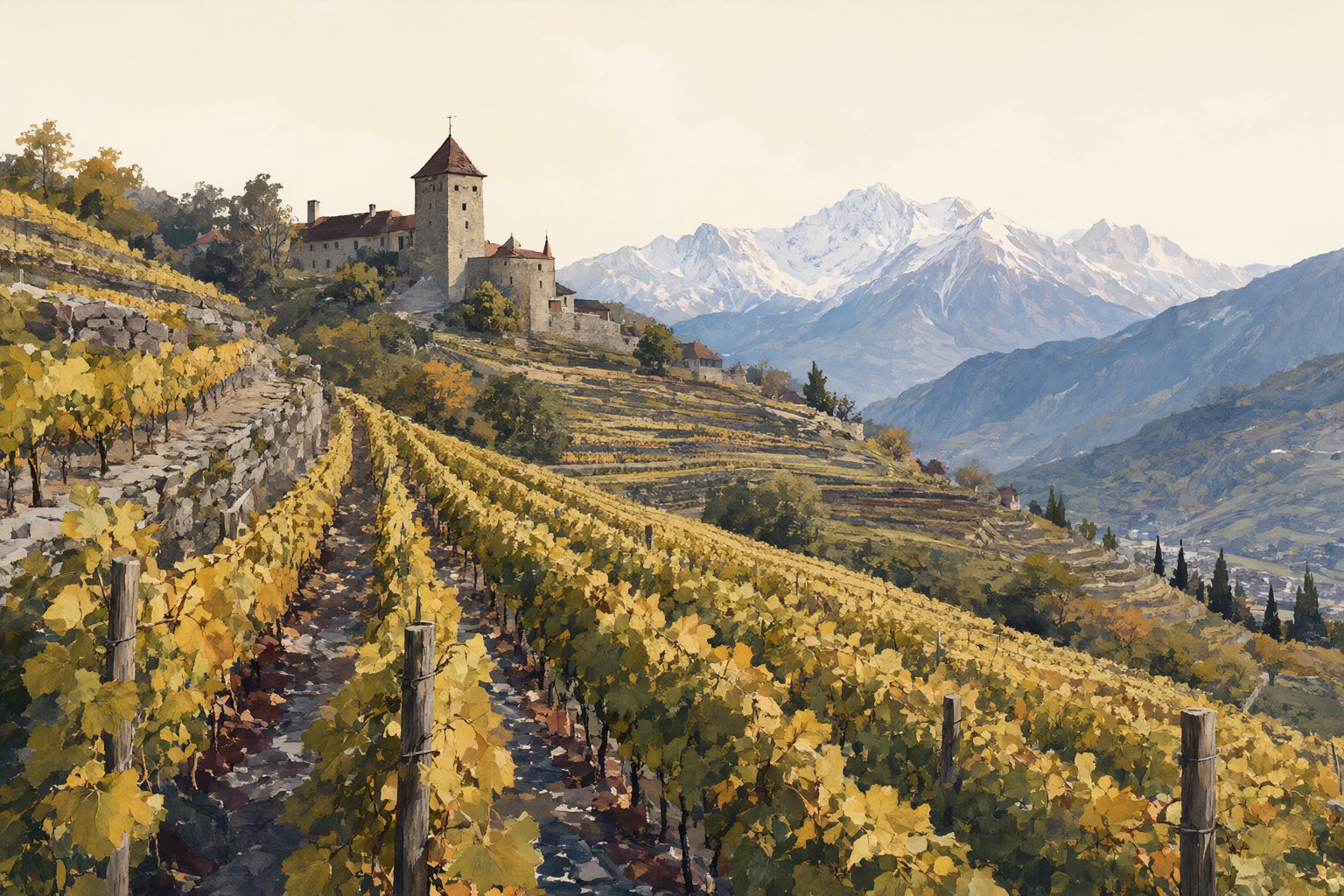
Trento plays a different game. The vineyards climb to around 800 metres above sea level, spread across dozens of communes in the province, on largely limestone soils. The deciding factor is the diurnal range: in summer the gap between day and night easily exceeds 15 degrees, which preserves acidity and aroma. From Lake Garda rises the Ora, a warm wind that stirs the air in the valley and helps keep the grapes healthy. The typical character is tauter, more vertical, more mineral: less “fruit”, more nerve.
Beware of oversimplification, though. Within each zone the differences between vintages, aspects and altitudes are huge, and a low-lying Trento can be softer than a Franciacorta from a cool hillside. Climate steers; it does not condemn.
What the rulebooks say
On paper the two texts look alike and part company on a few decisive points. In Franciacorta the base wine may come from Chardonnay and Pinot Nero, with Pinot Bianco up to 50% and, following a relatively recent opening, up to 10% Erbamat, a local late-ripening grape from the Brescia area with lively acidity. Meunier is not provided for. In Trento the list is wider, Chardonnay, Pinot Nero, Pinot Bianco and Meunier, with no fixed percentages: each producer composes as they see fit.
On time, the contrast is stark. Non-vintage Franciacorta requires at least 18 months on the lees (25 in all before release), the Millesimato 30 on the lees (37 in all). In Trento the base wine stops at 15 months, the Millesimato at 24. This is not a verdict on quality but a difference in starting point, and it explains why many entry-level Trento wines feel more immediate and many Franciacorta wines creamier.
Satèn: Franciacorta’s invention
Here Trento has no equivalent. Satèn is a purely Franciacorta style: a white from whites, made from Chardonnay (with Pinot Bianco allowed up to 50%) and with bottle pressure capped at 5 atmospheres, against roughly 6 for an ordinary sparkling wine. Less pressure means a finer, almost velvety bubble, hence the name. The timing is longer than for the base wine too: 24 months on the lees.
It shows that a young denomination can afford to invent a style rather than merely imitate one. Trento, for its part, has played the opposite card: not an extra category, but the identity of an entire mountain.
Riserva: paying for time
Both denominations have a Riserva, and this is where the comparison grows serious. Franciacorta demands at least 60 months on the lees, five years. Trento asks for 36 months, with a compulsory vintage on the label and the disgorgement date on the back. The timescales differ greatly, but what matters is how they are used: a Trento Riserva, with its mountain acidity, can withstand the wait without tiring; a Franciacorta Riserva finds its deepest creaminess in those five years. Two philosophies, two ways of ageing the same grapes.
Where I cast my vote
To prefer one over the other as if they were rivals is a bar-room error. They are two answers to the same problem: how to make a great sparkling wine in a country the sun treats too generously. Franciacorta answers with the lake, patience and an almost tailor-made idea of style; Trento with altitude, tension and a long family tradition. If I had to pick one for the table, I would take Trento with a lake-fish dish and Franciacorta with a risotto. Then, with the bottle empty, I would change my mind. And that would be a good sign for both.
❦