What wine goes with pumpkin? Autumn’s trickiest pairing
Risotto, tortelli mantovani, velvety soup or roast pumpkin: which wine to choose when the sweetness of pumpkin and squash throws the glass off balance.
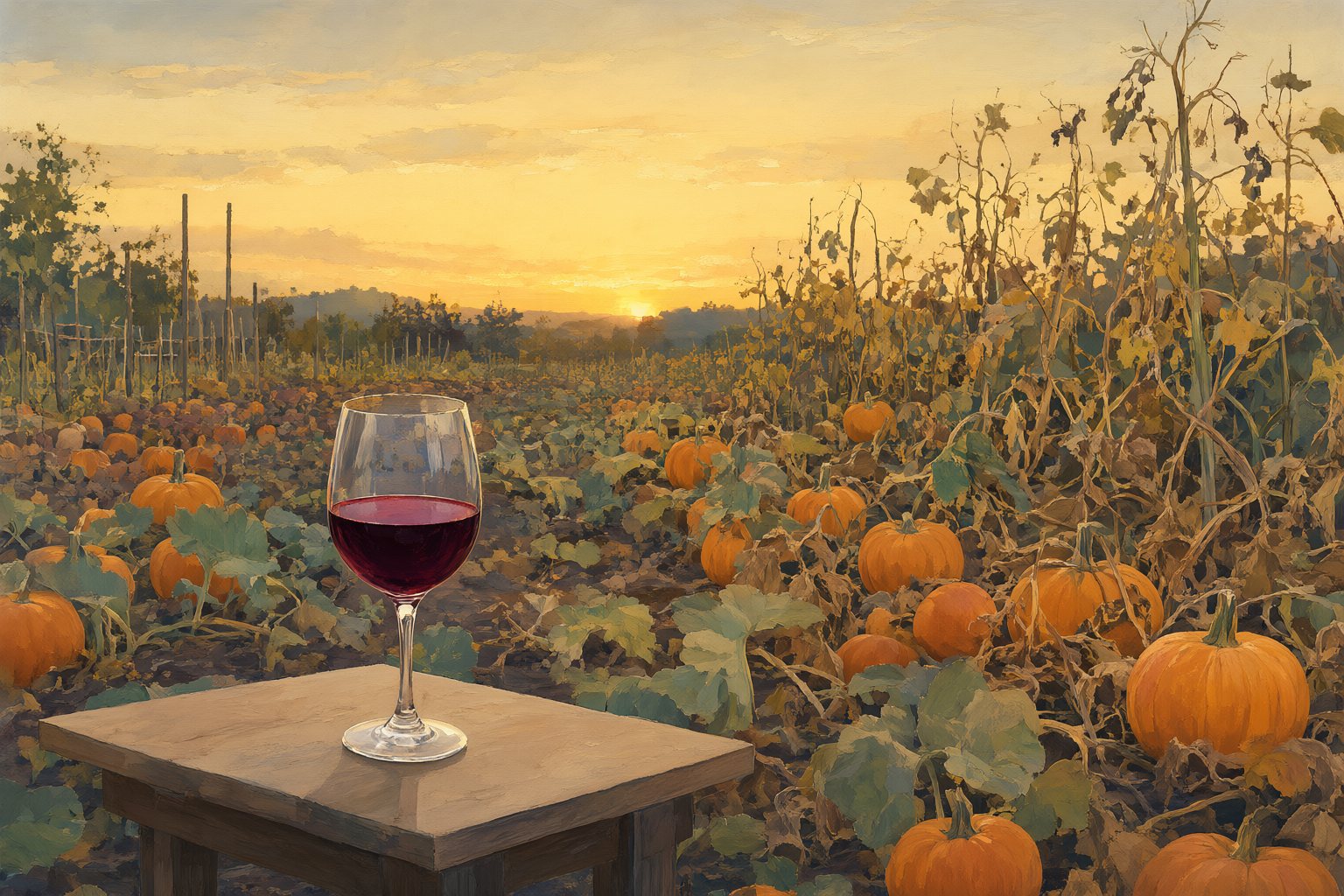
Pumpkin looks like an accommodating ingredient. It is round and orange, children love it and so do Michelin-starred chefs, it ends up in Tuesday’s risotto and at the Christmas Eve dinner. Then you bring it to the table beside a serious red and discover that it is a sly opponent: that soft, almost dessert-like sweetness overturns the balance in the glass and makes even the wine that seemed perfect last night taste angular.
The problem is not pumpkin itself. It is that pumpkin never arrives alone, and each time it brings a different family along: the butter and cheese of risotto, the amaretti and mostarda of tortelli, the cream of a velvety soup, the caramelisation of the oven. Choosing the wine means working out which of these relatives is in charge.
Why sweetness complicates everything
There is a rule sommeliers repeat ad nauseam that, with pumpkin, becomes law: sweet food makes wine seem drier, more acidic and more bitter than it is. A red rich in tannin, beside a sweet, velvety mouthful, loses its fruit and flexes its muscles in the wrong way, with a jarring, drying sensation. A very taut, lean white can come across as almost aggressive.
Pumpkin, moreover, changes character according to the variety. The Mantuan kind is dense and compact, Delica is drier with a hazelnut tone, Marina di Chioggia is more watery and recalls chestnut. The sweeter and more floury the flesh, the more the wine needs softness and fruit, or else bubbles capable of cutting through. The winning strategy is almost always one of two: go along with the sweetness with a round, lightly aromatic wine, or cut it with freshness and carbon dioxide. Fighting it with tannin and oak, on the other hand, rarely works.
Risotto, territory for whites with backbone
Pumpkin risotto is the most democratic dish of the season, but it is also the richest: butter and cheese beaten in at the end, sometimes a base of slow-cooked onion. Here the pumpkin is sweet but softened by the starch, and the wine needs enough structure not to disappear.
A medium-bodied white with good acidity is the safest choice. Lugana, from Turbiana grapes grown south of Lake Garda, has that combination of flesh and savouriness that supports the creaminess without weighing it down. Soave, from Garganega, brings almond notes that converse naturally with pumpkin. If the risotto is enriched with crisp sage or an aged cheese, a traditional-method Franciacorta, perhaps in the Satèn style, cleans the palate with every forkful and keeps the dish from becoming monotonous.
Avoid whites with plenty of new oak: the vanilla of the oak, added to the sweetness of the pumpkin and the butter, turns the dish into a kind of pudding.
Tortelli mantovani, the hardest test
This is where things get serious. Mantua’s tortelli di zucca, the pumpkin-filled pasta typical of the Christmas Eve dinner, have a filling that seems designed specifically to trip up anyone trying to pair it: pumpkin, crumbled amaretti, apple mostarda (fruit preserved in mustard syrup), grated cheese, nutmeg. Sweet, bitter, pungent and savoury all at once. And on top, melted butter and sage.
The answer that comes from the territory is also the most convincing: Lambrusco Mantovano. The appellation, recognised in 1987, includes the subzones Viadanese-Sabbionetano and Oltre Po Mantovano and permits only frizzante versions, red or rosé, dry or off-dry. The main grapes are Lambrusco Viadanese, Maestri, Marani and Salamino. A sparkling red with crunchy fruit and light tannin does exactly what is needed: the bubbles sweep away the butter, the acidity brings the sweetness back into line, and the red fruit does not clash with the amaretti.
That leaves the dilemma between dry and amabile, off-dry. The temptation, faced with such a sweet filling, is to go for the off-dry so the wine does not seem sour. It works, but the risk is a saturation effect after the second plate. A well-made dry one, served cool, is often the more elegant choice, and leaves room for the rest of the dinner.
Those who prefer white at Christmas can look to a dry Gewürztraminer from Alto Adige: its spicy aromatics echo the nutmeg and the mostarda, and its softness absorbs the sweetness of the filling. It is a bolder, less obvious pairing, and all the more fun for it.
Velvety soup and roast pumpkin, two opposite worlds
Velvety pumpkin soup is the most delicate version of pumpkin, often enriched with cream, ginger or curry. Here reds are almost always out of place, and even structured whites risk covering it. Better to aim for soft, aromatic whites: a mountain Müller Thurgau, a Gewürztraminer if there are spices, or a traditional-method sparkler if the soup is garnished with croutons and toasted seeds. If the dish is heavily spiced, the wine’s aromatics become a bridge; if it is simple and buttery, good freshness is enough.
Roast pumpkin is another story. Caramelisation develops toasty, almost smoky notes, often accompanied by rosemary, garlic, perhaps a sprinkling of cheese or a few slices of pancetta. It is the one case in which a red can really have fun. But it needs to be a fruity red with soft tannin: a Valpolicella Classico, a Dolcetto, a Bardolino. With a young, juicy red, served slightly cool, the sweetness of the roast pumpkin becomes a support for the fruit rather than an enemy. If the pumpkin accompanies roast pork or sausage, you can aim as high as a Valpolicella Ripasso, but without overdoing it with the most concentrated versions.
A curious alternative is skin-macerated whites, the so-called orange wines: their light tannic texture and dried-fruit notes stand up well to caramelisation, and the colour, it must be said, looks the part beside the orange of the pumpkin.
The most common mistake, and a small provocation
The mistake most often seen at the table is the serious red, structured, long aged in wood, chosen because “it’s autumn and you need a red”. With pumpkin it almost never works: the sweetness heightens the tannin, the oak piles onto the softness, and in the end neither comes out of it well.
Pumpkin asks for humbler wines than we imagine, but no less interesting for that. It asks for bubbles, fruit, a certain cheerfulness. Lambrusco Mantovano with tortelli is not a folkloric compromise, it is simply the most intelligent pairing you can make, and the fact that it comes from a few kilometres away from the pot is no accident. If there is a lesson in all this, it is that the great regional cuisines solved the problem long before we did. All it takes is the humility to listen to them, and to put the right bottle in the fridge.
❦