Cantine Aperte a San Martino 2026: tasting the new wine straight from the vat
From 1 to 15 November the wineries of the Movimento Turismo del Vino open their doors for the new wine. How to plan, what to ask, what to expect.
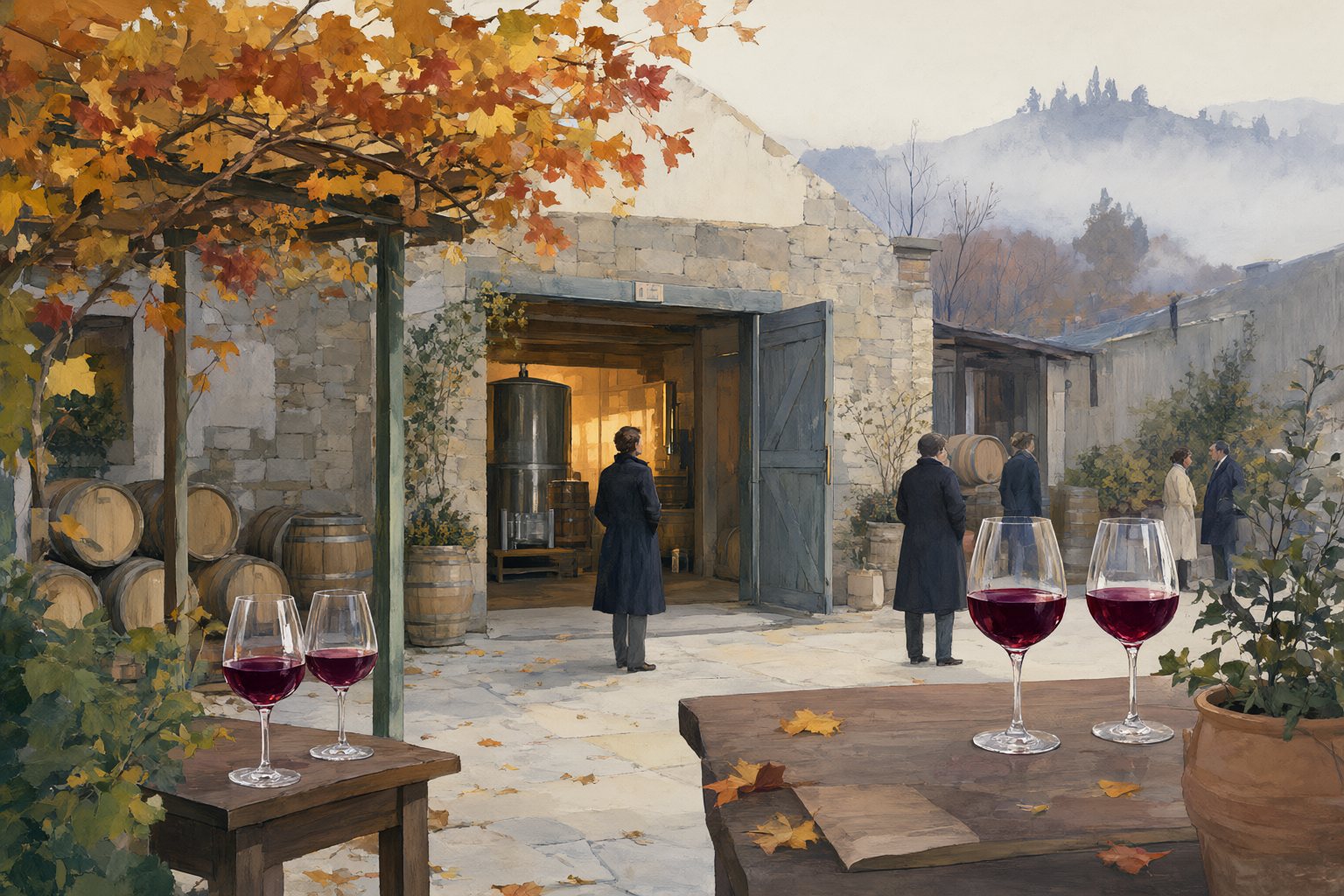
There is a moment in the year when wine is not yet wine, or at least not entirely. It is cloudy, edgy, it smells of crushed fruit and damp cellar, and those who made it do not yet quite know what it will become. It is exactly that moment that, from 1 to 15 November, the wineries of the Movimento Turismo del Vino will put on show with Cantine Aperte a San Martino: two weeks in which the new vintage can be tasted where it lies, in tank, in vat, in barrel. Before the glass bottle, before the label, before the marketing.
Why St Martin’s Day
In the farming calendar, 11 November is no ordinary date. For centuries it marked the close of the agricultural year: contracts expired, accounts were settled, and sharecropping families moving to a new farm loaded up their carts and left, so much so that in many areas fare San Martino, “to do St Martin”, still means to move house. And in the cellar, wine was racked. The proverb puts it bluntly: at San Martino every must becomes wine. Whether that is literally true depends on the harvest and the technique, but the idea holds: by mid-November the main fermentations are generally over and the new wine is beginning to take on a recognisable face.
The Movimento Turismo del Vino has built one of its seasonal events around this festival. The association was founded in 1993 and brings together around a thousand wineries across Italy; its best-known event remains Cantine Aperte at the end of May, but over the years the calendar has lengthened to take in the harvest, August nights with Calici di Stelle and, indeed, the depths of autumn. The San Martino edition is the most intimate, the least crowded and, for anyone who wants to understand how a wine is born, probably the most interesting.
What to expect (and what not to)
The format, by the organisers’ choice, is left to the individual estates: each will decide its own opening hours, programme and prices. The Movimento speaks of guided tastings “from vat to barrel”, visits, walks through the bare vineyards, pairings with seasonal flavours and meetings with the producers. At the time of writing the calendar of specific events is announced as imminent on the official website, so it is worth checking winery by winery.
Two caveats. The first: this is not a festival. There will be no pavilions or wristbands, just the doors of working farms, often in the thick of cellar activity. The second: the wine you taste from the vat is not the one you will find in bottle in a year or in five. A red destined for wood can, in November, be hard, reductive, almost surly; a white may still have a veil of carbon dioxide or a hint of residual sweetness. That is the beauty of it, but it should be taken for what it is: a snapshot, not a verdict.
Alongside the wine from the vat, many wineries will be offering novello, which in Italy is subject to precise rules: it may be released from 30 October of the harvest year, must contain at least 40% wine made by carbonic maceration of whole grapes, and must be bottled by 31 December. It is a different animal from the vat sample, fruitier and more immediate, built specifically to be drunk young. Tasting them side by side is one of the most instructive ways to spend a November afternoon.
How to plan
Booking is compulsory, and it is no formality: many participating estates are small, with a single person looking after visitors or with the owner dividing their time between guests and vats. Writing or phoning a few days ahead also lets you ask what you will actually be able to taste, how long the visit lasts and whether there will be anything to eat.
Better to focus on a single area and two, at most three wineries in the same day. November has short days, morning fog on the plains and hill roads that become less friendly after dark. Whoever is driving should use the spittoon without embarrassment: in a real winery it shocks nobody; on the contrary, it is a sign that you are tasting attentively. Alternatively, take turns as designated driver or choose an area you can reach by public transport.
As for clothing: cellars are cold, damp and often have wet floors. Closed shoes and an extra jumper are worth more than any guidebook. And a piece of advice that sounds trivial but is not: no perfume. In a small room full of glasses it carries further than you would think.
The two-week window means you can avoid the busiest weekends. If you can, go on a weekday: the producer will have more time and be more inclined to draw an extra sample.
What to ask the producer
A visit to the vats is the chance to ask questions that have no answer in a wine shop. A few ideas:
- How did the vintage go? Not the brochure version, the real one: rain, heat, hail, picking dates. Every harvest has a story, and the new wine is its most faithful transcript.
- What will happen to this wine? Where it will mature, for how long, whether it will be blended with other vats or other vineyards. Understanding its path helps you read the tasting.
- When was it harvested and how was it made? Native or selected yeasts, long or short macerations, steel, concrete or wood.
- Can we taste it alongside a previous vintage? It is not always possible, but when it is, it is a lesson worth the journey: you see in real time how much a wine can change.
And then the simplest question, which many forget: what do you like about this vintage? The answer often says more than a technical data sheet.
For those staying at home
Those who cannot travel can still celebrate 11 November properly. Tradition calls for roast chestnuts and new wine, and there is no reason to argue: a novello or a young red not aged in wood, served lightly cool as if straight from the cellar, goes beautifully with roast chestnuts and cured meats. Those who prefer a white can look for a wine from the latest harvest, savoury and unoaked. What matters is that it is young: San Martino is the feast of wine that is just beginning, not of wine that has already said everything.
Our view is simple. Italy is full of wine tourism events, and not all of them deliver what they promise. This one, however, has a rare virtue: it shows wine while it is still imperfect, when the choices have not yet been made and the producer has to think out loud. It is a wine not yet for sale, and for that very reason it tells its story better. It is worth going with few expectations and plenty of questions.
Practical information
- When: from 1 to 15 November 2026
- Where: at wineries belonging to the Movimento Turismo del Vino across Italy
- Booking: compulsory, directly with each winery
- Opening hours and prices: set by each individual winery
- Official website: movimentoturismovino.it
❦