Wine serving temperature: why we get reds and whites wrong
Reds too warm, whites ice-cold: why “room temperature” is a misunderstanding, and the right serving temperatures for every style of wine.
You can spend a small fortune on a bottle, choose the right glass, wait for the right occasion, and then ruin everything with a thermometer nobody looked at. No faulty cork or neglected cellar required: all it takes is a red served at twenty-four degrees beside the radiator, or a white taken out of the fridge and poured straight away, so cold it has nothing left to say. It is the most common mistake at the table, and the easiest to fix. Which is precisely why it is so irritating.
The myth of room temperature
Almost all of us learned a simple rule: whites cold, reds at room temperature. The first half has been taken too literally; the second has simply aged badly.
The French term chambré, from which our “room temperature” descends, was born in a world that no longer exists. The houses in which the etiquette of serving wine was codified had no central heating: thick walls, large rooms, fireplaces that warmed little more than the space in front of them. Some reconstructions place that “room” at around 12–14 degrees; the exact figure is debatable, but the point is not. “Bringing to room temperature” meant taking the cellar chill off the wine, not warming it up.
Today a flat in winter sits comfortably above twenty degrees, and a crowded restaurant is often warmer still. Applying to the letter a rule devised for a freezing drawing room means serving a red four, five, six degrees warmer than its inventors ever intended. That is not a nuance: it is a different wine.
What changes in the glass
Temperature neither adds nor removes anything from what is in the bottle. It shifts the balance, deciding which components make themselves felt first and which stay in the shadows.
Warmth exalts the soft elements: alcohol, glycerol, any residual sugar. A red that is too warm turns heavy, almost sickly-sweet, and above all alcoholic. The alcohol evaporates faster and reaches the nose first, smothering the fruit and the finer notes under a prickly sensation that everyone has felt at least once, even without putting a name to it. The wine seems tired, slack, older than it is.
Cold does the opposite: it throws the hard elements, acidity and tannins, into relief and holds back the release of aromas. That is why a tannic red served icy comes across as astringent and surly, while a white chilled almost to zero becomes a sour, mute drink. The nose closes, complexity vanishes, and all that remains is a generic sense of freshness. You end up dismissing as “anonymous” a wine that, a few degrees higher, would have had plenty to say.
In both cases the damage is the same: you are drinking a caricature of the wine, skewed one way or the other.
The ranges, style by style
The guidance below is indicative. Sources do not always agree to the degree, and some differences come down to taste and tradition; but the order of magnitude is shared, and it is enough to avoid the gross errors.
- Sparkling wines and Champagne: between 6 and 10 degrees. Lower for young, simple metodo classico wines, towards the top of the range for more complex, longer-aged sparklers, which at overly frigid temperatures lose exactly what makes them interesting.
- Young whites and rosés: between 10 and 12 degrees or so. Cool, not frozen.
- Full-bodied or oak-aged whites: a few degrees more than young whites. Here the guidance is less uniform, but serving them like a current-vintage white almost always means stifling them.
- Young, light reds: generally between 14 and 16 degrees, even a little less in summer. Grapes such as Schiava, Pinot Nero, Frappato, Rossese or Freisa cope well with, and indeed gain from, being served slightly cool.
- Structured, aged reds: between 16 and 18 degrees. Some guides go as high as 20 for the grandest reds, but that is the upper limit, not the norm. Beyond it, alcohol takes over.
- Sweet and passito wines: cool, around 10 degrees, because the cold keeps the perception of sugar in check and gives back some verve.
One practical rule runs across every category: wine warms up in the glass, never the reverse. Better to start a degree below and let it rise than to start above with no way back.
Fridge, ice bucket and a few precautions
You don’t need expensive gadgets. You need a habit.
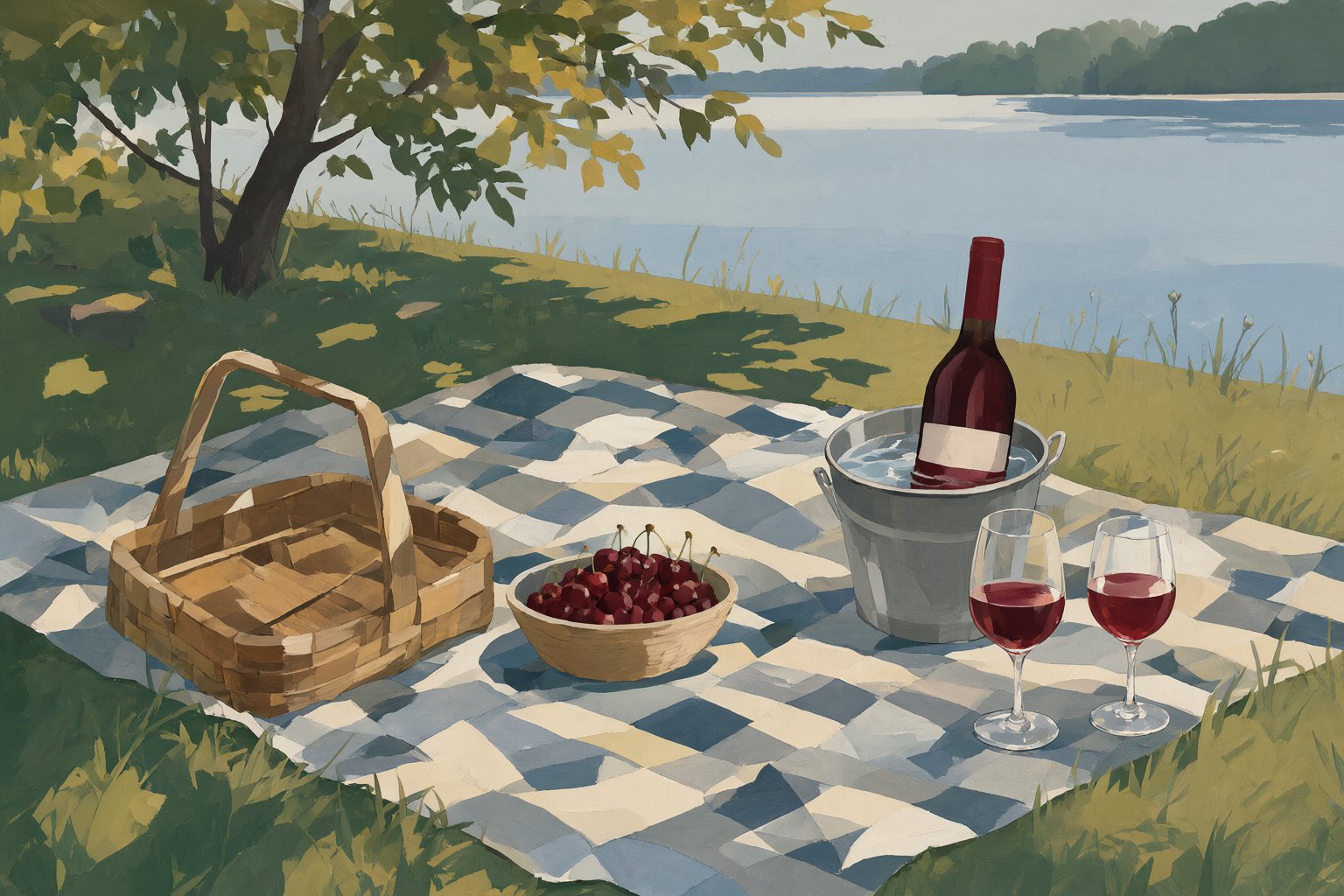
Reds go in the fridge. It sounds like a provocation; it is common sense. Half an hour in the fridge before opening brings a red from house temperature to the right one, or close to it. For light reds you can stretch it a little; for very structured ones, less is enough.
Whites come out of the fridge. A domestic fridge is designed to store food, not to serve wine, and it is colder than almost any white needs. Taking the bottle out twenty minutes to half an hour before serving brings it back into a zone where it can express itself again.
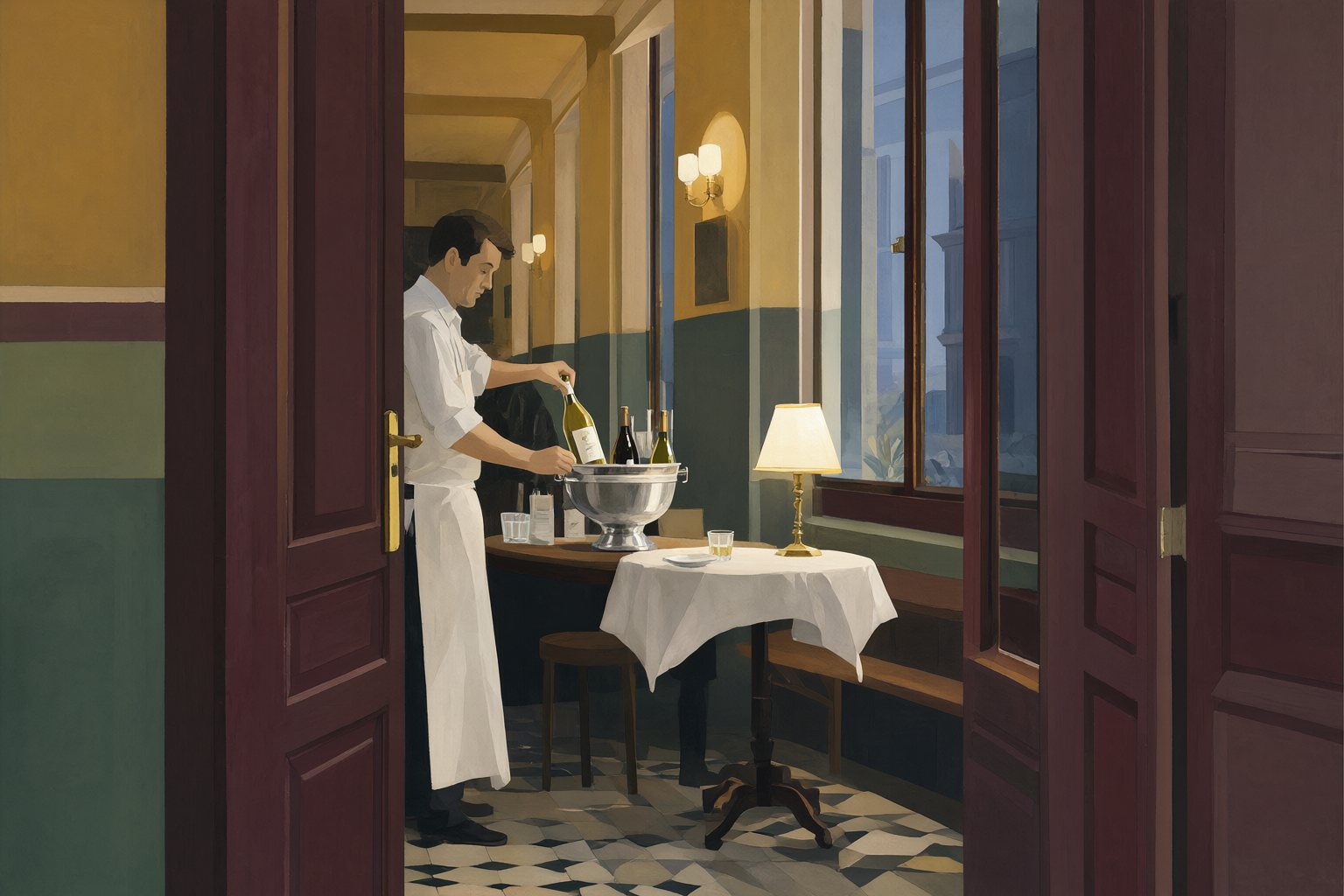
Fill the ice bucket with water, not just ice. Ice cubes on their own touch the bottle at only a few points and chill it slowly; ice and water together wrap the whole of the glass and work far faster. This way a white or a rosé at room temperature gets where it needs to be in a quarter of an hour or a little more. A handful of coarse salt in the water speeds things up further. Remember, though, that an ice bucket has no thermostat: left there all through dinner, the bottle keeps getting colder. For delicate wines it is better to take it out and put it back as needed.
The freezer is an emergency, not a method. It works, but it needs watching: forget a bottle in the freezer and you risk finding it cracked, or with the cork pushed out.
Never ice in the glass, at least for wines you intend to take seriously. It chills, yes, but it dilutes, and what has been watered down does not come back.
Anyone who wants to remove all doubt can keep a simple bottle thermometer in the kitchen. After a few weeks, almost always, it will no longer be needed: the hand learns to recognise the right coolness on the glass.
A matter of respect
We talk a great deal about vintages, crus and food pairings, and very little about temperature, perhaps because it seems a textbook matter, not very noble. It is the opposite. It is the only parameter of service that depends entirely on the person pouring the wine: the last gesture with which you can honour the work of whoever made it, or undo it.
My advice is to distrust anyone who says “room temperature” without specifying which room. And to adopt a contrarian habit: serve reds a little cooler than you are used to, and whites a little less cold. In the great majority of cases the wine will thank you. And whoever is drinking will notice that the bottle was better than they remembered.
❦