The best sparkling wines under €15, appellation by appellation
Prosecco Superiore, Trento DOC, Crémant, Cava, Oltrepò, Lambrusco and Asti: what to look for on the label to drink well for under €15.
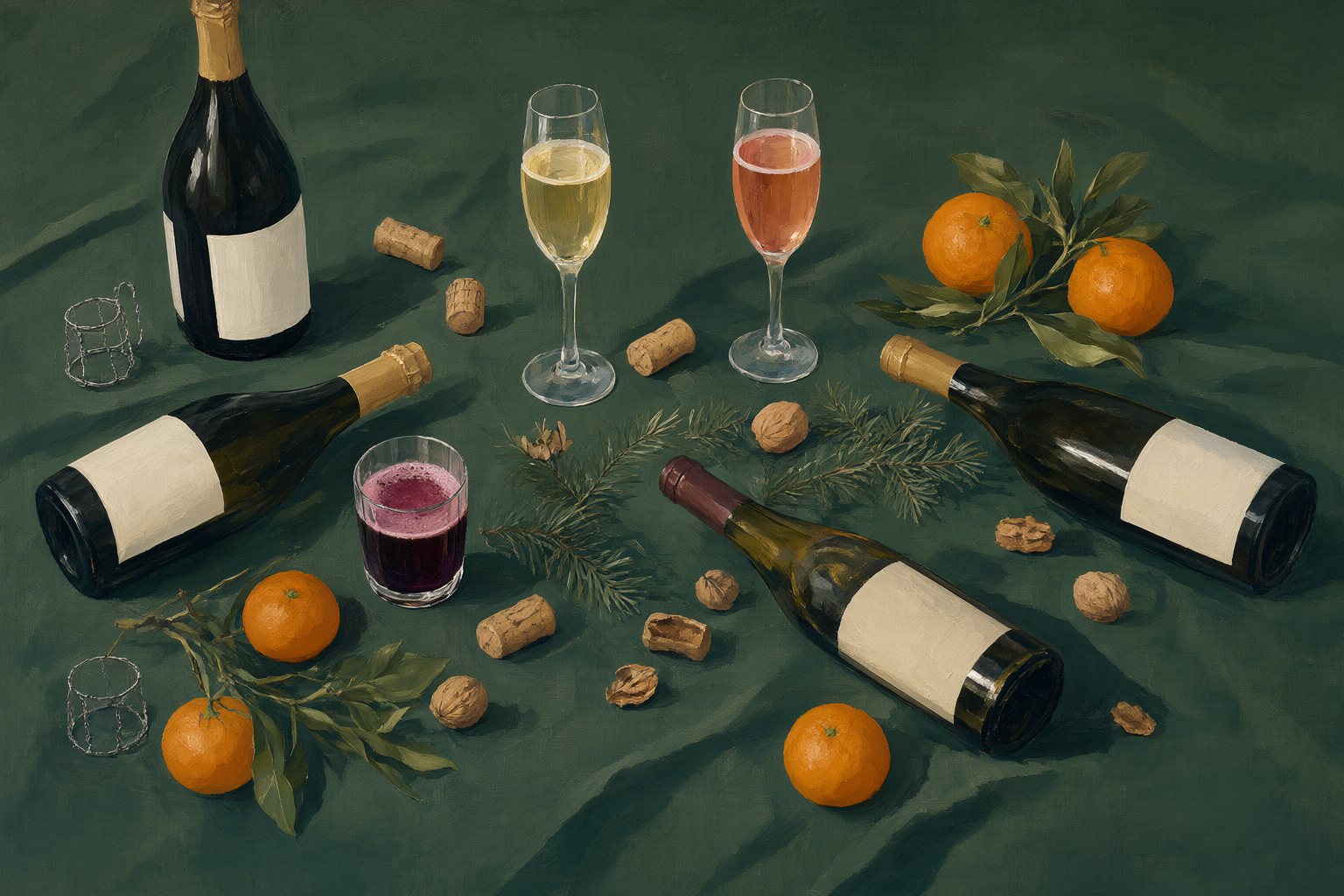
Fifteen euros is the perfect psychological threshold: enough to feel generous, too little for the Champagne everyone pretends to long for. It is there, in that middle ground, that the real festive-season game is played. And the good news is that the game can be won, provided you stop looking at the brand and start reading the appellation.
One figure to set the scene. According to Circana data reported by the trade press, in the first eleven months of 2024 Italian supermarkets sold more than 81 million litres of sparkling wine for around 548 million euros: do the maths and that is a little over 5 euros a bottle on average. Traditional-method wine, over the same period, accounted for 3.9 million litres worth 78 million euros, an average that comes very close to 15 euros. Averages to be taken with a pinch of salt, but they say something precise: with 15 euros you are not buying from the bottom of the shelf, you are buying from the top.
For the difference between second fermentation in bottle and in pressurised tank, we refer you to our piece comparing the traditional method and Charmat. Here we are interested in something else: where to look.
The Prosecco worth having
Prosecco is the best-selling wine in Italian supermarkets, and for that very reason it is also the most misunderstood. Under the same name there coexist an enormous DOC, stretching across the Veneto and Friuli, and two hillside DOCGs: Conegliano Valdobbiadene and Asolo. If your budget runs to 15 euros, the advice is simple: head for the hills.
Conegliano Valdobbiadene Prosecco Superiore DOCG has existed since 2009 and has an internal hierarchy that few people read. The word “Rive” on the label indicates grapes from a single commune or hamlet (there are 43 recognised Rive), often from steep slopes worked by hand. For 2022 the Consorzio declared around 104 million bottles worth 634 million euros: a little over 6 euros a bottle, but that is an overall figure, not a shelf price; the signal is that within 15 euros there is room for the more carefully made versions.
A detail that can change the evening: “Extra Dry” does not mean drier than “Brut”, it means the opposite. Extra Dry has more residual sugar, and it is the area’s historic style. Brut is tauter, and Extra Brut and Brut Nature tauter still. Choose according to what is on the plate, not according to which word sounds more elegant.
Italian traditional method: the €15 grey zone
Here the threshold makes itself felt. Trento DOC, the first Italian appellation dedicated to the traditional method (recognised in 1993), requires at least 15 months on the lees for its basic versions and 36 for the Riserva; in practice many producers go further. It is a mountain sparkling wine, based mainly on Chardonnay and Pinot Nero, with an acidity that stands up well at the table. Entry-level versions come close to the threshold and sometimes, on promotion, dip below it; the more ambitious ones exceed it. We have found no systematic price surveys, so treat this as a rough guide.
Oltrepò Pavese Metodo Classico DOCG is probably the best deal in northern Italy, and one of the least talked about. The production code requires at least 70% Pinot Nero and 15 months on the lees for non-vintage wines (24 for vintage). Pinot Nero in that quantity means wines with more body and a certain vinosity: bubbles for dinner rather than for the aperitivo. The rosé side, which the Consorzio has tried to call Cruasé, is worth seeking out. Some trade guides point to labels between 12 and 14 euros.
Franciacorta, with its minimum of 18 months on the lees for non-vintage wines, usually straddles the threshold or sits just above it: the basic versions flagged as good buys by the guides start at around 15 euros.
Across the border: Crémant and Cava
Crémant is the phenomenon of recent years. In Italy, according to figures reported in the press in 2026, sales went from around 250,000 to 2.5 million bottles in four years. The name denotes a French traditional-method sparkling wine made outside Champagne, with at least 9 months on the lees, in eight regions: Alsace, Burgundy, the Loire, the Jura, Bordeaux, Savoie, Limoux and the Rhône valley. It is not one single thing: Crémant de Bourgogne plays with Chardonnay and Pinot Noir and, in spirit, resembles its more famous cousin; Alsace’s often uses Pinot Blanc and Riesling and is more floral; the Loire’s speaks of Chenin Blanc, with an almost saline acidity. Reading the region on the label matters more than reading the word “Crémant”.
Cava has been through a major reform. Since 2021 the production code distinguishes Cava de Guarda (at least 9 months on the lees), Reserva (18 months), Gran Reserva (30) and Cava de Paraje Calificado, from a single vineyard, with at least 36 months. The main grapes remain the native Macabeo, Xarel·lo and Parellada. The practical advice: under 15 euros, look for the word “Reserva”. Nine extra months on the lees, at the same price or nearly, is the kind of advantage the brand will never tell you about.
We have found no reliable data on the prices of Crémant and Cava in Italy, so we do not give price bands.
The bubbles nobody takes seriously (and they are wrong)
Lambrusco is red, frizzante or fully sparkling, and at the table it does things no white wine can. It is not a single wine but a family: Sorbara is the palest and most acidic, almost a rosé; Grasparossa di Castelvetro is the darkest and most tannic; Salamino di Santa Croce sits in between. Most of it is made in pressurised tanks, but there are also bottle-fermented versions, often with the sediment left at the bottom. With zampone, cotechino and their kin, it is a pairing with centuries of reasons on its side.
Asti DOCG, on the other hand, is the sparkling wine many people drank as children at Christmas lunch without knowing it. Made a DOCG in 1993, it is produced from at least 97% Moscato Bianco, with a single fermentation in pressurised tank stopped by chilling: that is why it stays sweet and aromatic, with an actual alcohol level that is low for a sparkling wine (the production code requires at least 6%). It does not go with the antipasti, it goes with the panettone. And it is one of the very few sweet sparkling wines that make no apology for being so.
How to choose without getting ripped off
Three rules. The appellation counts for more than the name of the producer. Months on the lees, when stated, are the most honest information on the bottle. And the style should be matched to the moment, not to prestige: a Prosecco Superiore Brut with the aperitivo, an Oltrepò or a Trento at the table, a Lambrusco with boiled meats, an Asti with dessert.
Our view is that 15 euros is not a limit but a useful filter. It forces you out of the knee-jerk “Champagne or nothing” reflex and lets you discover that Europe is full of serious sparkling wines, made with patience, that cost less because they carry less of a name, not because they are worth less. If you want to make a good impression at midnight, do not bring the most expensive bottle you can afford. Bring the one whose origins you can tell the story of.
❦