Beaujolais Nouveau 2026: on 19 November the most debated wine returns
Beaujolais Nouveau 2026 is released on Thursday 19 November: the story of the slogan, Gamay, carbonic maceration, the Sarmentelles of Beaujeu and the crus to discover.
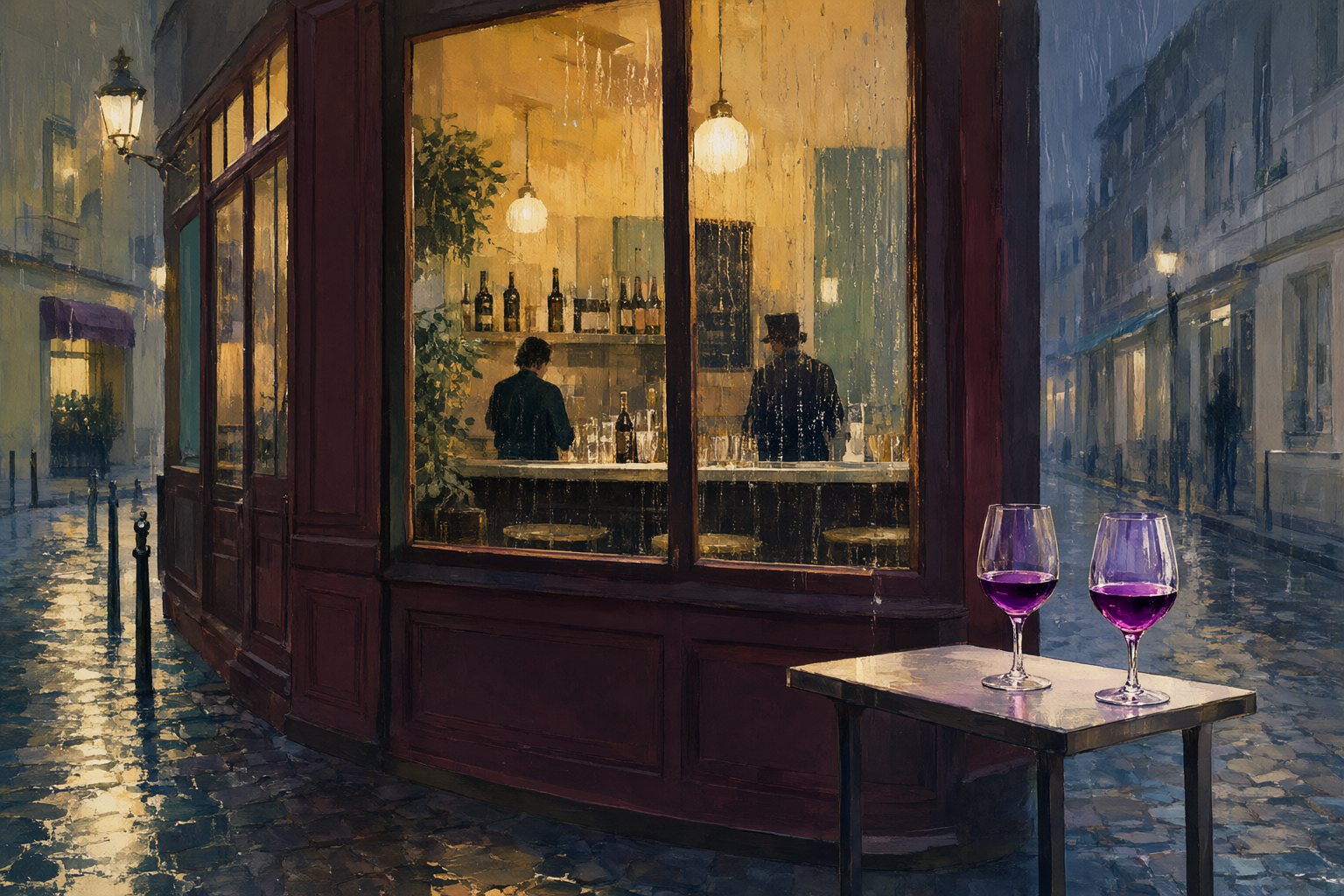
There is a wine almost everyone thinks they know and few have ever really listened to. Every year, on the third Thursday of November, it comes back with the punctuality of a Swiss train and the reputation of a likeable but rather noisy relative. In 2026 the date falls on Thursday 19 November: from that day the Beaujolais Nouveau of the new vintage may be sold and served in France and the rest of the world. Before dismissing it with a quip, it is worth understanding where it comes from, why it works and what lies behind it, in the hills north of Lyon.
The slogan that went round the world
Young wine has always been drunk in Beaujolais: it was the glass of the harvest just finished, the one that filled the bistros of Lyon in the cold weeks. The bureaucratic turning point came in November 1951, when the local interprofessional body set an official release date, 15 November. For more than thirty years the celebration remained tied to that day, until in 1985 the INAO, the French appellations authority, moved it to the third Thursday of November: a movable date, convenient for stretching the festivities into the weekend.
In between came the marketing, and it was marketing that set the standard. From the 1950s distributors began competing in a race to be the first to bring bottles to Paris; over the next two decades the merchant Georges Duboeuf became the face of the promotion, and the phrase “Le Beaujolais Nouveau est arrivé!” appeared on signs and blackboards across half of France, and then the planet. Today Japan, which thanks to its time zone pulls its corks before almost anyone else, remains the leading export market.
The 2025 figures, published by the interprofessional body, show that around 104,000 hectolitres of Beaujolais Nouveau were sold, 13.8 million bottles, two thirds of them in France and the rest in more than a hundred countries. A long way from the peaks of the golden years, but still a phenomenon no other primeur wine can boast.
Gamay and carbonic maceration: how it is made
Nouveau is made exclusively from Gamay, more precisely Gamay noir à jus blanc, black-skinned with white juice, a grape with a history of exile: at the end of the fourteenth century Philip the Bold, Duke of Burgundy, banished it from his lands in favour of Pinot Noir, judging it coarse. Gamay found refuge further south, on the granite and clay-limestone soils of Beaujolais, where it built its own identity.
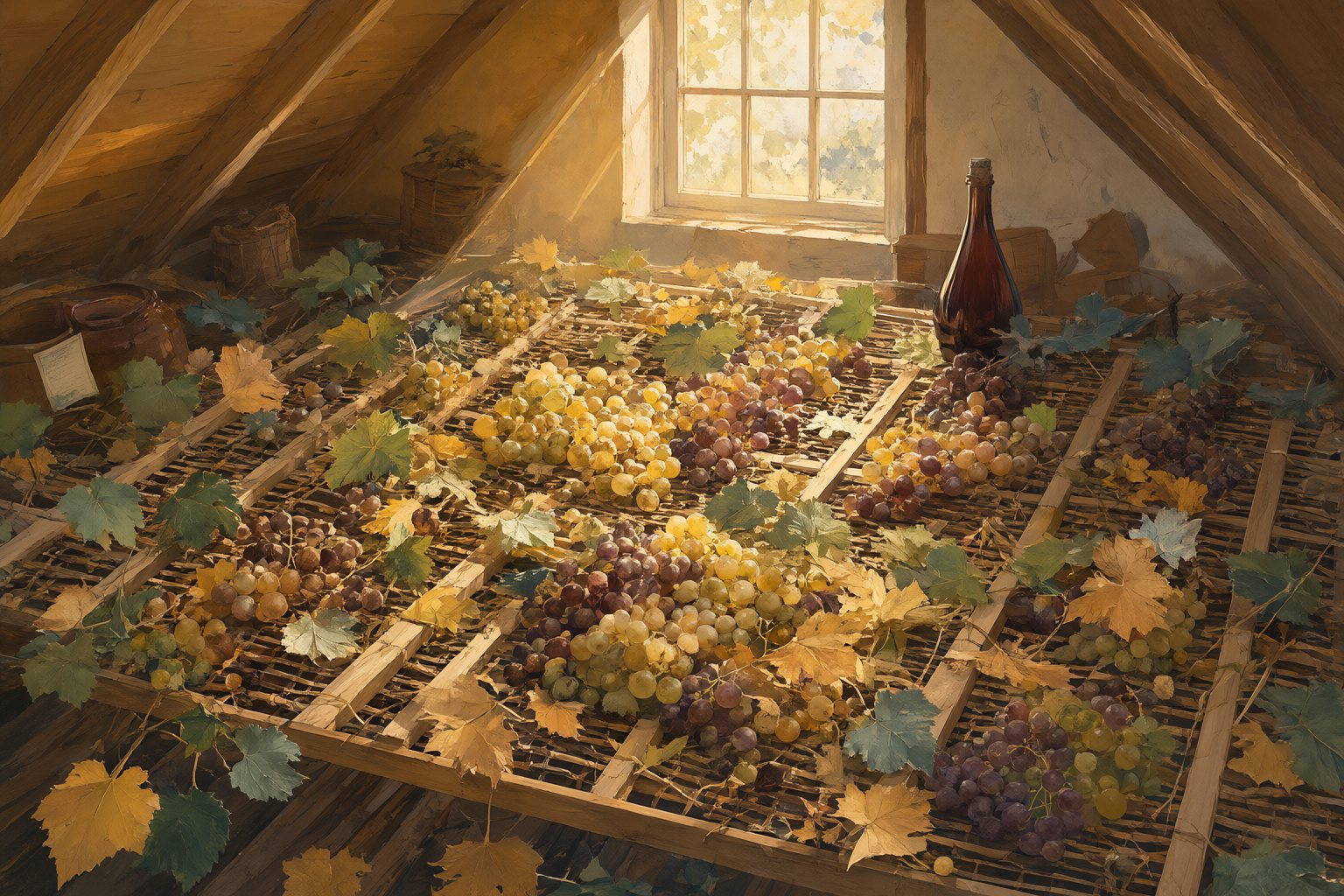
Its technical signature is carbonic maceration, or the semi-carbonic variant traditional in the area. Whole, uncrushed bunches are sealed in vats saturated with carbon dioxide: inside each berry, deprived of oxygen, an intracellular fermentation begins that releases aromas of fresh red fruit, notes of banana and pear drops, while the extraction of tannins from the skins stays minimal. The result is a purplish, juicy red, to be drunk cool and early. Nouveau may come only from the Beaujolais and Beaujolais-Villages appellations, not from the crus, and to reach the glass by mid-November it has to do everything in a hurry: a few weeks between the September harvest and bottling.
Les Sarmentelles: midnight in Beaujeu
If Nouveau has a capital, it is Beaujeu, the village that gave the region its name. Here, since 1989, the Sarmentelles has been held, the festival that effectively opens the worldwide celebrations. The 2026 edition, the thirty-eighth according to the calendar published by the organisers, is scheduled from Wednesday 18 to Sunday 22 November. The high point is the mise en perce: on the stroke of midnight between the 18th and the 19th, at the very moment the sale becomes legal, the first barrel is tapped, amid lights, fireworks, tastings and dancing until late.
The programme for the following days alternates tastings of Beaujolais’ twelve appellations, producers’ markets, dinners and music nights. All around, the region comes alive: in the same period the calendar features the Beaujolais International Marathon, the Fête des Saveurs in Gleizé and the Fête du Beaujolais Gourmand in Tarare, while some seven hundred French wine shops take part in the “Rendez-vous Beaujolais chez les cavistes” initiative. The interprofessional body, with a certain sense of self-irony, calls it a “French-style St Patrick’s Day”.
Beyond Nouveau: the crus that deserve better
The paradox of Beaujolais is that its most famous label has ended up overshadowing its best. The vineyard area covers some 11,600 hectares across 85 communes and almost two thousand estates, and the pyramid culminates in ten crus, all in the north, almost all on granite soils: Saint-Amour, Juliénas, Chénas, Moulin-à-Vent, Fleurie, Chiroubles, Morgon, Régnié, Brouilly and Côte de Brouilly.
Here Gamay changes its face. Fleurie and Chiroubles lean towards a floral, almost airy lightness. Morgon, especially from the slopes of the Côte du Py, and Moulin-à-Vent give more structured wines, able to evolve for years and, with time, to recall certain reds of the Côte d’Or to the north. Côte de Brouilly, on the flanks of an ancient volcanic hill, has a mineral tension all of its own. Anyone who knows Beaujolais only through Nouveau should open at least a Morgon or a Moulin-à-Vent: it is the quickest way to understand how underrated the grape has been.
Italian novello, a struggling cousin
Italy took its cue from France: novello appeared as a category at the end of the 1980s and today follows precise rules. It is released from 30 October, ahead of the French, must have at least 11% alcohol and no more than 10 grams of residual sugar, must be bottled by 31 December of the harvest year, and at least 40 per cent of the wine must come from carbonic maceration of whole grapes. The rest may be made by traditional vinification, and the grape varieties change from area to area.
That is precisely where the difference lies. Nouveau has a single grape, a single territory, a collective ritual repeated every year in the same place. Novello was born as a commercial idea spread across the whole peninsula, with neither a capital nor a shared history, and after the enthusiasm of the early years it lost momentum and became a niche product. Beaujolais has shown that a simple wine endures only if it carries a place with it.
What to open on 19 November
For those staying at home the choice is simple: a Beaujolais Nouveau 2026, served cool, at around 13 degrees, with charcuterie, a terrine or a Lyonnais dish such as saucisson in brioche. If the idea of a wine born only a few weeks earlier does not appeal, the same evening is perfect for a Beaujolais-Villages or a young cru such as Fleurie, to set beside the Nouveau and compare two speeds of the same grape. And for an Italian experiment, a novello in the same line-up helps you understand, better than any explanation, why one became a worldwide celebration and the other did not.
Our view: Beaujolais Nouveau is not a great wine and has never claimed to be. It is a way in. The real mistake is to stop on the threshold, when just beyond it there are ten crus worth the journey.
Practical information
- Release of Beaujolais Nouveau 2026: Thursday 19 November 2026, worldwide.
- Les Sarmentelles de Beaujeu: from Wednesday 18 to Sunday 22 November 2026, in Beaujeu (Rhône), with the tapping of the first barrel at midnight between 18 and 19 November.
- Official festival website: sarmentelles.fr
- Beaujolais wines website: beaujolais.com
❦