Italy’s 2026 harvest, region by region: the earliest vintage and the figures nobody would give
Franciacorta picking in July, Veneto and Tuscany ahead of schedule, Sicily on top form: how Italy’s 2026 harvest went and why the official estimates were dropped.
Every year, in early September, Italian wine waits for a number. At the Ministry of Agriculture, Assoenologi, Ismea and Unione Italiana Vini present their harvest estimate: how many million hectolitres, how far above or below the previous year, which region leads the pack. In 2026 that number never came: the three organisations gave up on the forecast and on the traditional press conference, announcing that the figures would arrive only once picking was over.
It is a small piece of news that tells a big story: the climate has become so erratic that forecasting a harvest at the end of summer is no longer a reliable trade. Heatwaves, drought, concentrated downpours and hailstorms can change yields and timing while the grapes are still on the vine, and two areas a few kilometres apart can live through entirely different vintages. France, too, had already suspended its estimates this year.
Without the national figure, the best way to understand how things went is to listen to the individual areas. Here is the picture, pieced together from the bulletins of consorzi, regional bodies and wineries.
The common thread: everything early
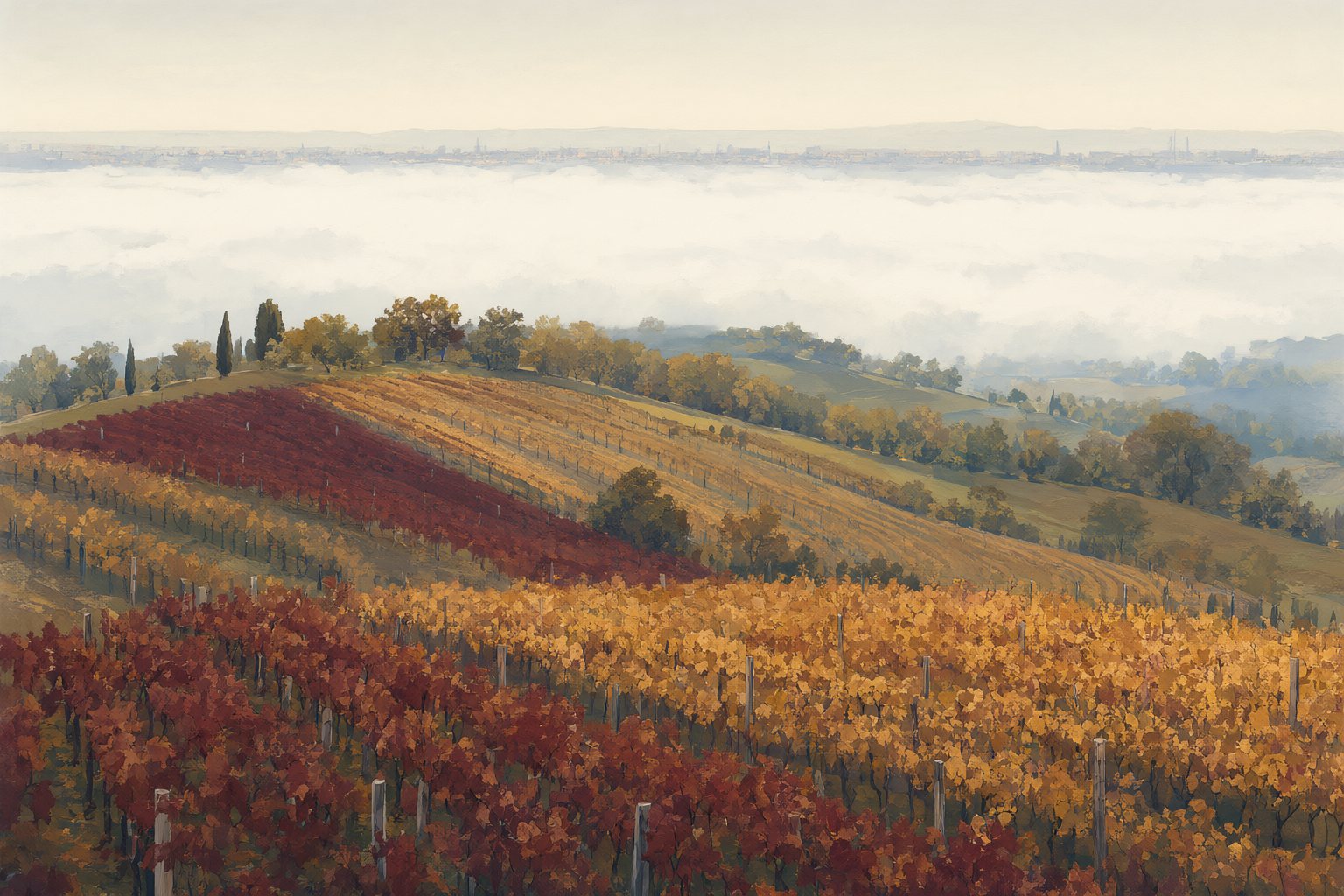
The word that keeps coming back everywhere is early. Weeks of intense heat sped up ripening almost everywhere and shortened the picking window. This is not an isolated anomaly but a trend: over the past forty years, in the great wine regions, the harvest has moved on average two or three weeks earlier.
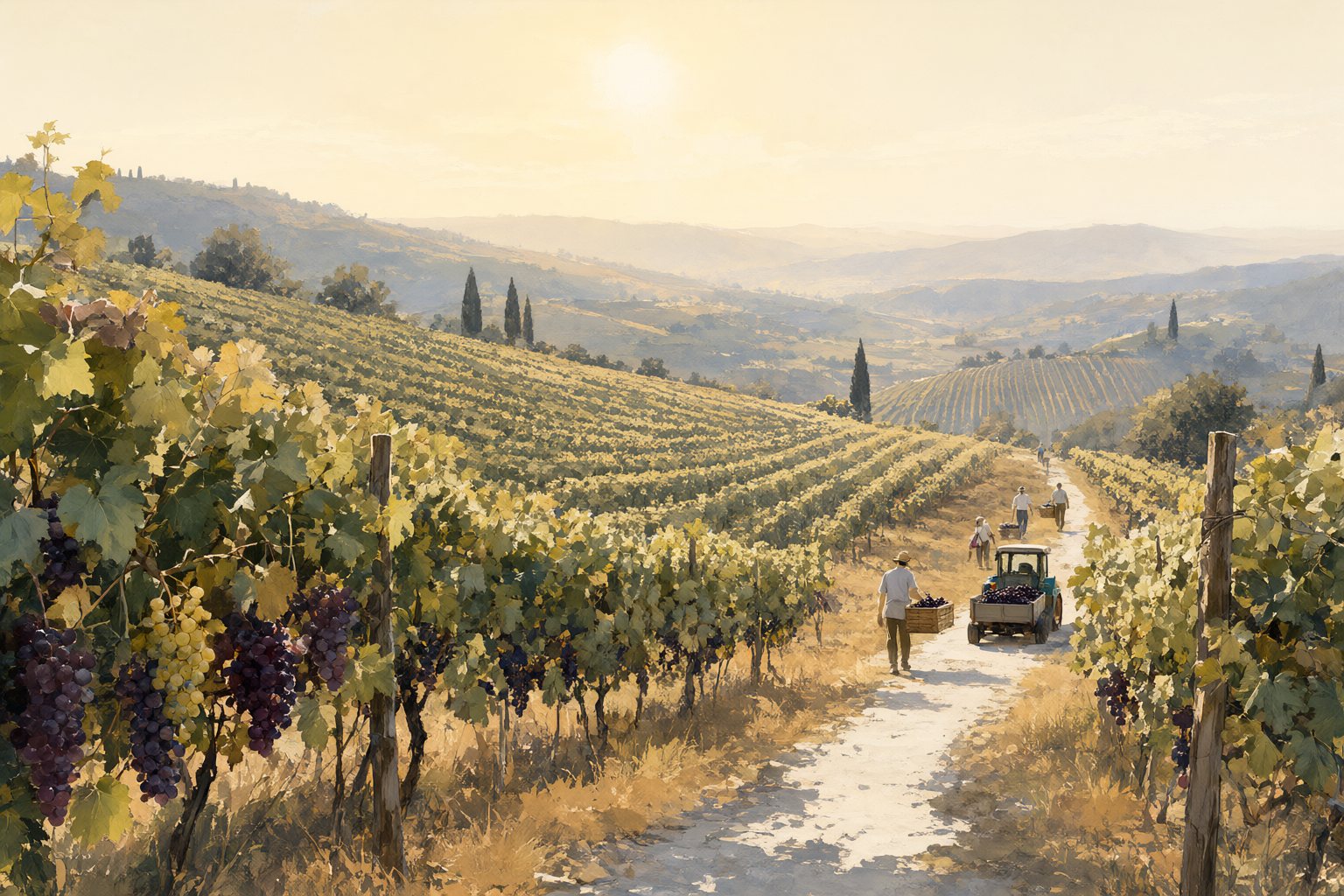
Heat brings high sugars and lower acidity, so the risk for anyone who waits too long is a more alcoholic, less balanced wine. Many wineries brought their picking forward, and some tried new approaches: in Franciacorta, Berlucchi experimented with night harvesting, a first for Lombardy, starting at four in the morning, to protect the workers and bring cooler grapes into the cellar.
The North-West: Franciacorta in July
The emblematic figure of the vintage comes from Lombardy. On 30 July, at Gussago and on Monte Orfano, the Franciacorta harvest got under way: according to the Consorzio, the first time the appellation has ever started in July. Budburst had arrived more than a week early, and rainfall up to mid-July had been 25% below the historical average. There was some spring hail, but ripening was described as regular.
In Piedmont, as always, the sparkling-wine bases went first. The Consorzio Alta Langa speaks of a “very positive” vintage of high quality, and several wineries in the Langhe estimated they were seven to ten days ahead of the previous year. For Nebbiolo, the latest-ripening variety, August forecasts pointed to the second half of September. In Liguria, Vermentino was picked about a week early, with good expectations for quality.
The North-East: steady, with a few surprises
The most detailed picture comes from the Veneto, thanks to the monitoring carried out by Veneto Agricoltura with the Region, ARPAV and CREA. At the beginning of August the harvest was eight to ten days ahead, after a hot, dry summer. The drought had one welcome side effect: little rain means little downy and powdery mildew. The chronic problems of trunk diseases and flavescence dorée, however, remain. Expected quality is “good to excellent”, with regional output stable or slightly below 2025, when 14.7 million quintals were harvested.
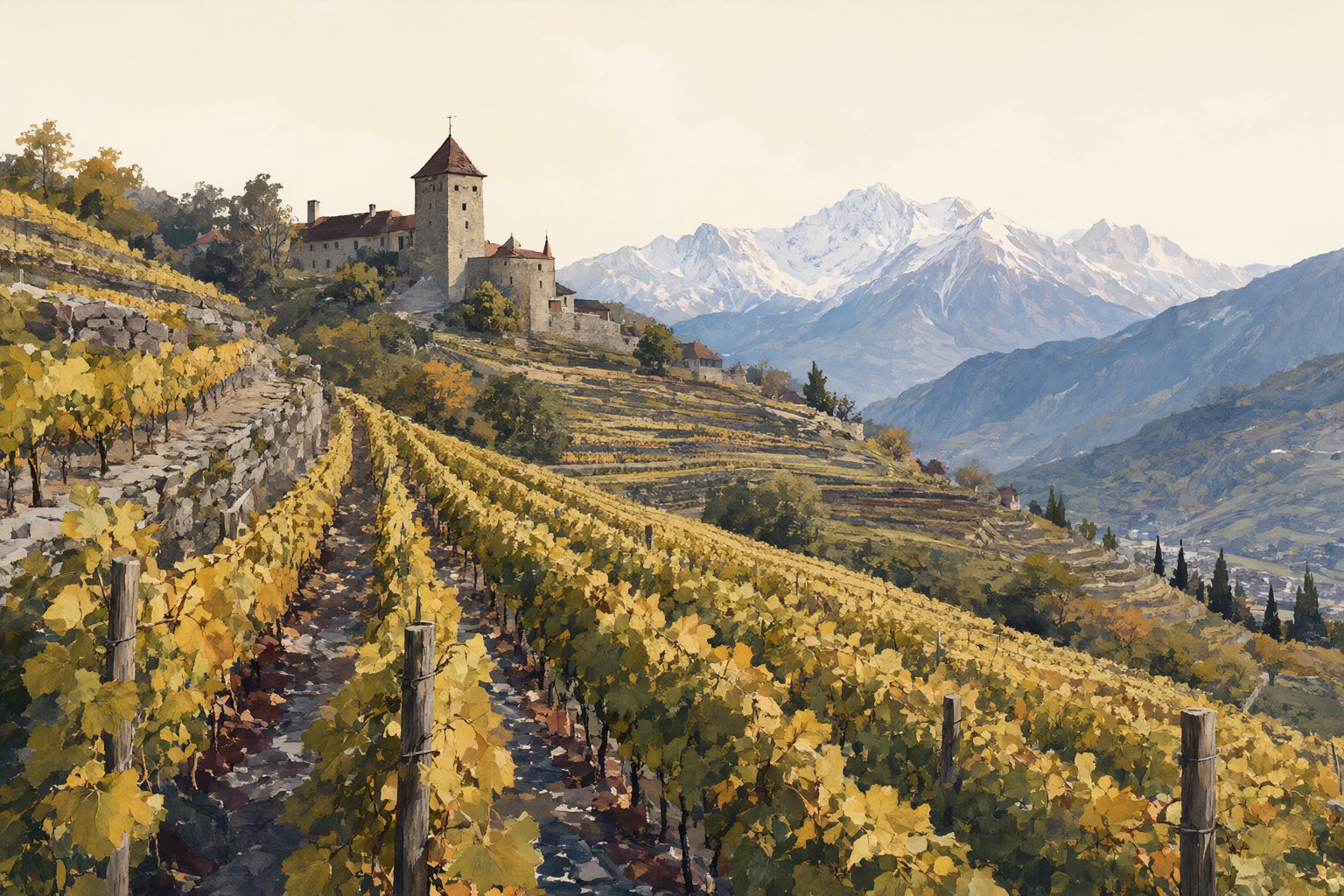
Elsewhere in the North-East, August estimates were actually up: between 5 and 10% more in Friuli’s irrigated vineyards, between 7 and 8% in Trentino, between 6 and 7% in the province of Bolzano. In Alto Adige the cooperative wineries described a uniform and exceptionally healthy crop; in Trentino, Ferrari began picking Chardonnay for Trentodoc on 10 August, staking everything on acidity and freshness. The exception is Prosecco: on the Glera hillsides, no particular advance was reported.
The Centre: Tuscany between heat and cut yields
In Tuscany the vintage has two faces. In the Maremma, picking started about two weeks early, with whites and sparkling bases already in the cellar in August; the Consorzio headed by Francesco Mazzei speaks of healthy grapes and very positive quality, but of below-average yields because of small bunches and water stress. In some hill areas there was even talk of bringing Sangiovese forward. In Bolgheri, by contrast, there was no significant advance.
In Chianti Classico, wineries reported véraison seven to ten days early and grapes in excellent health, in a vintage hotter and drier than 2025. Here the heat was felt in earnest: in Rufina one estate recorded more than twenty consecutive days above 35 degrees, with night-time lows around 22–23. In Montalcino, winter rains had left good water reserves in the soils, the best ally for a Sangiovese that is picked late.
In Umbria, August estimates pointed to a drop in production of between 5 and 10% because of the drought, offset, according to producers, by more concentrated quality.
The South and the islands: Sicily gets top marks
In Sicily the harvest began at the end of July with the early white grapes of the west and unfolds, as every year, over roughly a hundred days, moving up towards the interior, the Iblean plateau and the slopes of Etna. A rainy winter and spring replenished the soils, disease pressure was low, and Assovini Sicilia speaks of “high” expected quality, with good prospects for Grillo, Nero d’Avola and Perricone. In Salento, a few days’ advance and moderate yields were reported.
The real problem is not in the vineyard
There is one more reason why this year’s harvest figure mattered less than usual. Italian wine has full cellars. As of 31 July 2026, according to the Icqrf’s Cantina Italia report, wine stocks stood at 42.6 million hectolitres, 6.9% more than a year earlier; more than half of it is appellation wine, and Prosecco DOC alone accounts for about 3.2 million hectolitres. For comparison, Italy’s entire 2025 production had been 44.4 million hectolitres.
That is why in several regions, from the Veneto to Tuscany, from Piedmont to the Marche and Abruzzo, the consorzi have reduced yields or held back part of the wine. In a year like this, the question is not how much is produced, but how much can be sold.
What to expect in the glass
Pending the final figures, promised at the end of the season, the portrait that emerges is of a hot, early and generally healthy vintage, with good or very good quality expected almost everywhere and quantities that vary from patch to patch. For drinkers it means two things: 2026 whites and sparkling wines where picking was brought forward to preserve freshness, and reds that are likely generous and ripe, to be judged winery by winery.
When Assoenologi, Ismea and Uiv publish the final tally, we will return to the numbers. For once, though, waiting is no bad thing: an accurate figure in November is worth more than a wrong estimate in September.
❦