Bag-in-box wine: how long it lasts once opened and unopened
How long an opened bag-in-box keeps, and a sealed one, why it outlasts an open bottle, where to store it and whether boxed wine is really worse.
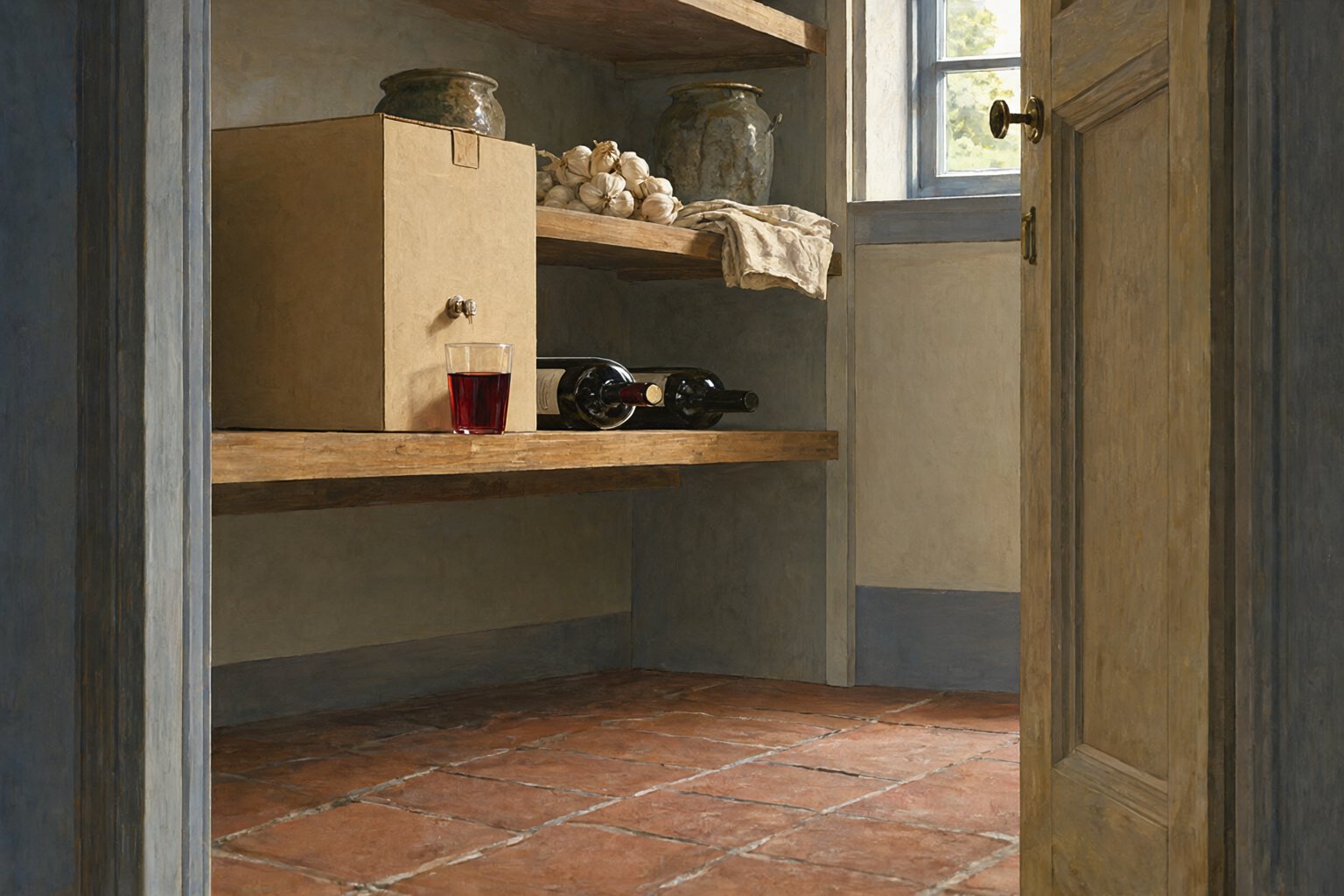
In many Italian homes the bag-in-box has taken the place of the old demijohn: it lives in the storeroom, it has a tap, and nobody is quite sure how long you can wait before finishing it. The short answer: once opened, generally three to six weeks, better in a cool place or in the fridge; still sealed, a few months, not years, and it pays to respect the date printed on the box. The reason lies entirely in a plastic bag.
How it is made, and why it outlasts a bottle
The name says it all: a soft bag of multilayer plastic, enclosed in a cardboard box that protects it from light and knocks, with a tap welded to the bag. As you pour, the bag deflates and closes in on itself. No air comes in to take the place of the liquid, as happens in a freshly opened bottle, where every glass poured is replaced by a glass of oxygen.
Oxygen is the enemy of an open wine: it flattens the aromas, yellows a white, pushes everything towards stewed-apple notes and, in the long run, towards vinegar. An open bottle of red, even recorked, generally holds for a few days. The bag-in-box moves the count into weeks.
Opened: three weeks to be safe, six at most
How many weeks, exactly? Producers tend to claim up to six. The British magazine Decanter is more cautious: its expert advises keeping it for three weeks, four at most, and storing it in the fridge once opened, even if it is red. The reason is that the system slows oxidation but does not stop it: a little air still gets in through the tap each time it is used, and plastic is not as perfect a barrier as glass.
A few practical rules to extend the life of the box:
- Cool and away from light. The storeroom next to the boiler is the worst place. The fridge is the best, and for a red it is enough to take it out half an hour before serving.
- A clean, well-closed tap. A drop of wine left in the spout oxidises and can spoil the rest.
- Whites and rosés before reds. They have fewer natural defences against oxygen: better to finish them first.
- Taste. If the wine smells of wet cardboard, tired hazelnut or vinegar, it is time to move it to the cooking pot, or to let it go.
Unopened: months, not years
Here lies the most common misunderstanding. Many people think a sealed bag-in-box keeps like a bottle, and forget it in the cellar. It does not. Again according to Decanter, the plastic is slightly permeable, and even without opening the box the wine oxidises within a few months. That is why the box often carries a date by which to drink it, whereas on bottles of wine an expiry date is not legally required.
The bag-in-box, in short, is a container designed for wines to be drunk young, within the year or a little more. Buying one “to age” makes no sense: you buy it when you want to drink it.
Is it worse wine?
The box says nothing, in itself, about the quality of the wine. It is a container, like the bottle: inside there may be a simple wine or a well-made one. It is true that in Italy it has historically been associated with bulk, everyday table wine, and it is true that nobody puts a wine for ageing in it, given the limits just described. But the prejudice is starting to crack.
In the Nordic countries the bag-in-box is a normal choice: in Sweden, according to a market report by Wines of Germany, it accounts for about half of the wine market. And in Italy, too, important denominations are thinking about it. In January 2026 Gambero Rosso reported that the members of the Consorzio Barolo Barbaresco Alba Langhe e Dogliani had approved by majority a proposal to allow bag-in-box of up to 5 litres for Langhe Nebbiolo DOC, a change to the production rules that still has to go through the Region, the ministry and the European Union. The stated reasons: Northern European markets and the weight of the packaging, about 400 grams of cardboard and plastic for 5 litres of wine. Among producers, it must be said, some fear for the image of the territory.
The case also says something else: for a wine with a denomination, the permitted containers are set by the disciplinare, the production rules, so much so that cardboard needs a formal amendment. That is why, for now, you will not find the big names in a bag-in-box.
When it makes sense to buy one
The bag-in-box is perfect for those who drink a glass with dinner every evening and do not want to open a bottle only to let it die; for parties with lots of people; for cooking wine, which finally stops being a bottle left open for three weeks next to the hob. It makes less sense for those who drink wine once a week, because the weeks go by fast.
Our view is that the bag-in-box deserves less suspicion and more honesty. Less suspicion, because as a container for young wines it works better than an open bottle and is much lighter to carry. More honesty, because whoever sells it as “it lasts forever” is wrong: the box buys time, it does not stop it. Treat it like good milk, not like cellar wine, and it will disappoint you less than its looks might suggest.
❦